
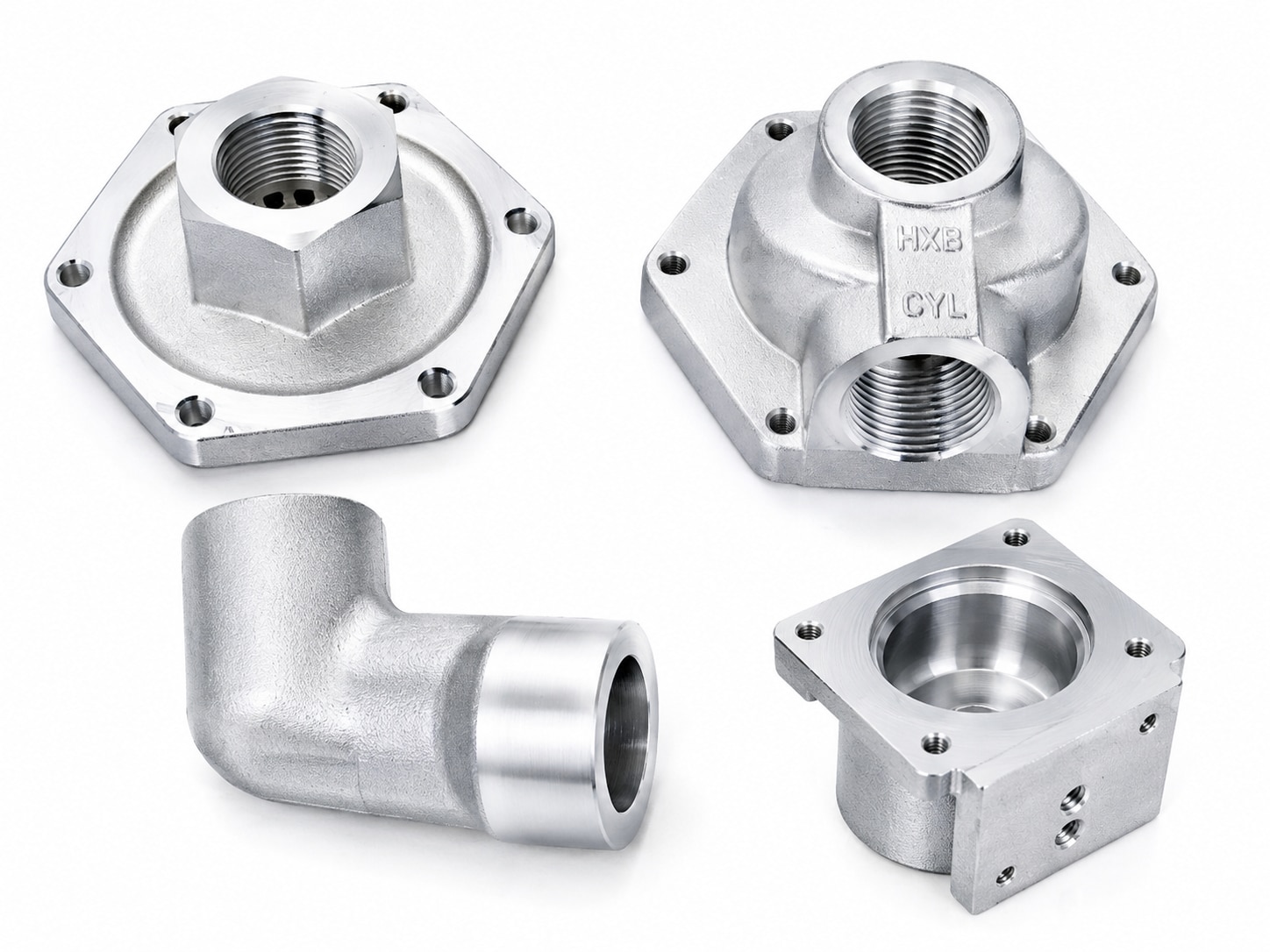
Choose the valve body by its function, pressure, interfaces, production volume, and sealing demands—not by the aluminium grade or casting label alone. By the end, you will have a specification, comparison method, and inspection plan for deciding whether gravity die casting, sand casting, pressure die casting, or billet machining suits your equipment.
Key takeaways
- Start with the pneumatic circuit symbol and operating conditions.
- Confirm every port, actuator interface, sealing face, and machined datum.
- Compare gravity die, sand, pressure die, and billet against volume and integrity.
- Request alloy, pressure-test, inspection, and process details in your Mumbai quote.
Start with the Valve Function and Operating Conditions
The casting must support the valve’s function, port arrangement, actuation method, and operating conditions before you compare manufacturing processes. If your search is “which aluminium Pumatic valve casting for fits your equipment,” start with the pneumatic circuit symbol, not the alloy.
Send the casting supplier these details:
- Valve type: 3/2, 5/2, or 5/3 directional control; flow-control; pressure-control; or proportional
- Rest position: normally open, normally closed, or a 5/3 centre condition
- Actuation: single-solenoid with spring return, double-solenoid, pilot-operated, or manual
- Working pressure, pressure spikes, air quality, temperature range, and cycle rate
- Medium and environment: dry compressed air, lubricated air, moisture, washdown, dust, or corrosive exposure
| Configuration | Function and actuation | Casting must accommodate |
|---|---|---|
| 3/2 valve | One supply, exhaust, and outlet; spring return or single solenoid | Three passages, correct exhaust arrangement, and the specified rest state |
| 5/2 valve | Double-acting actuator control; single or double solenoid | Supply, exhaust, and two actuator ports with separated internal galleries |
| 5/3 valve | Double-acting control with a defined centre position | Centre closed, centre exhaust, or centre pressure passages without cross-leakage |
| Proportional or pressure valve | Variable output rather than simple on/off switching | Stable metering passages, sensing ports, and controlled sealing surfaces |
An aluminium casting forms the body or manifold; it does not replace the spool, sleeve, seals, springs, seats, or inserts. Confirm the required internal bore, seal grooves, machined seats, and pressure boundary before approving the body design.
Match the Casting to Every Interface and Machined Feature
An existing pneumatic assembly fits only when the casting matches its envelope, mounting pattern, ports, internal bores, actuator connection, and sealing geometry. Check these dimensions against the released valve drawing, not against a similar-looking body.
| Feature | Match against | If it is wrong |
|---|---|---|
| Overall envelope | Length, width, height, corner radii, and clearance around coils or fittings | The body collides with adjacent equipment |
| Mounting interface | Hole count, hole diameter, pitch, slot position, datum faces, and mounting standard | Bolts will not align or the valve will sit out of position |
| Ports | Port size, thread standard, thread depth, port orientation, and centre distances | Tubing will not connect or threads will leak |
| Internal bore | Spool or piston diameter, bore straightness, and end-stop locations | The actuator binds or fails to shift |
| Actuator interface | Solenoid pilot pattern, actuator bore, rod position, and connector clearance | The existing actuator cannot operate the body |
| Sealing features | O-ring grooves, gasket lands, seats, plugs, and surface-finish limits | Air bypasses the intended circuit |
| Machining allowance | Extra metal around ports, faces, bores, and threaded holes | Finish machining breaks through or leaves inaccurate geometry |
Treat the casting as a near-net body, not a finished valve. Machine air passages, seats, ports, threaded holes, and sealing faces after casting, then inspect the critical dimensions. As-cast threads and sealing faces create variable fit and repeatability.
For reliable pneumatic valve equipment fit, require the supplier to confirm:
- A marked-up drawing with datums and tolerances
- Port thread gauges and centre-distance measurements
- Bore, groove, and sealing-face inspection results
- Insert material where repeated tightening or wear makes aluminium unsuitable
Choose Between Gravity Die, Sand, Pressure Die, and Billet
Annual volume and wall geometry usually decide the route before piece price does. A thin, repeatable body for 50,000 units has a different economic answer from a one-off valve that must hold pressure after extensive machining.
| Route | Cost and volume fit | Geometry and pressure-integrity trade-off |
|---|---|---|
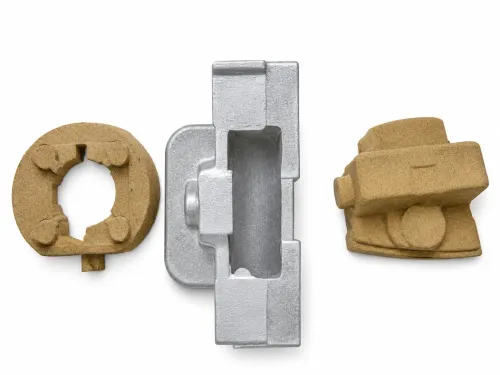
| Aluminium sand casting | Lowest tooling commitment for prototypes, large sections, and low quantities | Handles complex, bulky shapes, but rougher surfaces and wider dimensional variation increase machining; inspect carefully for porosity in pressure boundaries |
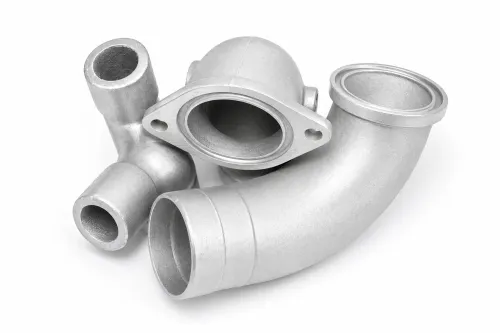
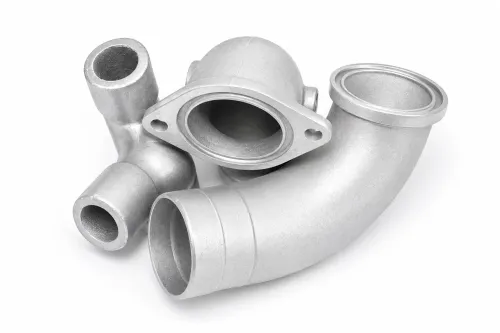
| Aluminium gravity die castings | Permanent tooling suits repeatable medium-volume production | Delivers better surface finish, dimensional control, and metal soundness than sand; useful for manifolds and moderate wall thicknesses |
| Aluminium pressure die casting | Tooling cost is justified at high volume | Produces thin walls and consistent repeatable geometry quickly, but trapped gas and porosity can undermine pressure integrity; require a defined leak-test method before approval |
| Machined billet | Avoids casting tooling for very low quantities and design changes | Provides strong confidence in pressure boundaries and clean machined passages, but wastes material and becomes expensive for complex shapes or large batches |
Choose gravity die when the body needs repeatability without pressure-die volumes. Choose sand when tooling cost matters more than finish or cycle time. Choose billet when only a few bodies are needed, the design is still changing, or a cast defect would be unacceptable.
Do not approve a route from the outside shape alone. Compare internal passages, minimum wall thickness, threaded ports, seal faces, machining allowance, leak-test pressure, and annual quantity; those details can move the decision from casting to billet.
Specify Alloy, Pressure Integrity, and Service-Life Controls
Choose the alloy and casting design for the pressure boundary, not for low weight alone. A pressure-rated aluminium alloy such as A356-T6 can suit a valve body when its heat-treatment condition, wall thickness, ports, and fatigue life are validated together.
Use generous internal radii, uniform walls, controlled feeding, and machining allowance around bores and threaded ports; sharp corners and isolated thick sections promote cracks and shrinkage.
Treat Pumatic valve casting pressure as a verified design limit, not a number inferred from the alloy name. The body, plugs, inserts, seals, and machined surfaces must pass the specified leak and pressure tests at the valve’s maximum working pressure, with fatigue testing where cycling is severe.
Require these controls before acceptance:
- Provide the alloy designation, melt or material certificate, casting process, and heat-treatment condition where applicable.
- Define gas porosity and shrinkage limits in critical walls, ports, and sealing faces; aluminium valve body porosity can open during drilling or tapping.
- Inspect machined passages, bores, threads, and seal grooves rather than relying on an external visual check.
- State the leak-test medium, test pressure, hold duration, and allowable leakage. A pneumatic test demands guarding; hydrostatic testing stores less energy.
- Protect against condensate, salt spray, and cleaning chemicals with a compatible finish, and isolate aluminium from brass or steel inserts to limit galvanic corrosion.
Reject any body with cracks at ports, exposed cavities after machining, distorted sealing faces, or leakage that worsens during pressure cycling.
Build a Mumbai Quote Around Process and Inspection
A Mumbai enquiry must price a verified valve body, not an aluminium shell. Send the drawing, valve symbol, port sizes and thread standard, operating pressure and temperature, air medium, mounting pattern, cycle rate, critical sealing faces, and required production volume.
The phrase “Pumatic valve for manufacturing process in mumbai” becomes useful only when it names these deliverables.
- Request drawing review and DFM, followed by die or pattern design approval. Specify the alloy, casting route, machining allowance, and heat-treatment condition where applicable.
- Require the manufacturing route to show melting and degassing, gravity filling, solidification, fettling, CNC machining, deburring, and cleaning. Ask whether inserts and surface treatment are included.
- Separate tooling, raw alloy, casting yield, machining, inspection, leak testing, packaging, taxes, and freight in the quotation. “Pumatic valve for casting price in mumbai” is not a meaningful comparison if tooling and CNC work are hidden inside one piece price.
- Write the acceptance plan into the purchase order: alloy or melt certificate, dimensional inspection report, porosity control or radiography for critical areas, and a leak-test method stating pressure, duration, test medium, and allowable leakage.
A supplier such as SPM Castings should receive the same inspection requirements used for approval, because a visual check cannot reveal gas porosity or shrinkage cavities opened by drilling and tapping. If anodizing is specified, inspect treated bores, threads, and sealing lands after masking and account for coating thickness in the tolerance stack.
Related product
Frequently asked questions
How do you choose an aluminium pneumatic valve casting for equipment?
Start with the valve function, pneumatic circuit symbol, port arrangement, actuation method, pressure, temperature, fluid, cycling, and mounting constraints.
Which interfaces and machined features must the casting include?
Check every air port, threaded or bored connection, sealing face, actuator interface, mounting hole, datum, wall section, and machining allowance against the equipment drawing.
When should you choose gravity die, sand, pressure die, or billet?
Choose gravity die for repeatable medium-volume parts, sand for larger or lower-volume geometries, pressure die for high-volume thin-wall production, and billet machining for prototypes or simpler low-volume parts.
What should a Mumbai quote for a pneumatic valve casting include?
Request the alloy, casting process, tooling cost, piece price, minimum quantity, machining scope, pressure-test method, inspection plan, delivery terms, and rejection criteria.
Related product
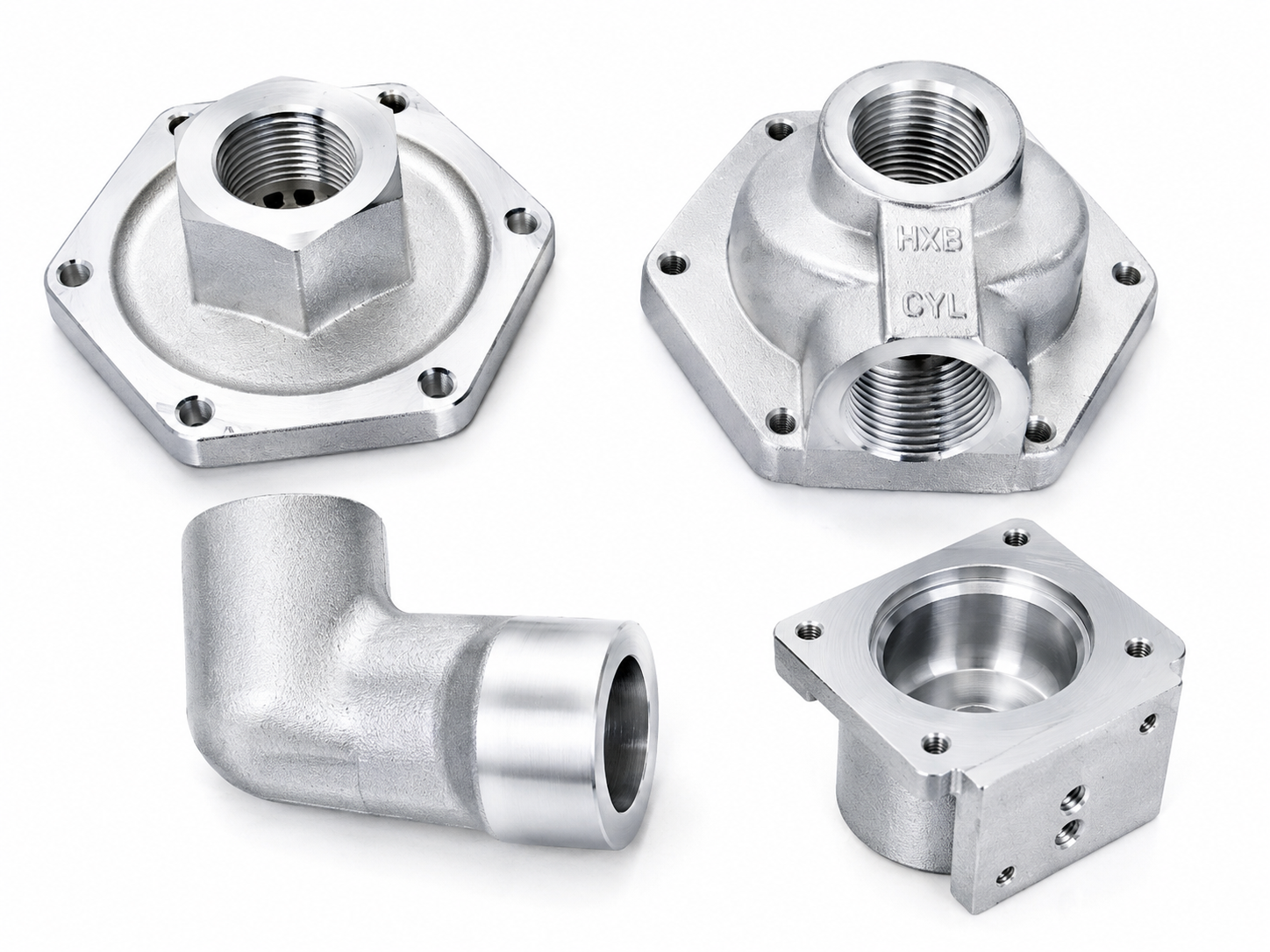 | Aluminium Gravity Die Castings A pneumatic valve regulates the flow of compressed air or gas into, through, or out of a system. View product → |