
“Venture casting” is not a standard aluminium process name, so buyers need to establish whether a supplier means gravity die casting or another method. By the end, you will be able to identify the process, compare it with sand and pressure die casting, judge whether it suits your component, and specify the checks required before ordering in Mumbai.
Key takeaways
- “Venture casting” is not a recognised standard aluminium casting process name.
- Choose gravity die casting for repeatable medium-volume parts with better finish than sand casting.
- Specify alloy designation, heat treatment, machining tolerances, inspection records, and casting defects.
- Audit a Mumbai supplier’s tooling, process controls, samples, and quality documentation before ordering.
What does “venture casting” mean in aluminium manufacturing?
“Venture casting” is not a generally recognised aluminium-casting process designation like sand casting, gravity die casting, investment casting, low-pressure die casting, or high-pressure die casting.
In the phrase “aluminium venture castings in Mumbai”, ask the supplier whether “venture” is:
- A supplier-specific term
- A trade name
- A spelling variation
- A mistaken reference to aluminium gravity die casting
“Aluminium casting” on a quotation is incomplete because it does not identify the mould type, filling pressure, achievable wall thickness, porosity risk, tooling cost, or inspection method. Those differences affect service performance, price, and whether the part can be produced repeatedly.
Put the exact process on the drawing and purchase order. For example: “Gravity die casting using a reusable permanent mould.” Also specify the alloy, as-cast dimensions, machining requirements, heat treatment, and inspection method.
Resolve the terminology before comparing suppliers; otherwise, you may compare a sand-cast part with a permanent-mould casting while treating both quotations as equivalent.
How aluminium gravity die casting produces an industrial part
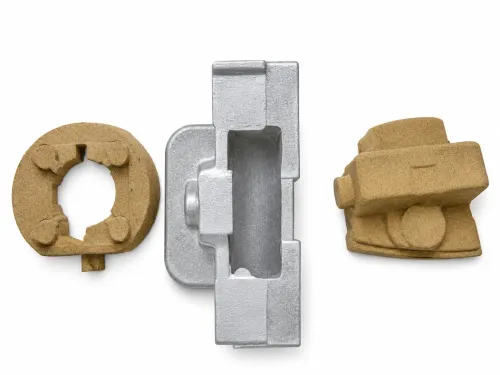
The process starts with designing a pattern and reusable permanent die around the finished part.
Engineers choose a heat-resistant tool steel or comparable mould material, add draft angles so the casting releases, position the parting line for access, and plan cores for internal cavities, vents for escaping air, risers for feeding shrinkage, gates for metal entry, and machining allowance.
1. Preheat the die, then apply a controlled release agent. A cold or poorly coated mould can restrict flow, damage the surface, or make removal difficult.
2. Melt the aluminium and check its alloy identity, cleanliness, and melt condition before pouring.
3. Pour the molten metal into the open die. Filling is driven primarily by gravity, not the high injection pressure used in pressure die casting.
4. Allow the metal to solidify, open the die, and remove the casting and cores.
5. Fettling removes gates, risers, flash, and other excess metal. Inspect the part for dimensions, surface defects, cracks, and internal quality before accepting it.
6. CNC-machine critical faces, holes, threads, or datums where the as-cast surface cannot meet the drawing.
Reusable metal tooling supports repeatable geometry and a cleaner surface than many expendable sand moulds, but it has less freedom for very thin or intricate features. A part designed only for machining or sand casting may need redesign for draft, cores, risers, gates, and machining allowance before economical aluminium gravity die castings are possible.
How gravity die casting compares with sand, pressure die and investment casting
Permanent-mould casting is the wider family; gravity die casting is one form of it. Aluminium gravity die castings fill a reusable metal mould primarily through gravity, so tooling costs more than sand moulds but repeat dimensions and surface finish are usually better.
| Option | Main advantage | Main limitation and best fit |
|---|---|---|
| Sand casting | Low tooling cost and freedom for large or varied shapes | Attractive for prototypes, one-off parts and low quantities; finish and repeatability are usually lower |
| Gravity die casting | Reusable mould, consistent geometry and cleaner surfaces | Less suited to very thin or highly intricate sections; good for repeat industrial components |
| High-pressure die casting | Rapidly fills very thin, complex sections | Expensive tooling, trapped-gas porosity and production constraints; justified at high volume |
| Investment casting | Expendable ceramic mould captures fine detail on intricate small parts | Higher process effort and limited scale; unlike gravity casting, the mould is not reused |
| Low-pressure casting | Controlled pressure feeds metal into the mould | It is not gravity alone, and requires different equipment and process control |
Choose gravity die casting for repeatable aluminium venture castings for industrial equipment when the part has practical wall sections and limited undercuts. Choose sand casting when volume is low or the design keeps changing; choose pressure die casting for very high volumes and extremely thin, integrated features.
Compare tooling, cores, maintenance, yield, machining and inspection costs—not only the casting price.
When is gravity die casting the right choice for industrial equipment?
Choose gravity die casting when the part repeats often enough to repay permanent tooling and its geometry suits a reusable metal mould. It fits venture castings for industrial equipment where consistent dimensions, stronger and cleaner surfaces than many sand castings, and repeatable machining matter.
1. Select it for moderate-to-high annual volume and stable designs, including pump bodies, enclosures, brackets, motor mounts, and end frames. Confirm that wall sections, draft, parting-line access, cores, vents, and undercuts allow reliable filling and ejection.
2. Compare the full production cost: die tooling, core boxes and core consumption, mould maintenance, melt loss and yield, heat treatment, machining fixtures, inspection, and rejected-casting disposition. A lower casting price can disappear through poor yield, excessive machining, fixture changes, or scrap.
3. Use sand casting for one-off prototypes, very low quantities, large uncomplicated parts, or designs still changing; its cheaper, faster tooling often wins. Consider pressure die casting for very high volumes, extremely thin walls, or highly integrated details that gravity filling cannot reproduce economically, despite higher tooling and process-control costs.
Review wall thickness, cores, and undercuts before approving the route. If those features demand complex tooling or repeated inserts, sand casting or pressure die casting may be the better economic choice.
What should you specify about LM6, machining and casting quality?
For aluminium gravity die castings, LM6 is an aluminium-silicon casting alloy valued for castability and corrosion resistance, and commonly considered for housings and structural components. “LM6” alone is not a complete requirement: confirm the exact standard, chemical limits, mechanical properties, and supplied condition.
Heat treatment is not interchangeable between casting alloys. If you require T6, specify solution treatment, quenching, and artificial ageing; allow for dimensional movement or distortion after treatment.
Separate as-cast tolerances from CNC machining tolerances. Identify functional datums and critical faces, and state the machining allowance so the foundry leaves enough stock without creating excessive removal.
Your purchase specification should include:
- Alloy standard, temper, chemistry and mechanical requirements;
- As-cast dimensions, CNC dimensions, datum scheme and machining allowance;
- For pressure-containing parts, limits for gas or shrinkage porosity, oxide-related inclusions, cold shuts and misruns;
- The inspection method: radiography, computed tomography (CT), or a validated leak test.
A leak test proves that the finished pump, valve, manifold or hydraulic part does not leak under specified conditions; it does not reveal every internal void or inclusion. Radiography or CT shows internal discontinuities, but does not prove the required functional leak rate.
Where aluminium meets steel, copper or brass, specify isolation washers or coatings, suitable surface treatment, drainage, and control of dissimilar-metal contact.
How should you evaluate aluminium casting suppliers in Mumbai?
Approve aluminium venture castings for industrial equipment in Mumbai only after the supplier proves one controlled production chain, not merely a Mumbai office. Confirm whether “venture” means gravity die casting, a trade name, or a supplier-specific term, then record the named process on the purchase order.
Compare the cost drivers against annual volume:
| Option | Check | Commercial consequence |
|---|---|---|
| Permanent mould | Tooling and maintenance | Higher upfront cost, lower repeat-part variation |
| Cores and melt yield | Core consumption and melt loss | Changes casting cost and usable output |
| Machining and inspection | Fixtures, datums, reports | Controls recurring CNC and rejection cost |
| Rejected castings | Segregation, rework, disposition | Prevents hidden scrap charges |
Ask for:
- Alloy certificate, heat or batch traceability, die and core plan, first-off or layout inspection, and CNC datum strategy.
- Tool-life controls, heat-treatment records, dimensional report, and the agreed NDT or leak-test report.
- The responsible locations for melting, moulding, heat treatment, fettling, and machining; a trading address does not prove integrated control.
SPM Castings can be considered when you need aluminium and brass castings alongside CNC-machined industrial components, but request the same process, material, quality, and capacity evidence before approval. This is essential when comparing aluminium venture castings in Mumbai, because a cheaper quotation can conceal weak traceability, unstable fixtures, or poor rejected-casting handling.
Related product
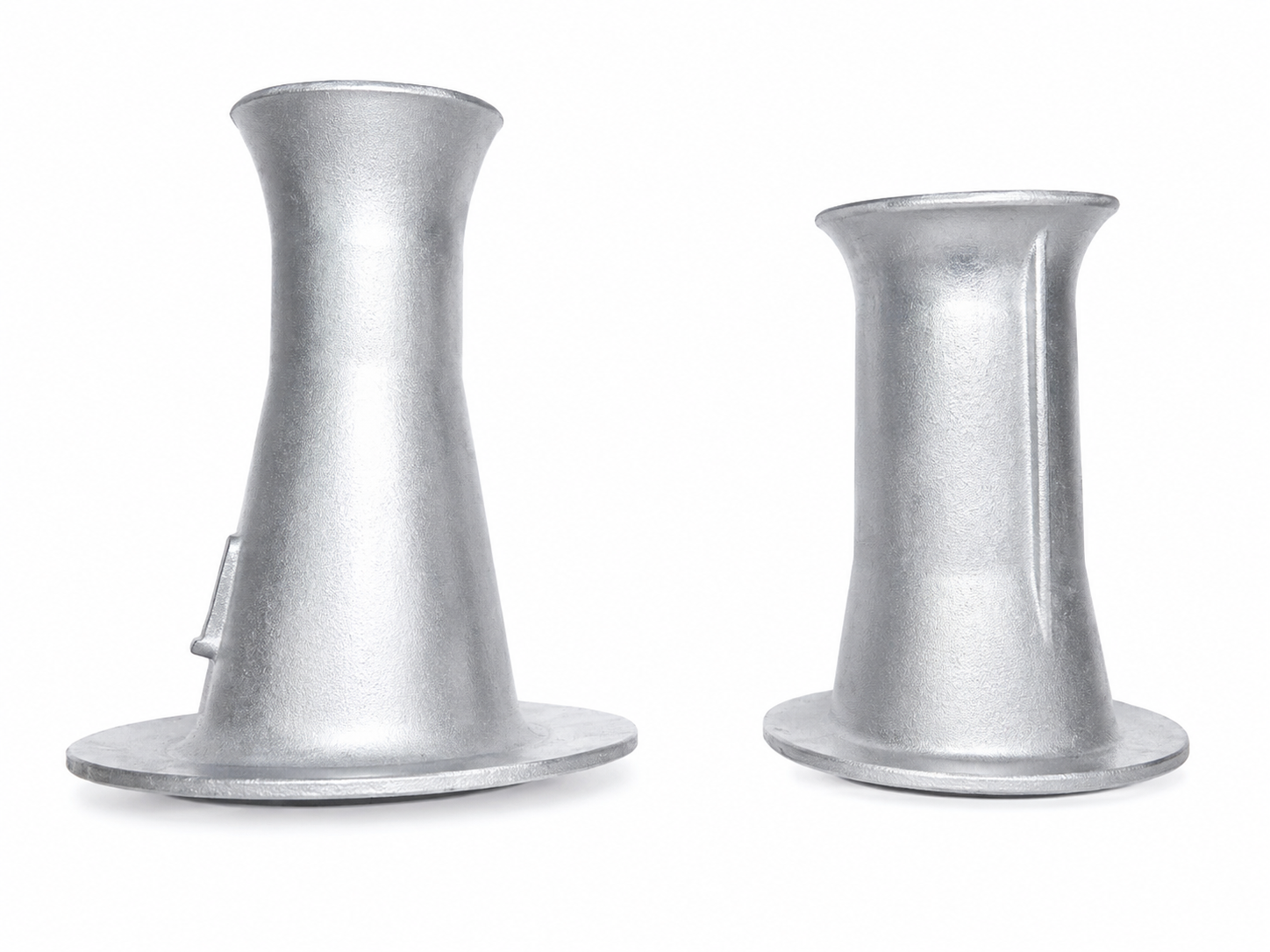 | Aluminium Gravity Die Castings Aluminium Gravity Die Castings in LM6 Material View product → |
Frequently asked questions
What does “venture casting” mean in aluminium manufacturing?
“Venture casting” is not a generally recognised aluminium-casting process designation. Ask the supplier whether they mean gravity die casting, sand casting, investment casting, or another defined process.
How does aluminium gravity die casting produce an industrial part?
The foundry pours molten aluminium into a reusable metal die under gravity. After solidification, workers remove the casting, trim gates and risers, inspect it, and machine specified surfaces or holes.
How does gravity die casting compare with sand, pressure die and investment casting?
Gravity die casting offers reusable tooling, better surface finish and repeatability than sand casting, but lower production speed than pressure die casting. Investment casting suits intricate smaller parts, while gravity die casting suits many robust industrial components.
When is gravity die casting the right choice for industrial equipment?
Choose it for medium production volumes, aluminium parts that need repeatable dimensions and sound walls, and designs too large or too demanding for economical pressure die casting.
What should you specify about LM6, machining and casting quality?
State the exact alloy, drawing revision, dimensional tolerances, machining datums, surface requirements, heat-treatment condition if applicable, inspection plan, and acceptable limits for porosity, cracks, inclusions and other defects.