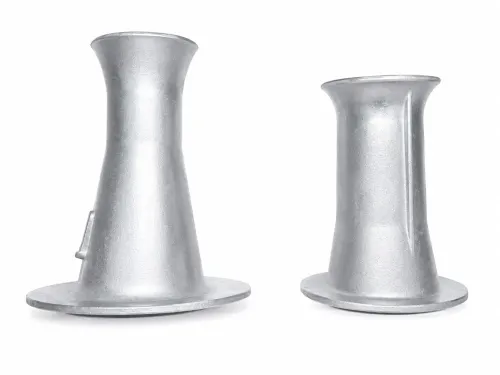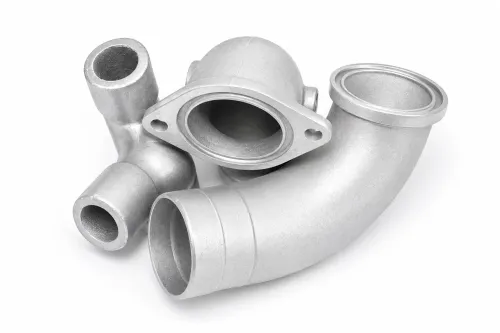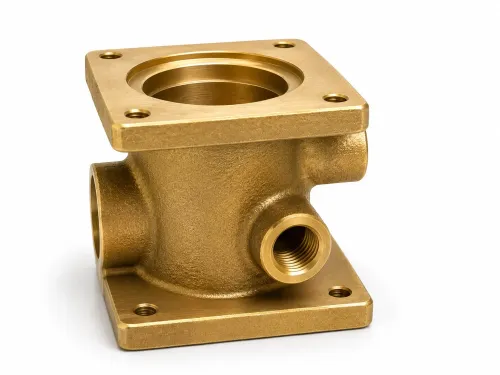

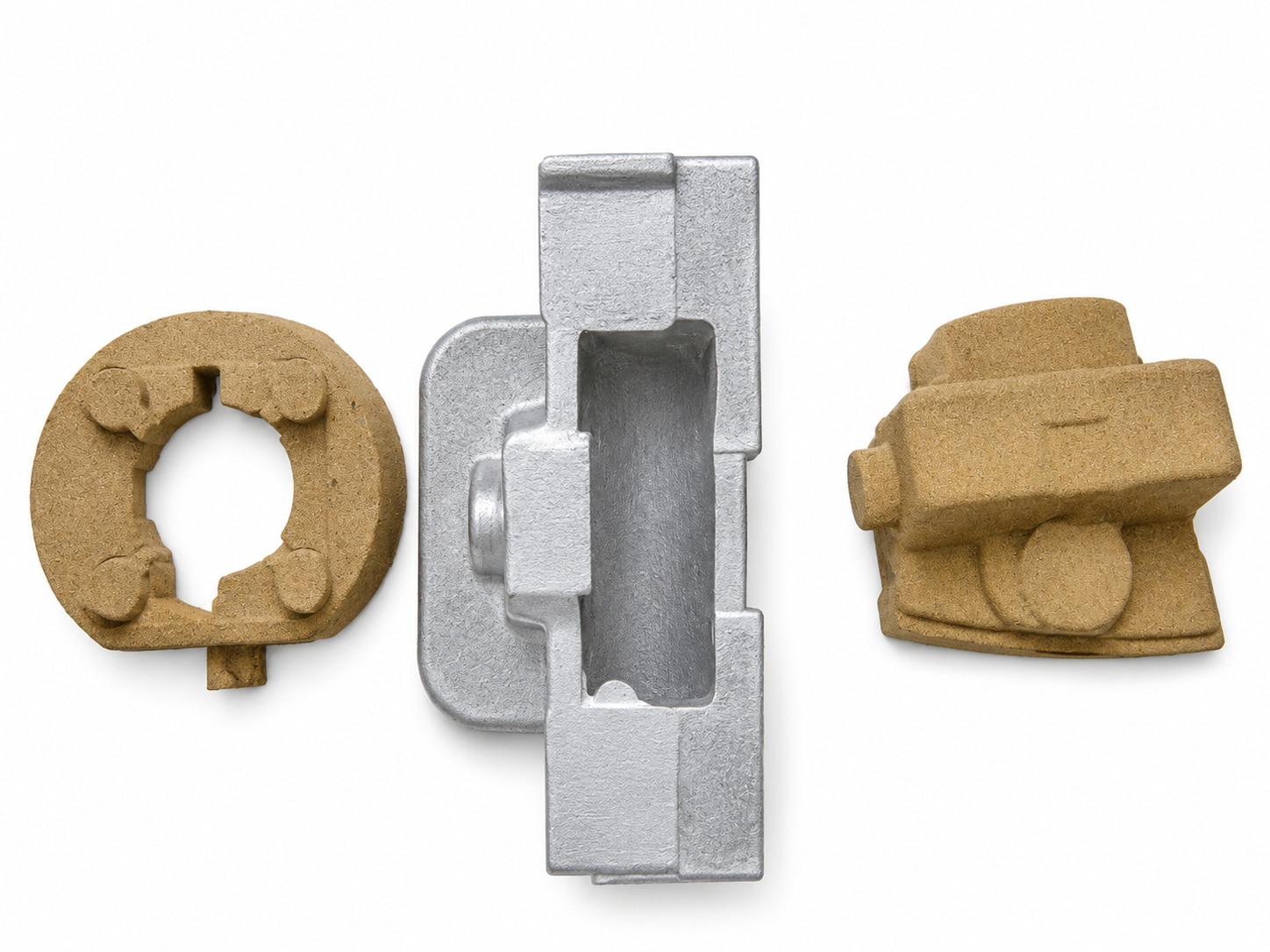
A shell core casting is an aluminium or other metal casting shaped around a hardened sand core that creates an internal cavity, passage or bore. You will learn how the shell mold differs from its core, which electrical components suit the process, how to specify and inspect them, and when another manufacturing method is the better choice.
Key takeaways
- Use shell cores for hollow passages, enclosed cavities and complex internal geometry.
- Specify alloy, wall thickness, machining datums and electrical-service conditions in the RFQ.
- Request dimensional reports, material certificates, pressure tests and casting defect records.
- Compare suppliers on core accuracy, repeatability, inspection capability and machining control.
What a Shell Core Casting Actually Contains
The external shell mold defines the component’s outside shape; one or more internal shell cores occupy the spaces that molten metal must not fill. During pouring, metal surrounds the cores to form hollow sections, cable passages, bores, undercuts and enclosed cavities. Shakeout breaks away the cured sand core, leaving the required internal geometry.
Shell core castings describes a manufacturing process, not an alloy category. Your purchase specification must name both, such as an aluminium-silicon alloy made by shell-core gravity casting. Aluminium shell core castings suit terminal housings, switchgear bodies, motor and generator end covers, transformer accessories, junction-box bodies, cable-entry components and other non-current-carrying structural parts.
For shell core castings for electrical equipment in Mumbai, compare the construction method with the required cavity:
| Option | Construction | Typical use |
|---|---|---|
| Shell core casting | External shell mold plus removable internal sand core | Housings with passages, bores or enclosed voids |
| Green-sand casting | Moist sand mold and ordinary sand cores | Simpler shapes and lower tooling commitment |
| Metal die casting | Reusable metal mold, with limited core flexibility | Repeat production of simpler, high-volume shapes |
Contacts, busbars and conductor parts are different products. Specify copper, brass or another approved conductive material for them; do not assume an enclosure alloy meets conductor requirements. Aluminium is electrically conductive, so an aluminium casting does not automatically provide insulation. Use insulating bushings, coatings or separate insulating materials wherever the design requires electrical isolation.
When Shell Cores Beat Other Casting and Machining Methods
An aluminium shell core casting earns its extra process cost when internal passages, hollow sections or undercuts need a cleaner, more repeatable cavity than an ordinary green-sand core can provide. The resin-coated shell produces a rigid, accurate core, but heated patterns, core boxes, resin, curing and tooling changes add cost and preparation time.
| Option | Main advantage | Best fit |
|---|---|---|
| Aluminium green-sand casting | Lowest tooling burden; permeable sand handles broad shapes | Lower-volume parts with simple internal geometry and more finish variation |
| Gravity die or permanent-mold casting | Repeatable surfaces and dimensions with reusable metal tooling | Simpler shapes, adequate draft and steady repeat production |
| Pressure die casting | Fast cycles and thin walls | Very high-volume parts with tight cycle economics |
| Investment casting | Extremely intricate small forms | Small sections and complex geometry where other molds cannot reproduce detail |
| Machining from solid | No casting pattern or core | One-off parts, prototypes and frequently changing designs |
| Aluminium shell core casting | Accurate hollow cavities and undercuts with manageable casting size | Repeat housings, bores, cable passages and enclosed sections |
Compare annual volume, casting envelope, draft, minimum wall thickness, machining allowance, permeability and porosity risk before choosing. Also check surface finish, dimensional accuracy, tooling cost, section complexity and post-machining effort.
Shell cores become less attractive when internal geometry is simple or designs change frequently. Investment in core tooling needs repeat volume to pay back. Machining or additive tooling can win for a changing prototype, while a metal die wins once production is stable.
For shell core castings in Mumbai, protect resin-coated cores from humid storage and handling damage; aluminium shell core castings still require controlled venting and melt cleanliness.
How to Design the Casting for Electrical Service
1. Set electrical and mechanical boundaries before choosing the process. An aluminium body is conductive, not an insulator: define insulating bushings, coatings, separate insulating materials, creepage and clearance distances, grounding or bonding, gasket lands, and the required ingress-protection test.
A sound casting can still fail an IP test when porosity or flange flatness ruins the seal.
2. Design the cavity for reliable moulding. Place core prints on stable, accessible faces and support long cores where they cannot sag or shift; keep the parting line away from gasket faces and electrical interfaces. Maintain near-uniform wall thickness, use generous fillets and radii, add draft, and avoid isolated heavy bosses that create shrinkage.
Provide tool access for bosses, threaded holes, cable-entry bores, datum faces and inspection.
3. Mark features that need CNC finishing and establish datums from the casting’s mounting scheme. Machine bearing seats, gasket faces, mounting pads, threads, cable-entry bores and electrical interfaces rather than trusting core dimensions alone. Leave machining allowance on these surfaces. Cosmetic exterior areas can remain as-cast when appearance and fit permit.
4. Specify the exact alloy designation and temper, never merely “aluminium.” Silicon-rich aluminium-silicon alloys offer fluidity and castability; heat-treatable alloys can provide greater strength but require controlled heat treatment and distortion checks. Balance corrosion resistance, thermal conductivity, machinability, strength and leak-tightness, and do not assume casting conductivity matches copper or wrought aluminium conductors.
These rules define practical aluminium shell core castings and shell core castings for electrical equipment in Mumbai.
How Shell Core Castings Are Made and Checked
A shell core casting moves through a controlled sequence, not a single moulding operation. For shell core castings in Mumbai, record the alloy, pattern revision, core-box revision and process route before production starts.
1. Prepare the heated pattern and core boxes. A changed core box or pattern alters tooling ownership, approval work and lead time; control revisions with dated drawings, revision numbers and written approval.
2. Heat resin-coated sand against the pattern until the resin cures into a rigid shell. Cure the core in its box, protect it from moisture, and verify vents, core prints and dimensions.
3. Assemble the shell halves, place the cured core, close the mould and confirm core location. Pour cleaned, degassed aluminium with controlled filtration and low turbulence.
4. Shake out the sand after solidification, then remove gates and risers, fettle flash, apply the specified heat treatment and CNC-machine functional bores, datums, gasket faces, holes and threads.
5. Inspect a sample internally and externally. Look for blocked passages or core shift, parting-line flash, mould mismatch, gas pinholes or blows, shrinkage cavities, sand inclusions, incomplete filling, distortion and mislocated walls. Resin-gas escape, poor venting, hydrogen, folded oxide films, turbulence, inadequate feeding and moisture exposure leave different evidence.
6. Require visual and dimensional inspection, wall-thickness checks, surface-finish readings, alloy certificates, first-article approval, machining inspection and melt-or-batch traceability through shipment. Use radiography or another agreed NDT method when internal soundness matters.
7. Leak- or pressure-test sealed housings and state pressure, duration and allowable leakage; “porosity-free” is not an acceptance level. Use ISO 8062-3 for casting tolerances and machining allowances, while separately tolerancing functional holes, threads, seals and electrical interfaces. Inspect passages and section locations, not merely a smooth exterior.
How Mumbai Buyers Should Compare Suppliers and Write the RFQ
Compare suppliers against a controlled RFQ, not the phrase “precision casting.” Your specification for shell core castings for electrical equipment in Mumbai must define the part, process, acceptance limits and delivery conditions.
- Supply a 3D model and current 2D drawing.
- State alloy designation, temper, annual quantity, prototype quantity and part mass.
- Show core geometry, minimum wall thickness, critical tolerances, machining datums and machining allowances.
- Specify surface finish, heat treatment, leak-test pressure, IP requirement and electrical application.
- Define repair-welding rules, NDT extent, inspection plan, packaging and delivery location.
- Ask who owns and maintains the pattern and core boxes, and how revisions are approved.
Ask whether the foundry has suitable core-making and curing equipment, CNC capacity for critical faces and holes, dimensional inspection, and NDT facilities. For shell core castings in Mumbai, verify covered storage for resin-coated sand, cores and machined aluminium against coastal moisture, dust and contamination; inspect how fragile cored castings are separated and restrained during transport.
SPM Castings lists shell core castings under aluminium gravity die castings, so treat that classification as a starting point and verify your exact scope.
| Evidence | What to request | What it proves |
|---|---|---|
| Sample quality | Dimensional and cavity reports | Internal geometry is controlled |
| Traceability | Melt, batch and heat-treatment records | Material history is recoverable |
| Approval | First-article record and agreed defect limits | Acceptance is measurable |
Reject vague “porosity-free” claims. Confirm sealing-face inspection, leak results and radiography where specified. Choose another process when tooling cost, core complexity or porosity risk outweighs the cavity benefit.
Related product
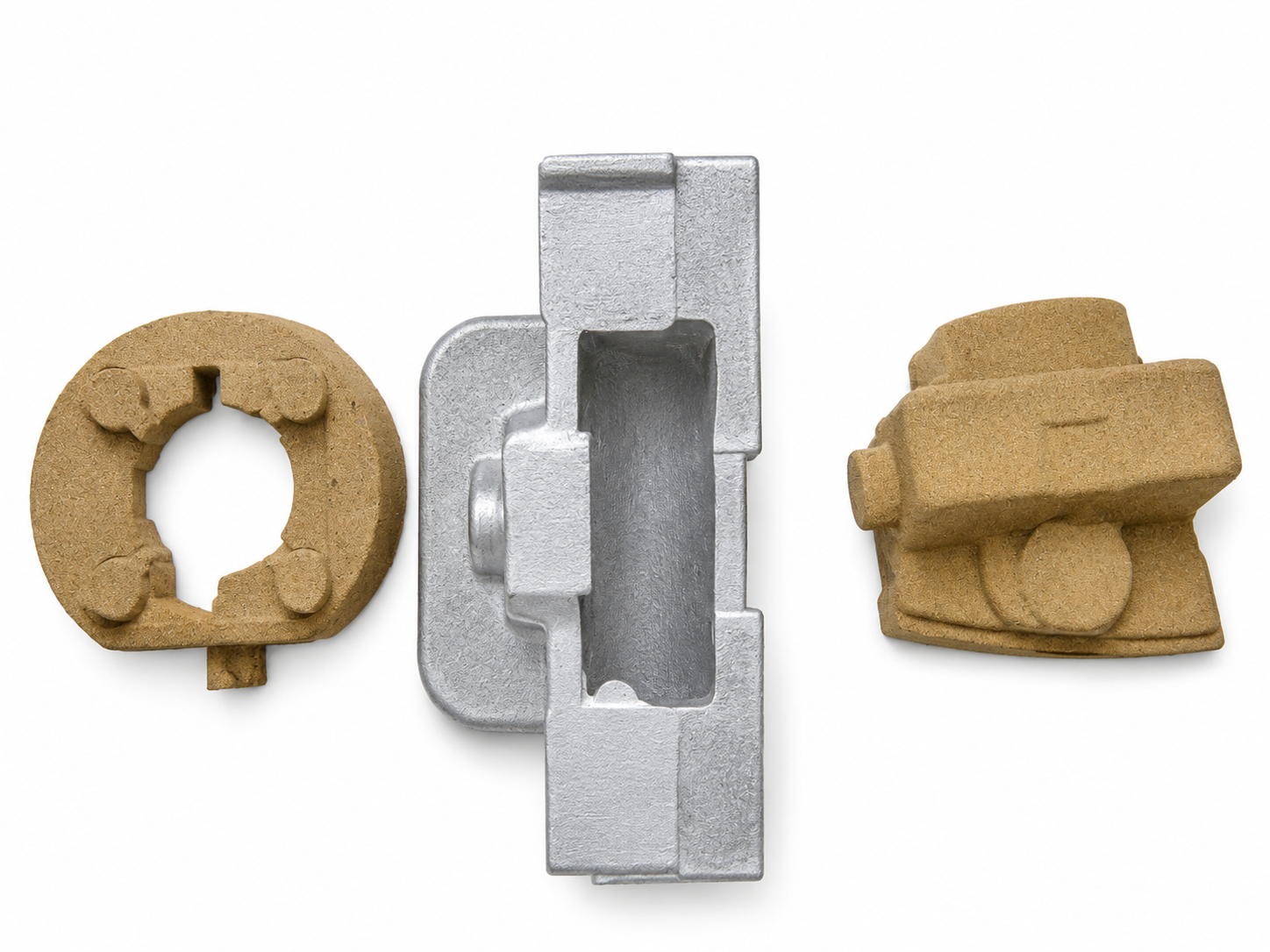 | Aluminium Gravity Die Castings Shell core casting (or shell molding) is a metal casting process that uses a resin-coated sand mixture to create thin, hardened half-molds and cores. View product → |
Frequently asked questions
What does a shell core casting contain?
It contains an external sand mold plus cured sand cores that create hollow sections, bores, cable passages, undercuts and enclosed cavities.
When should you choose shell core casting over machining?
Choose it when internal cavities or passages would require extensive material removal, multiple setups or difficult tool access.
How should you design a shell core casting for electrical service?
Define the alloy, insulation or conductivity needs, wall thickness, clearances, drainage, machining datums and operating environment before tooling.
What should a Mumbai casting RFQ include?
Include the drawing revision, alloy, annual and batch quantities, tolerances, surface finish, core features, machining requirements, inspection plan and delivery terms.