
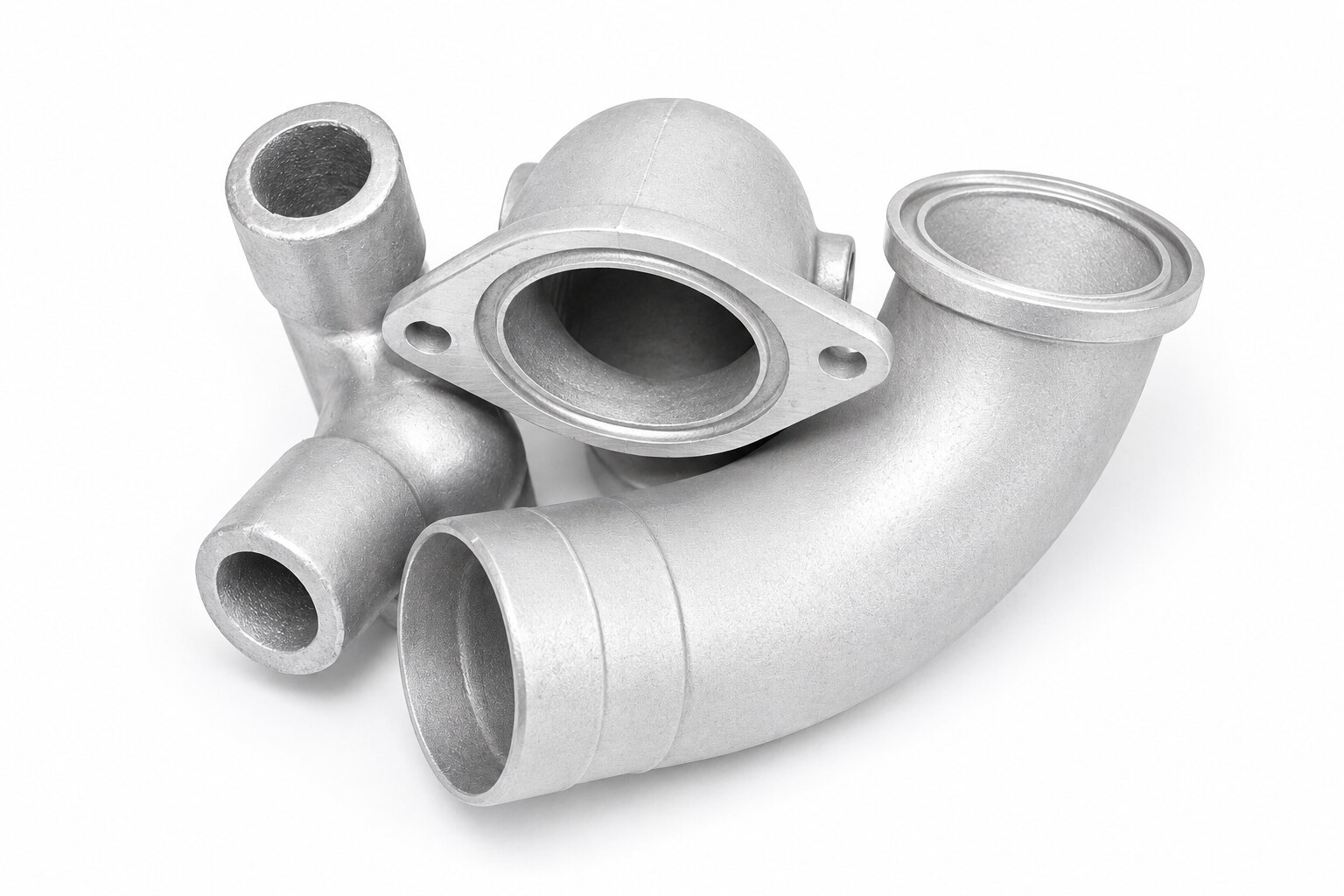
The right component depends on more than the word “pipe”: you must match its geometry, casting process, alloy, pressure duty and inspection plan to the equipment. By the end, you will have a practical checklist for deciding between a cast pipe, tube, housing and alternative manufacturing route, then preparing a quotation specification that suppliers can evaluate accurately.
Key takeaways
- Use casting for pipes with flanges, bosses, branches or irregular passages.
- Choose extrusion or tube when the bore and wall stay constant.
- Specify alloy, pressure, temperature, tolerances and test requirements before pricing.
- Ask suppliers for process limits, machining allowances and inspection details.
Start by Defining the Component and Manufacturing Route
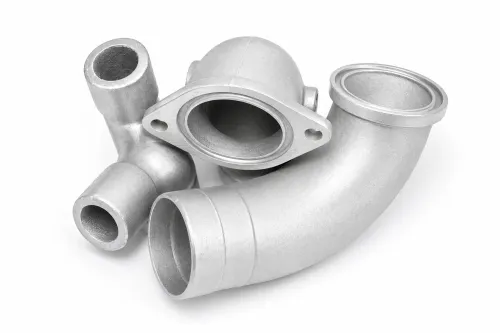
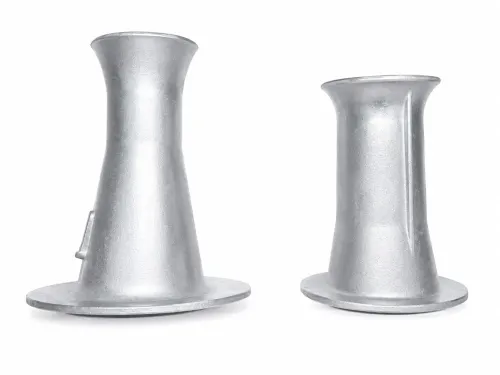
First decide whether you need a cast aluminium pipe, cast tube, pipe body or pipe-shaped housing. Casting suits a component with integrated flanges, bosses, mounting pads, branch connections or irregular internal passages. A straight tube with a constant bore and wall is easier to source as an extrusion, seamless tube or welded tube, then machine.
Choose a forged or machined-from-solid part when the duty requires dense material, high local strength, or a small quantity without casting tooling. Use this checklist before requesting prices:
- Confirm bore diameter, outside diameter, wall-thickness limits and overall length.
- Locate branches, flanges, bosses, ports, mounting pads and bolt holes from stable datums.
- Show intersecting cores, internal passages and blind cavities on a sectioned drawing or 3D model.
| Process | Main advantage | Best fit and limitation |
|---|---|---|
| Sand casting | Low tooling cost and high shape freedom | Large, complex, low-to-medium-volume parts; rougher finish and less repeatability |
| Aluminium gravity die castings | Better repeatability, surface finish and surface structure | Repeated production; permanent mould investment makes one-off parts unattractive |
| Pressure die casting | Efficient thin walls and high production rates | High-volume parts; less suitable for large sections, low volumes or some pressure boundaries |
Do not assume casting removes porosity risk. Thick bosses and abrupt wall changes can shrink during solidification, so use gradual transitions and generous radii. Use the search phrase which aluminium pipe casting for fits your equipment requirements to check the process before comparing suppliers.
Lock the Geometry Before You Ask for a Casting Price
A casting price is meaningless until the finished geometry is fixed. State the finished bore diameter, outside diameter, allowable wall-thickness limits and overall length, then locate each feature from stable datums.
| Feature | Specify | Verification point |
|---|---|---|
| Branch, flange and boss | Centre, angle, height and envelope | Sectioned drawing or 3D model |
| Port and mounting pad | Diameter, face position, orientation and flatness | Datum-based coordinates |
| Bolt hole | Quantity, pitch circle, diameter, depth and thread | Hole table tied to datums |
| Internal geometry | Passages, intersecting cores, drain paths and blind cavities | Section views showing core intersections |
Mark every face, bore, gasket land, bearing seat and O-ring groove that requires CNC machining. Do not leave a sealing surface entirely as-cast; draft, parting-line mismatch and local defects can cause leakage or misalignment.
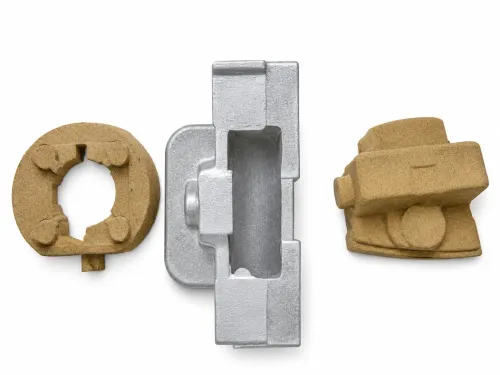
Ask the foundry to review minimum wall capability, core support, core prints and draft on internal and external surfaces. Specify generous radii at branch junctions and gradual transitions between thin and heavy sections. Isolated heavy pads and abrupt wall increases become hot spots that shrink during solidification.
Agree machining stock by surface, not through a universal percentage. Set it against the datum strategy, casting size, distortion risk and final tolerance, with the foundry and CNC supplier approving the as-cast condition before tooling release. A balanced wall design is safer than simply adding thickness: extra metal can increase shrinkage without adding useful strength.
Match the Alloy and Pressure Specification to Actual Service
A pipe casting survives service only when its alloy, temper and pressure boundary match the actual fluid, pressure and temperature duty. Record the fluid or gas composition, working pressure, pressure spikes, vacuum exposure, operating-temperature range, thermal cycling, vibration, fatigue duty and external corrosion environment.
- Specify the alloy by castability, tensile strength, yield strength, elongation, corrosion resistance, weldability and pressure tightness; then name the temper. A356-T6 is not equivalent to as-cast A356.
- Treat copper-bearing alloys cautiously: they can improve strength or machinability but may resist corrosion less effectively than silicon-rich or corrosion-focused choices.
- Isolate aluminium from wet steel, brass or copper joints with suitable sleeves, coatings or gaskets when galvanic corrosion is possible.
- Distinguish a structural pipe body from a pressure-containing boundary. For the latter, state the test medium, test pressure, hold time, test temperature and allowable leakage in the purchase specification.
- Ask whether impregnation is permitted after a failed leak test and whether that repair is acceptable for your equipment.
A356-T6 tensile results alone do not prove pressure tightness. Gas porosity, shrinkage porosity and oxide films can still form leak paths, particularly after heat treatment exposes defects or causes distortion. For aluminium castings used as pressure boundaries, require a separate leak test and acceptance limit; do not substitute coupon strength for boundary verification.
Understand What Gravity Die Casting Controls—and What It Cannot Remove
Gravity die casting improves finish and dimensional repeatability, but it cannot guarantee a pore-free pressure boundary. The reusable metal mould receives molten aluminium under gravity; cores create bores and passages, vents release air, and feeders supply metal as the casting contracts.
Design the parting line, draft angles and core prints into the drawing, or the mould and core cannot produce the intended geometry.
| Route | Main advantage | Main limitation |
|---|---|---|
| Gravity die casting | Better finish, repeatability and surface structure than sand casting | Permanent tooling costs more and internal porosity remains possible |
| Sand casting | Lower tooling barrier and greater freedom for large or complex aluminium castings | Rougher finish, wider variation and more finishing work |
| Pressure die casting | Efficient for high-volume, thin-walled parts | Less suitable for large sections, low volumes and some pressure boundaries |
Shrinkage concentrates near thick bosses, flange junctions, abrupt wall changes and isolated hot spots. Generous fillets, balanced walls and directional feeding work better than simply adding thickness. Poor melt handling or turbulent filling can trap inclusions and oxide films.
- For pressure or safety-critical zones, specify visual and dimensional checks, radiography or another volumetric method, inspected areas, sensitivity and acceptance limits. “100% tested” means little without those details, plus the test pressure and pass/fail criterion.
- After T6 treatment, recheck critical bores and sealing faces. Strength can improve, but quenching can distort dimensions or expose leak paths.
- Compare permanent-tool preparation and cost with sand casting’s flexibility before choosing aluminium gravity die castings.
Turn the Decision into a Supplier-Ready Purchase Specification
A supplier-ready specification turns a promising quote into a controlled comparison. Put the service duty, alloy and temper, casting process, dimensions and acceptance evidence on the drawing or purchase order before tooling begins.
1. Define the part: state the finished and as-cast bore, outside diameter, length, wall-thickness limits, branch and flange geometry, datums, machining stock and surface finish. Identify every sealing face, port, mounting hole and internal passage.
2. Name the process standard: use ASTM B26/B26M for aluminium-alloy sand castings, ASTM B108/B108M for permanent-mould castings, or ASTM B85/B85M for die castings. Do not accept “aluminium casting” as a substitute.
3. Set performance controls: specify test medium, pressure, hold time, temperature, allowable leakage, inspected zones and radiography requirements. State whether repair welding or impregnation is prohibited or permitted, and define the approval needed after any repair.
4. Demand evidence: ask for core-making, mould, heat-treatment, CNC, leak-testing and inspection capabilities. Require heat-treatment records, batch traceability, alloy chemistry, tensile properties, dimensional reports, radiography where required and pressure-test results.
For pipe casting in Mumbai or elsewhere, location and catalogue labels prove nothing. Compare the proposed route against the equipment duty. When evaluating SPM Castings, confirm the proposed gravity-die route, machining datums, pressure-test method and traceability.
This checklist prevents a low quote or attractive finish from hiding porosity, an unspecified temper, inadequate walls or the wrong process for your volume.
Related product
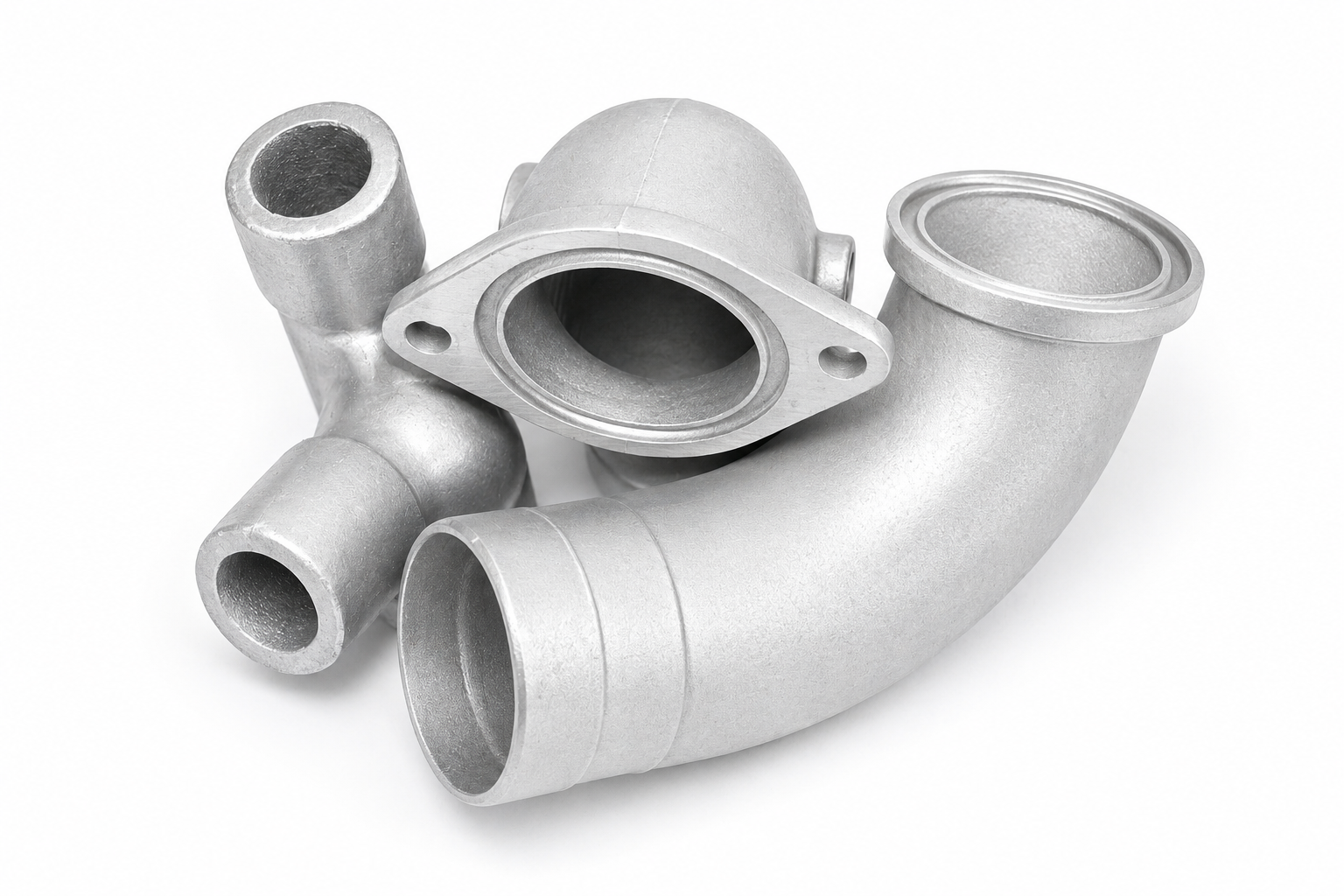 | Aluminium Gravity Die Castings Pipe Pipe |
Frequently asked questions
When is an aluminium pipe casting better than an extrusion or tube?
Choose a casting when the component includes integrated flanges, bosses, mounting pads, branch connections or irregular internal passages. Use an extrusion, seamless tube or welded tube for a straight component with a constant bore and wall.
What should you define before requesting an aluminium pipe casting price?
Provide the complete geometry, bore and wall dimensions, flange and boss locations, machining surfaces, tolerances, pressure requirements, service temperature, alloy preference, quantity and inspection requirements.
How should you match an aluminium casting alloy to equipment service?
Match the alloy to the operating pressure, temperature, corrosion exposure, strength, machinability and leak-tightness required in service. Do not select an alloy from strength alone.
What can gravity die casting control in an aluminium pipe component?
Gravity die casting can produce repeatable external geometry and integrated features with a reusable metal mould. It does not eliminate shrinkage, porosity, draft, parting lines, machining allowances or the need for pressure and dimensional inspection.