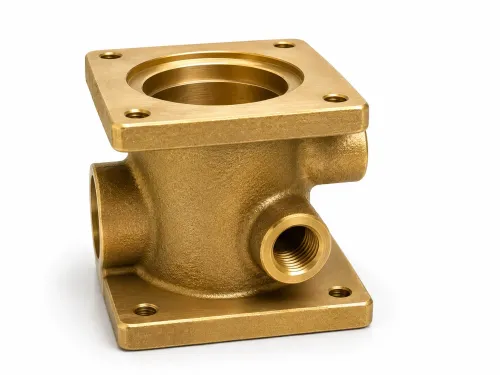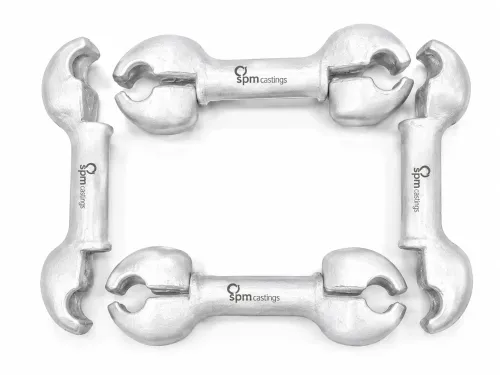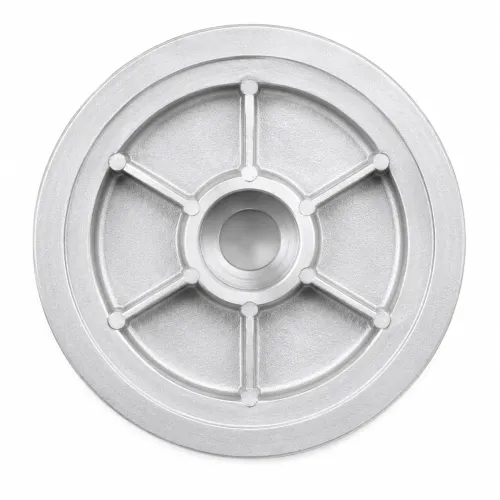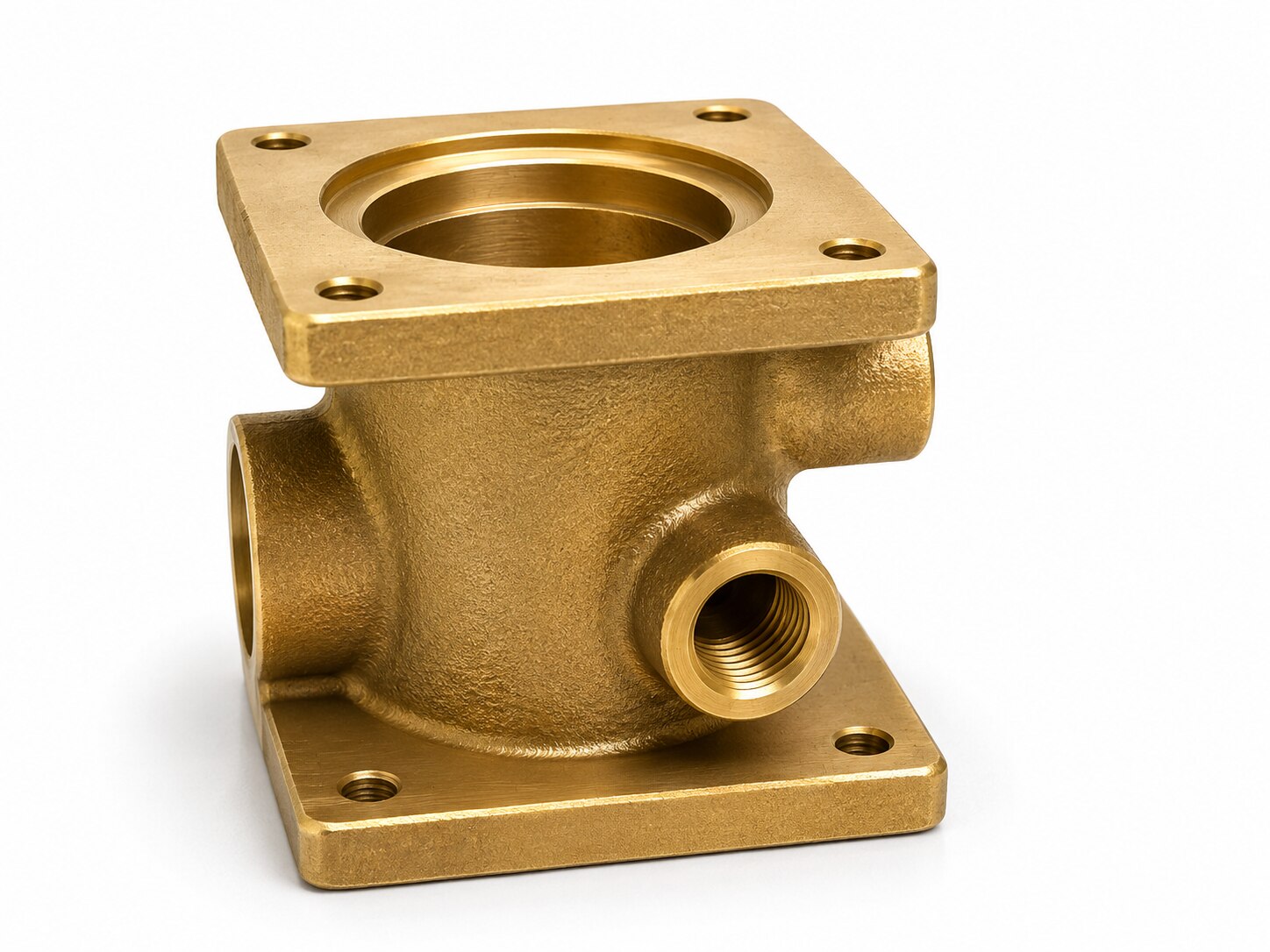
Choosing a supplier for valve brass GDC or Venturi castings requires more than confirming that a foundry is nearby. You need to match the alloy, casting route, internal geometry, pressure-test method, inspection evidence and machining plan to the component’s actual duty.
Key takeaways
- Request the brass grade, pressure duty, and applicable test requirements in writing.
- Inspect Venturi throats, cores, and passages for flash, blockage, and shrinkage.
- Choose GDC when repeatability and finish outweigh simple tooling requirements.
- Approve samples, inspection records, and traceability before serial production.
What gravity die casting changes in a valve component
GDC means gravity die casting: molten brass enters a reusable metal die under gravity, without externally applied pressure. The die gives better repeatability and surface finish than sand casting, but rapid chilling can still cause misruns, cold shuts or internal shrinkage if filling, venting and feeding are poorly balanced.
Design a valve component around the casting process:
1. Put the parting line where mould mismatch will not cross a valve seat, sealing face or critical bore. Add draft to every surface pulled from the die; avoid deep pockets that trap the pattern or need complicated cores.
2. Use sand or metal cores for passages the die cannot form. Provide core prints with enough support, because a shifted core changes wall thickness, flow area and the position of the Venturi throat.
3. Mark machining datums on stable, cast features and specify the minimum machining allowance on faces, bores, threads and seats. Do not locate CNC operations from an unmachined surface: draft and die mismatch can move a flange, seat or bore out of position.
4. Show thick junctions, bosses and closed ends on the casting drawing. Ask the foundry to feed these hot spots and vent trapped air; an attractive exterior does not prove pressure integrity.
For valve brass GDC castings, identify the alloy by a recognised designation and define the pressure-test requirement separately. “Brass” is not a sufficient material specification for a pressure-containing valve.
How to specify the brass grade and pressure duty
Put a recognized alloy designation on the purchase order, not simply “brass.” State the applicable standard, chemical limits and customer-approved equivalent; examples include EN 1982 CC754S or CC755S, CuZn39Pb3/CW614N, C36000, and dezincification-resistant CuZn36Pb2As/CW602N. These choices are not interchangeable for corrosion, potable water, pressure duty or machining.
Specify the valve component as a controlled casting, not a generic shape:
- Identify the body, bonnet, plug, gland, seat carrier or other part number, with the casting and finished-machining drawings.
- Mark pressure boundaries, wall-thickness minimums, parting line, cores, draft, machining allowances, threads, sealing faces and ports.
- State the service medium, operating temperature, design pressure, pressure class and any corrosion or lead-content restriction.
- Require melt or heat identification, chemical analysis, mechanical-property evidence where applicable, and lot traceability.
For valve brass GDC in Pune, request the same documents from any valve brass castings supplier, including where machining and pressure testing occur.
| Alloy family | Strength of specification | Main decision |
|---|---|---|
| Leaded free-machining brass | Easy machining; lead content documented | Use only where the medium and regulations permit it |
| DZR brass | Resistance to dezincification | Select for water service when the approved standard requires DZR performance |
| Customer-specific casting alloy | Exact chemistry and properties defined | Use when drawings, approvals or pressure codes name a particular grade |
Write the pressure test separately from dimensional acceptance: specify hydrostatic or pneumatic method, test pressure, medium, duration and allowable leakage. A visually sound casting can still leak through interconnected shrinkage or gas porosity.
What a Venturi casting must get right inside the passage
The throat diameter, inlet and outlet diameters, and the shape of the converging and diverging sections decide whether a Venturi passage delivers predictable flow. A small throat error changes pressure loss and flow coefficient; an offset throat creates asymmetric velocity and unstable readings.
Specify the functional passage, not just the outside profile. Control these features:
- Throat diameter, inlet-to-throat and throat-to-outlet concentricity, and the transition angles.
- A step-free bore with controlled roughness; core flash, parting lines and machining marks can create turbulence.
- Core location, support, venting and shrinkage allowance. Record the core design and inspect for shift at the inlet, throat and outlet.
- The forming method: permanent, sand, soluble or ceramic core, followed by machining where the pressure-tap or throat geometry requires tighter control.
| Risk | Control | What to verify |
|---|---|---|
| Core shift or joint flash | Core prints, locating features and controlled clamping | Sectioned first-off casting and internal bore inspection |
| Internal porosity | Sound melt practice and radiography or CT for critical parts | Pressure test after final CNC machining |
| Measuring-duty error | Machine the throat and pressure-tap geometry | Dimensional report against the drawing and ISO 5167 geometry where claimed |
For venturi castings in pune, ask where casting, machining and testing occur, then require one lot number to follow the part through every operation. Do not call a rough as-cast body an ISO 5167-compliant measuring Venturi without the specified geometry and verification.
When GDC is better than another manufacturing route
Choose gravity die casting when the valve body needs repeatable geometry, internal cores and a moderate production volume, but does not justify pressure-die tooling or extensive bar-stock removal. Brass GDC castings use a reusable metal die filled by gravity, giving a cleaner, more consistent surface than sand while retaining useful shape freedom.
| Route | Main advantage | Cost or design penalty | Best fit |
|---|---|---|---|
| Gravity die casting | Repeatable dimensions, good surface finish and cored passages | Requires die tooling, draft, parting-line planning and reliable feeding | Medium-volume valve bodies, covers and Venturi shapes |
| Sand casting | Low tooling cost and large, complex forms | Rougher surface, wider variation and more finishing; cores need close control | Large parts, prototypes and low quantities |
| Pressure die casting | Fast cycles and thin, highly repeatable walls | Expensive tooling; trapped gas and porosity can threaten pressure integrity | High-volume thin-wall parts after process validation |
| Forging | Dense metal and strong directional properties | Limited hollow geometry; subsequent drilling and machining add operations | Compact pressure parts needing high mechanical strength |
| Machining from bar | Excellent dimensional control and no casting porosity | High material waste, long cycle time and poor economics for large bodies | Small batches, simple shapes or tight-tolerance inserts |
Compare the complete route, not only the piece price. Include die cost, batch size, core and machining operations, scrap risk, inspection time and lead time. Choose GDC over sand when repeatability matters; choose it over machining when the body is bulky or internally shaped.
Specify the alloy by standard and pressure-test the finished component rather than assuming a smoother surface proves soundness.
How to qualify a supplier near Pune and accept the castings
Approve the supplier on documented process control, not on delivery distance. For valve brass GDC and Venturi castings in Pune, identify where casting, CNC machining, heat treatment, plating and pressure testing occur; record each subcontractor, inspection responsibility and lot-traceability handoff in the quotation or quality plan.
1. Request the alloy designation and limits, not “brass.” Check whether the specification names CuZn39Pb3/CW614N, C36000, CuZn36Pb2As/CW602N, EN 1982 CC754S, CC755S or a customer-approved equivalent. These grades are not interchangeable for pressure, corrosion, potable water or machining service.
2. Require the casting and machining drawings, mould and core route, tooling ownership, minimum machining allowance, process-control plan, calibration records and material certificate. The certificate must identify the heat or melt; a certificate of conformity without that link is weak evidence.
3. Confirm datums on the machining drawing. Do not accept an unmachined casting surface as the datum for a valve seat, bore, flange face or Venturi throat unless the drawing controls mismatch and draft.
4. Inspect the first-off samples for parting-line shift, cracks, core movement, flash, surface-connected porosity and incomplete filling. Measure wall thickness, bores, flange faces, seat locations and Venturi throat dimensions against the drawing.
5. Require the stated hydrostatic or pneumatic test method, pressure, duration, medium and leakage limit. Dimensional approval does not prove pressure tightness; interconnected shrinkage or gas porosity can leak after a casting passes visual inspection.
When comparing SPM Castings with another Pune-area supplier, give both the same drawings, test specification and traceability requirements before comparing price or lead time.
Related product
 | Brass Gravity Die Castings A brass valve is a mechanical device used to control, regulate, or direct the flow of liquids and gases within a piping system. View product → |
Frequently asked questions
What does gravity die casting change in a brass valve component?
Gravity die casting uses a reusable metal die and gravity-fed molten brass. Compared with sand casting, it can improve repeatability and surface finish, but poor filling, venting, or feeding can create misruns, cold shuts, and internal shrinkage.
How should you specify a brass valve casting for pressure duty?
State the brass grade, pressure rating, service medium, temperature range, dimensional requirements, machining allowances, leak-test method, and acceptance criteria before requesting quotations.
What must a Venturi casting get right inside the passage?
The casting must preserve the inlet, throat, and outlet geometry without flash, core shift, blockage, rough projections, or shrinkage that changes the passage area and affects flow performance.
How do you qualify a brass GDC supplier near Pune?
Review representative samples, die and core capability, brass grade controls, inspection reports, pressure or leak-test records, traceability, machining capacity, and the supplier's process for correcting casting defects.