
An aluminium U clamp can fail because its throat is too tight, its bolt holes are misplaced, its alloy is unsuitable, or its contact with another metal creates corrosion. Before requesting a quotation, define the mating-part dimensions, load path, material condition, casting requirements, electrical controls and inspection evidence you need.
Key takeaways
- Confirm the clamp shape, mating part and working dimensions before requesting prices.
- Choose the alloy and fastener layout from the clamp’s load and service conditions.
- Specify casting, machining, inspection and surface-finish requirements in writing.
- Compare quotations by process, quality checks and delivery risk—not price alone.
Define the Clamp Shape, Mating Part and Working Dimensions
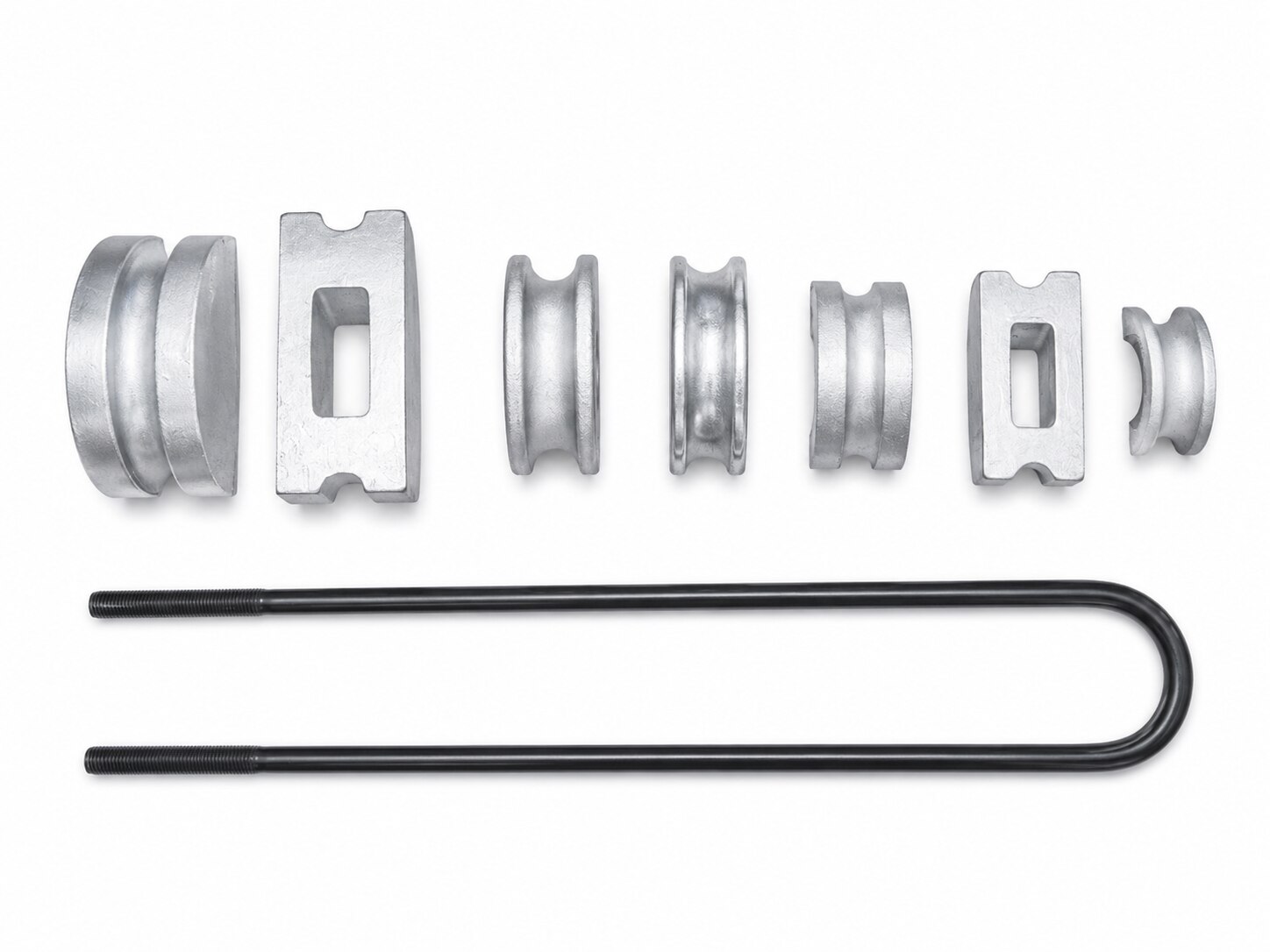
A price is meaningless until the supplier knows the clamp’s actual shape, mating part and working envelope. Decide whether you need a true U-shaped saddle, a threaded U-bolt, or a two-piece clamp with a separate saddle plate and nuts.
The phrase aluminium u clamp for details before ordering in kolhapur should lead to a dimensioned drawing, not a catalogue size.
- Measure the mating part’s actual outside dimensions, not its nominal size. Record pipe or tube outside diameter, cable-bundle diameter, beam or rail width, and the clearance needed for insulation, paint or movement.
- Specify inside width, inside height or leg length, rod or wall thickness, overall width, bend radius, mounting-hole diameter and usable thread length.
- Mark functional datums and identify the seating face, machined surfaces, hole centres and bolt axis. State the permitted flash, because parallel legs and a square bolt axis matter more than matching the outside width alone.
- Define the load direction and movement: static weight, vibration, impact, cable tension, pipe movement or thermal expansion. State whether the clamp holds, guides or permits sliding.
- Require the quotation to separate tooling, piece price and lead time. Ask whether pattern or die manufacture, gravity casting, heat treatment, machining, finishing, inspection and packing are in-house or subcontracted, and request approval samples with traceability.
A locally cast part can still take longer if machining or heat treatment is outsourced. Include the mating-part drawing and the maximum permissible interference in your enquiry.
Match the Alloy and Fastener Design to the Load
An aluminium clamp has enough strength only when its alloy, section, fastener and load path are checked together. Do not treat a cast U clamp as an interchangeable replacement for a forged steel U-bolt.
- A structural pipe or rod clamp needs verified tensile, shear, bearing and fatigue performance.
- A cable-support clamp needs resistance to sustained weight, vibration, cable tension and movement.
- An electrical-equipment mounting bracket needs mechanical capacity plus defined insulation, creepage, clearance or bonding controls.
Select the alloy from the service conditions, not from “aluminium casting.” Require the alloy designation, temper or heat-treatment condition, chemical-composition limits, yield or tensile requirement, hardness range and elongation where relevant. Sustained load, vibration or elevated temperature can require a heat-treatable alloy; marine or chemical exposure can instead make corrosion resistance the priority.
For u clamp for electrical equipment, state whether the part must bond, insulate or remain electrically isolated. Anodizing, paint and oxide can interrupt continuity, while contact with copper, zinc-plated steel or stainless hardware can create galvanic corrosion.
Check washer bearing stress, boss crushing, thread pull-out and leg prying at the specified preload. A larger torque does not compensate for inadequate bearing area; aluminium can embed, deform and lose preload. Specify washer diameter, torque or preload method and torque-retention testing.
If using u clamp aluminium gravity die castings, identify permanent-mould casting and, where invoked, ASTM B108/B108M, rather than leaving the process unspecified.
Set the Casting, Machining and Quality Requirements
Your drawing and purchase specification must identify the alloy, casting process, machining datum and acceptance criteria; “aluminium casting” alone is not a usable specification. For U clamp aluminium gravity die castings, state permanent-mould or gravity die casting, not pressure die casting or sand casting, and cite the applicable edition of ASTM B108/B108M if used.
Write these requirements into the order:
- Alloy designation, chemical-composition limits, temper and heat-treatment condition.
- Required draft by actual die pull direction, minimum wall section, inside-corner radii and boss geometry.
- Machined holes, threads, datums and tolerances, with inspection performed before or after machining as specified.
- Critical regions, allowable surface and internal defects, inspection method, sampling frequency and acceptance level.
- Proof-load requirement where clamp failure could injure people or damage equipment.
Ask for a tooling review before die release. Abrupt wall changes create shrinkage and hot spots; simply making the whole aluminium clamp casting thicker can add defects without improving strength.
Compare the complete route, not just the casting price: pattern or die manufacture, gravity casting, heat treatment, CNC machining, finishing, inspection and packing. Ask which steps are in-house, which are subcontracted, how batch traceability works and whether each step is included in the quoted lead time.
A Kolhapur supplier can still have the longest schedule if machining or heat treatment is outsourced. Require the material certificate, inspection report and batch number with the first approved parts.
Control Electrical Contact, Corrosion and Surface Finish
An aluminium clamp can be mechanically tight yet electrically useless, or create a galvanic failure. For a u clamp for electrical equipment, mark the drawing as bonded, insulated, or electrically isolated. If bonded, specify bare contact zones, a bonding jumper, and maximum contact resistance; anodizing, paint, and oxide do not guarantee continuity.
If isolated, state insulation resistance, creepage, clearance, and the required sleeves or washers.
Review the complete assembly, not the aluminium alone. Check each dissimilar-metal interface:
- Copper: provide a compatible finish, barrier washer, or sealant.
- Carbon steel or zinc-plated steel: prevent trapped moisture beneath the clamp.
- Stainless steel: isolate the joint where salt or condensation is present.
Add drainage paths and seal water traps. A conductive clamp that touches a wet dissimilar metal can corrode even when the aluminium alloy passes its own material specification.
Name the finish and its acceptance criteria on the order:
- Anodizing: specify type, thickness, sealed condition, and masked contact areas.
- Conversion coating: state the chemical-treatment standard and coverage requirement.
- Powder coating: define thickness, adhesion, and damage limits.
- Chemical treatment: identify the process and required electrical continuity.
Confirm that finish thickness will not close holes, reduce thread engagement, or prevent the clamp from seating. Require coating removal only where bonding or metal-to-metal contact is intentional.
Compare Quotations by Process, Inspection and Delivery Risk
Approve the supplier that makes the complete manufacturing route and inspection evidence visible, not the one with the lowest casting price. Compare pattern or die manufacture, gravity casting, heat treatment, CNC machining, finishing, inspection and packing as one schedule.
| Supplier | Process and quotation evidence | Inspection and delivery risk |
|---|---|---|
| Supplier A | Permanent-mould/gravity die casting; tooling cost, ownership, expected life, repair responsibility and piece price shown separately | In-house operations, first-article report and documented lead time |
| Supplier B | Sand or pressure die casting, or an unspecified process; low initial tooling price | Different porosity, draft and dimensional results can make the quote incomparable |
| Supplier C | Casting is subcontracted; machining and finishing listed as allowances | Outsourced die, heat treatment or machining can extend delivery without appearing in the quoted casting time |
For u clamp options in kolhapur, ask whether every operation is in-house or subcontracted and how the batch remains traceable. If the specification invokes ASTM B108/B108M, name the applicable edition and confirm permanent-mould casting rather than accepting “aluminium casting.”
Before releasing production, require approval samples and a first-article report containing:
- Alloy and heat-treatment records, batch or heat number, critical dimensions and hole/thread results.
- Casting photographs, radiography or section evidence where internal porosity near a loaded boss matters.
- Dimensional inspection, surface-defect results and proof-load or other specified test results.
- Finish thickness and packing details, because damaged threads or mixed batches create assembly failures.
A quotation from SPM Castings should receive the same evidence-based review. For an aluminium u clamp for details before ordering in kolhapur, reject any quote that hides tooling ownership, subcontracting or the approval-sample criteria.
Related product
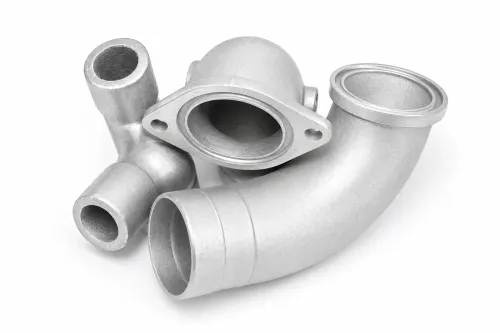
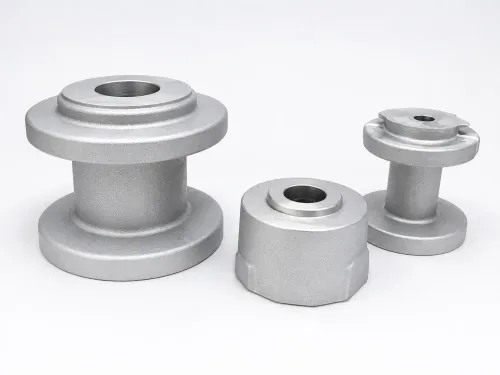
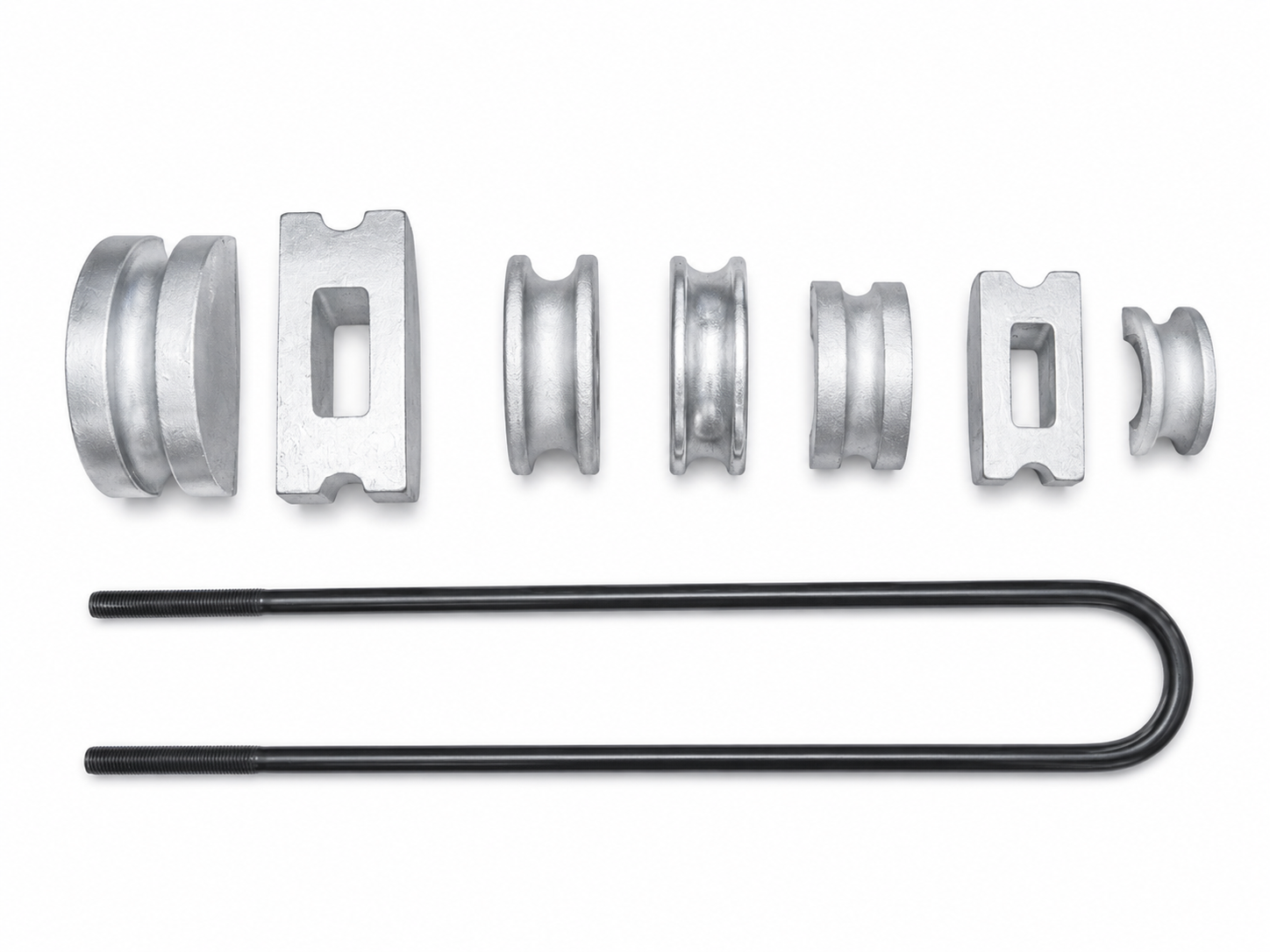 | Aluminium Gravity Die Castings U Clamp A U-clamp (or U-bolt) is a curved industrial fastener used to secure pipes, tubes, or cables to walls, beams, or mounting rails |
Frequently asked questions
What dimensions must you provide when ordering an aluminium U clamp?
Provide the mating part diameter or width, inside radius, overall height, leg spacing, wall thickness, hole or thread details, clearance and working envelope.
How do you choose an aluminium alloy and fastener design for a U clamp?
Match the alloy to the load, temperature, corrosion exposure and electrical requirements, then define bolt size, thread type, washer arrangement and tightening access.
What quality requirements should an aluminium U clamp quotation include?
State the casting process, machining operations, dimensional tolerances, visual acceptance criteria, inspection records, material identification and packaging requirements.
What should you compare between aluminium U clamp suppliers?
Compare the proposed alloy, casting method, machining scope, inspection plan, surface finish, tooling charges, minimum order quantity, lead time and delivery risk.