
A buyer searching for a cast aluminium pipe needs to distinguish a hollow moulded component from an extruded tube, a machined pipe-shaped part, and certified pressure-bearing pipework. By the end, you will understand how the bore is formed, which applications suit the process, what design details control quality, and what to include in a supplier enquiry.
Key takeaways
- A core forms the internal bore of an aluminium pipe casting.
- Gravity die casting suits repeatable hollow geometries and controlled production volumes.
- Choose casting, extrusion, or machining based on bore, wall, and quantity.
- Include alloy, dimensions, tolerances, finish, quantity, and drawings in your enquiry.
What an Aluminium Pipe Casting Actually Is
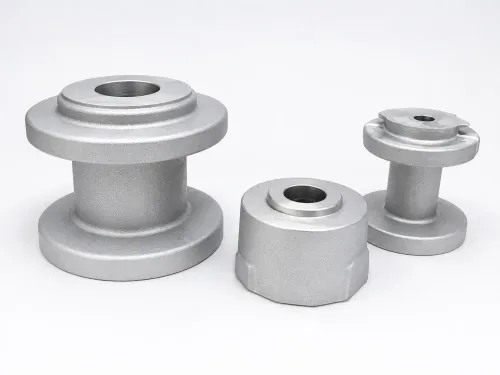
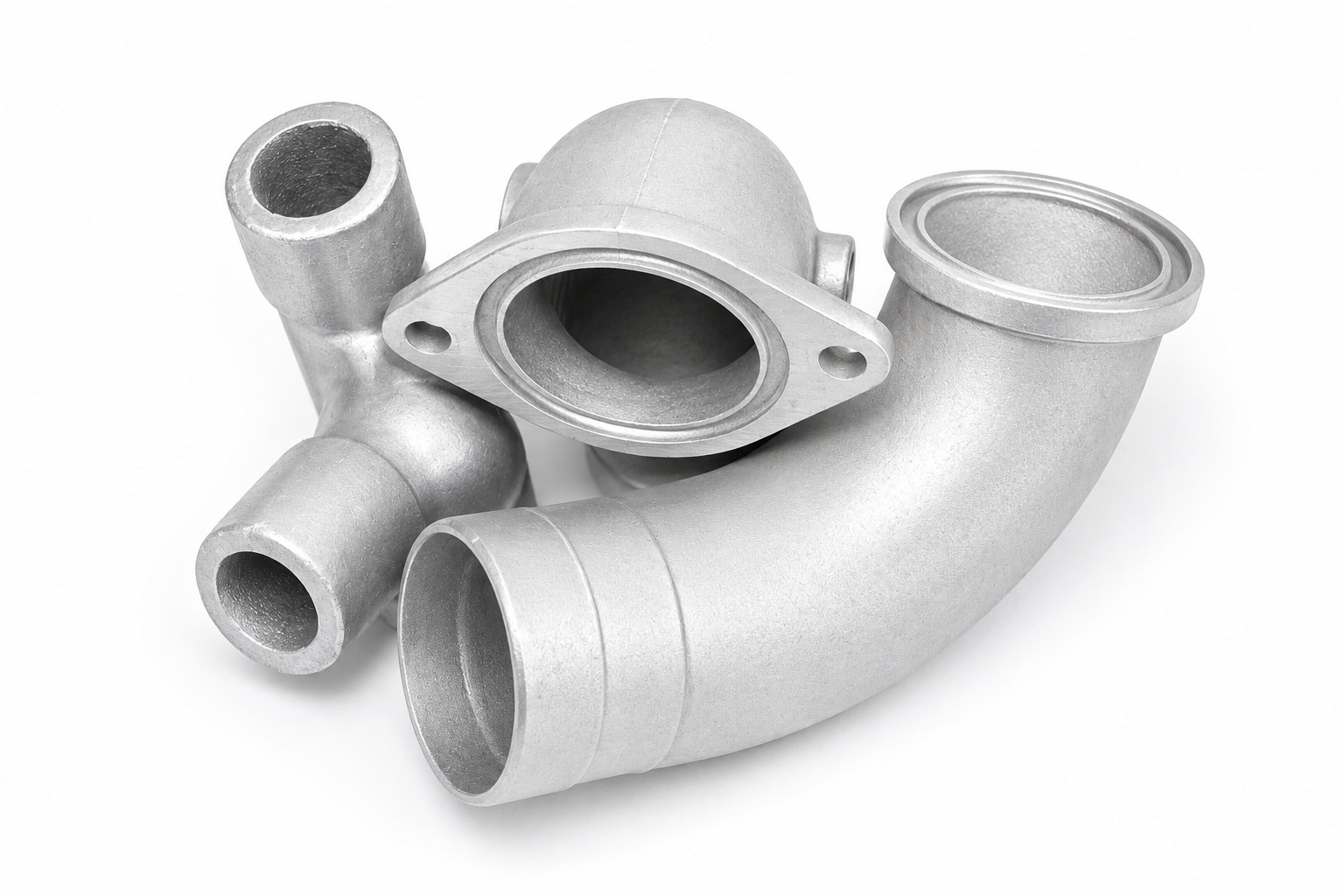
An aluminium pipe casting is a hollow, cylindrical aluminium-alloy component whose outside shape is formed in a mould and whose internal bore is created around a core. It is not a material grade or a nationally defined product category.
The search phrase “what is an aluminium pipe for casting in Kolhapur” combines the component with its manufacturing location. Your specification still needs the alloy, temper, casting process, bore, outside diameter, wall thickness, pressure duty, and inspection standard.
| Component or process | How it is made | What it allows |
|---|---|---|
| Extruded aluminium tube | A billet is forced continuously through a die | Long, uniform hollow sections |
| Aluminium pipe casting | Molten alloy fills a mould around a core | Flanges, bosses, ribs, ports, mounting pads, or non-circular outer forms |
| Casting used to make a pipe-shaped part | A blank, housing, or body is cast and later bored | A machined passage rather than a finished hollow casting |
The distinction matters. An aluminium pipe casting leaves the mould with its hollow form, while a cast pipe-shaped blank may contain solid material for a later CNC-machined bore. That changes the tooling, core design, machining allowance, inspection method, and drawing requirements.
For an aluminium pipe in Kolhapur, identify whether you need a finished hollow casting or a cast body with a machined passage. Without that distinction, suppliers can quote visibly similar parts with different bore accuracy, wall thickness, pressure capability, and acceptance criteria.
How Pipe Gravity Die Casting Forms the Bore
A core forms the bore in pipe gravity die casting; the metal mould creates the outside shape. Molten aluminium flows into a reusable metal mould under gravity, not under the high pressure used in a die-casting machine.
1. Prepare and coat the mould, then check its vents, parting line, and locating features. Place the sand, shell, or permanent metal core on positive core prints so it cannot depend on friction or loose placement.
2. Close the mould around the located core and pour the specified aluminium alloy. The alloy solidifies around the core, which occupies the internal passage and preserves the intended bore shape.
3. Open the mould after solidification and remove the casting. Fettling cuts away gates, risers, and flash, then removes remaining core material and residue.
4. Machine the bore when the drawing requires tighter diameter or concentricity control than the casting can provide. The same operation can establish the end faces, ports, flange holes, and other datums.
Choose a sand or shell core for passages that are difficult to withdraw from a permanent tool. Choose a permanent metal core for repeatable geometry when the design allows removal. Leave solid machining stock for a simple or extremely accurate passage when a machined bore offers better control.
Core strength, coating, venting, dimensional stability, and location control affect bore diameter, concentricity, surface finish, gas defects, and sand inclusion. Inspect dimensions and surface condition, then leak-test at the specified pressure, duration, medium, and leakage limit. Visual inspection cannot reveal subsurface gas or shrinkage porosity.
Where Cast Pipe-Shaped Components Are Used
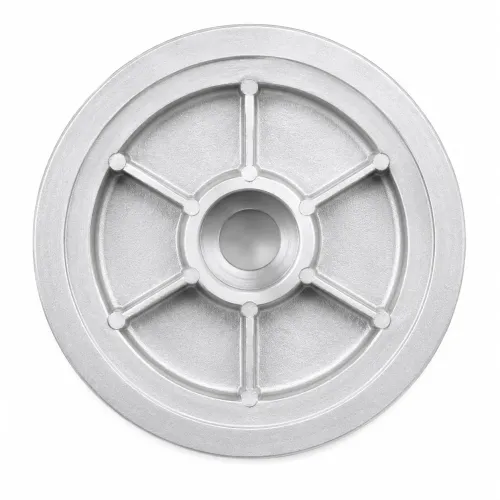
Pump and valve passages, air and fluid housings, manifolds, engine and machinery parts, electrical enclosures, and low- to medium-pressure piping components are common pipe casting uses. These parts often combine a bore with bosses, ribs, ports, flanges, or mounting pads.
The key decision is whether you need a cast pipe-shaped component or certified pressure-bearing pipe. A pump casing, valve body, or manifold is not automatically interchangeable with standard seamless or welded tube.
1. Define the service before selecting the casting. State the pressure, temperature, fluid, operating cycles, and whether the component contains pressure. ASME B31.3 may apply to process piping when the customer’s engineering specification places the system under that code; it does not turn an unspecified casting into certified pipe.
2. Put the acceptance basis on the drawing or purchase specification. Name the applicable product standard, alloy condition, temper, heat treatment, weld or casting restrictions, leak-test medium, test pressure, test duration, allowable leakage, and dimensional acceptance limits.
3. Select the alloy separately from its condition. Aluminium-silicon alloys such as A356-type alloys offer useful castability and mechanical performance. T6 treatment can increase strength in a suitable casting, but it cannot remove porosity or guarantee pressure tightness.
4. Inspect defects that could affect service, not only visible surfaces. Include gas porosity, shrinkage, oxide films, inclusions, cold shuts, misruns, core shift, and wall-thickness variation in the inspection plan. Visual inspection can miss subsurface leakage paths and fatigue-critical defects.
Use aluminium pipe casting when the integrated geometry provides value; specify certified pressure pipe when the duty demands a qualified pipe product.
Which Process Fits the Geometry and Production Volume
Match the process to the part’s geometry and batch size. Choose pipe gravity die casting for a repeatable batch that justifies reusable tooling, a shaped exterior, and an internal passage formed by a core.
It gives an aluminium pipe casting more consistent dimensions and surface finish than sand casting, but tooling costs more and complex internal geometry is harder to produce.
| Process | Best fit | Main trade-off |
|---|---|---|
| Gravity die casting | Repeat batches with bosses, flanges, ribs, pads, or other shaped external features | Reusable moulds improve consistency, but tooling costs more and core design limits internal complexity |
| Sand casting | Large, irregular parts and low-volume production | Lower tooling commitment, but rougher surfaces, wider variation, and more machining |
| Extrusion or tube drawing | Long, uniform hollow sections | Extrusion forms the section continuously; drawing improves size and finish through dies, but neither naturally adds cast bosses, flanges, or abrupt features in one operation |
| Centrifugal casting | Rotational hollow parts needing controlled material distribution | Poorer fit for integrated ports and irregular housings |
| Machining from billet | Prototypes and very small quantities | Avoids mould and core defects, but waste, cycle time, and cost rise for large hollow parts |
Gravity die casting is the wrong choice for very thin walls, very long uniform tubes, one-off prototypes, extremely tight internal tolerances, or designs that cannot tolerate a parting line or core variation. Do not use it for high-pressure, code-certified pipework without a customer-approved casting and test plan.
What to Put in an Aluminium Pipe Enquiry in Kolhapur
For an aluminium pipe in Kolhapur, send a 3D model and 2D drawing before tooling is quoted. Without both, suppliers can price materially different parts under the same description.
1. Put the complete geometry on the drawing: outside diameter, inside diameter, minimum and local wall thickness, straightness, finished length, flange or boss geometry, port locations, datums, draft angle, fillets, core prints, and machining allowance. Define the minimum wall thickness after machining so a cutter cannot break through a thin area.
2. State the material and process: alloy, temper, heat-treatment cycle, casting route, surface finish, and whether the bore is as-cast or machined. “What is an aluminium pipe for casting in Kolhapur?” is not a material specification; Kolhapur identifies the manufacturing location, not the alloy or product standard.
3. Define acceptance before manufacture: leak-test pressure and duration, test medium, allowable leakage, dimensional sampling, radiography or other non-destructive testing, batch traceability, and the acceptance standard. Record whether ASTM B26/B26M applies to an aluminium-alloy sand casting or ASTM B108/B108M applies to a permanent-mould casting, including the required edition.
ISO 8062-3 can set casting dimensional and geometrical tolerances and machining allowance. Finished CNC dimensions and datums still belong on the drawing.
SPM Castings can review the core, mould, machining sequence, and inspection plan against the component’s actual duty before you approve tooling. That review prevents an underspecified aluminium pipe in Kolhapur from producing inconsistent quotations.
Related product
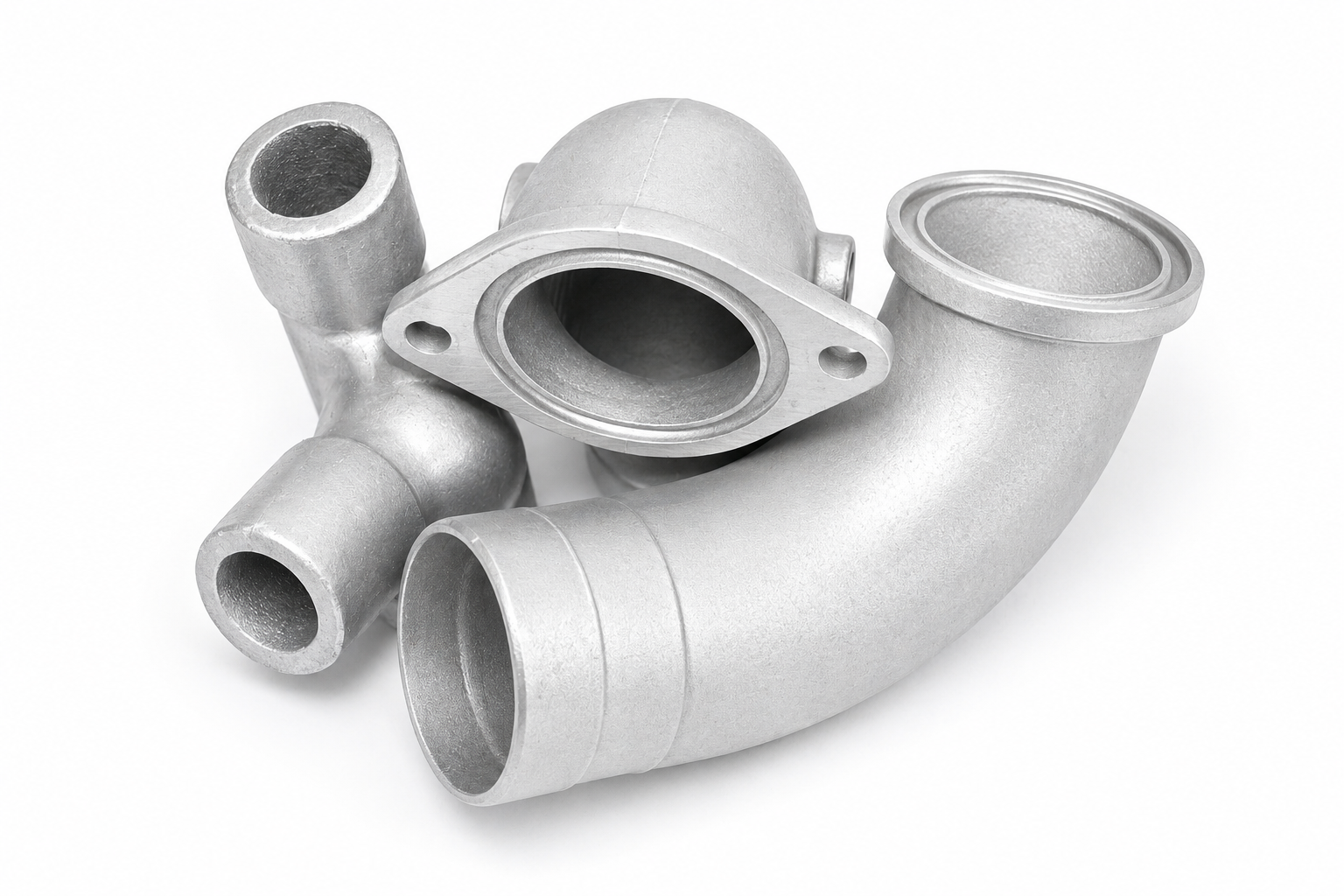 | Aluminium Gravity Die Castings Pipe Pipe |
Frequently asked questions
What is an aluminium pipe casting?
It is a hollow cylindrical aluminium-alloy component formed in a mould, with its internal bore created around a core.
How does pipe gravity die casting form the bore?
Molten aluminium fills a reusable metal die around a positioned core, which creates the component’s internal passage as the metal solidifies.
Where are cast pipe-shaped aluminium components used?
They are used where a hollow, shaped aluminium housing or passage is needed in industrial equipment, electrical systems, valves, pumps, engines, and machinery.
What should an aluminium pipe enquiry in Kolhapur include?
Provide the drawing or model, alloy requirement, outside and bore dimensions, wall thickness, tolerances, quantity, surface finish, machining needs, and intended use.