
An engine spacer is worth specifying only when a measured interface problem requires a repeatable stand-off, alignment relationship, or oil-passage position under assembly load. By the end, you will know which Kolhapur manufacturers and repair businesses need one, when aluminium is suitable, what information to give a supplier, and how to approve the finished part.
Key takeaways
- Use a spacer only when measured geometry, clearance, or sealing evidence supports it.
- Choose aluminium when weight, corrosion resistance, and operating loads suit the application.
- Control casting porosity, machining datums, flatness, threads, and dimensional validation.
- Compare suppliers on drawings, inspection records, traceability, tooling, and repeatability.
Which Kolhapur businesses actually need an oil engine spacer?
An oile engine spacer for OEMs in Kolhapur is a layout-specific part, not a generic washer. It may sit between the engine block and crankcase, crankcase and oil pump, sump and filter housing, sensor and mounting face, or engine and an accessory.
Its job is to hold a controlled axial distance that remains repeatable after bolt tightening. Confirm “oil” with the customer: it is not a material grade or recognised component classification; it may be a product name, internal code, or misspelling of “oil engine spacer”.
The businesses most likely to need one are:
- Engine OEMs and generator makers controlling pump, sensor, cover, or accessory position.
- Pump and compressor manufacturers matching an engine shaft, valve, housing, or bearing.
- Agricultural-equipment producers and machinery builders adapting engines to driven equipment.
- Repair businesses converting an engine to a new pump, sensor, valve, housing, bearing, cover, or accessory.
| Part | Primary function | Do not substitute when |
|---|---|---|
| Engine spacer | Maintains a defined axial stand-off between mounting faces | The joint needs sealing, fine adjustment, or load support |
| Shim pack | Makes small thickness corrections | The assembly needs one rigid, repeatable distance |
| Thrust washer or bearing sleeve | Controls rotating thrust or supports a shaft | No rotating load exists |
| Sealing ring or gasket | Prevents oil leakage and accommodates limited surface variation | Alignment and stand-off are the main requirements |
| Adapter plate or bracket | Changes an interface or carries a positioned load | Only axial spacing is required |
A spacer is unsuitable if it creates fastener bottoming, weakens a load path, or replaces a structural bracket without stress review.
How do you prove that a spacer is needed?
Prove the need with measurements, not a visual guess. Record the interference, required stand-off distance, shaft or fastener alignment, oil-port and gallery alignment, gasket compression, and installation clearance.
- Measure the existing gap and the target axial distance at several points; variation exposes uneven faces or distortion.
- Record shaft runout, fastener alignment, bolt-hole positions, bore diameter, and locating-pin engagement.
- Check that oil ports and galleries remain fully open, then calculate whether the spacer changes oil volume or flow.
- Specify the spacer’s axial length, end-face parallelism, bore-to-bolt-circle relationship, and locating-feature position.
- Check thread engagement after fitting. Reject the design if a fastener bottoms before clamping the joint.
- Check clamp load, local bearing stress, minimum wall thickness, and any unsupported bending section.
Choose the part that solves the measured problem:
| Option | Use it when |
|---|---|
| Gasket | You need sealing and limited compliance |
| Shim | You need fine thickness adjustment |
| Flange spacer | You need a fixed distance across a flanged joint |
| Adapter plate | You need a different bolt pattern or interface |
| Mounting bracket | You need to carry or position a load |
A spacer is the wrong answer when the assembly needs a new oil passage, load path, bolt pattern, or structural support. Claims about oil engine spacer benefits in Kolhapur do not replace this check: the drawing and measured interfaces decide whether the component is necessary.
Record the before-and-after clearance, torque condition, and leakage result during a trial fit.
When is an aluminium spacer the right engineering choice?
Choose aluminium when low mass, corrosion resistance, heat transfer, and efficient machining matter more than maximum stiffness or surface durability. An aluminium oil engine spacer in Kolhapur can be machined to repeatable bore, face, and thickness geometry, making assembly alignment predictable.
Aluminium remains less stiff and less wear-resistant than steel or cast iron, so alloy, temper, wall thickness, and contact stress must be assessed together.
| Requirement | Aluminium advantage | Concern |
|---|---|---|
| Mass and heat | Much lighter; transfers heat readily | Expansion can alter preload and clearance |
| Machining | Produces repeatable bores and faces | Threads and bearing surfaces wear sooner |
| Environment | Resists ordinary atmospheric corrosion | Oil additives, chloride contamination, cleaners, coatings, and sealants need compatibility checks |
| Temperature | Suitable within the alloy’s rated range | Aluminium expands at 22–24 × 10⁻⁶/K versus 11–13 × 10⁻⁶/K for carbon or low-alloy steel; across 100 mm and 100 K, differential movement approaches 0.1 mm |
Reject aluminium when the spacer carries high contact or bearing stress, frets under joint movement, faces severe vibration or high temperature, or needs durable threads, a hardened bearing surface, or a hardened sealing surface. Also reject direct contact with steel, brass, or copper in wet or contaminated service unless isolation and galvanic protection are engineered.
Verify the actual oil, additive package, cleaning chemical, anodizing or other coating, and sealant before approval.
What must the casting, machining, and validation plan control?
Release a controlled definition before tooling or sampling. Confirm “oil” as a product name, internal code, or misspelling, then provide:
- Engine and assembly model, drawing number and revision
- Datums, bolt-hole pattern, bore diameters, thickness, and oil-port locations
- Gasket or seal type, dimensional and geometric tolerances, and functional surface finish
- Operating temperature, pressure limits, alloy, heat treatment, and traceability requirements
For aluminium gravity die casting, design draft and parting lines away from locating faces, oil galleries, and bores. Use consistent wall sections, account for shrinkage and hot spots, control porosity, and leave machining allowance on critical faces and bores.
CNC machining is required when flatness, parallelism, perpendicularity, concentricity, bore size, or functional surface finish controls assembly; an as-cast face cannot prove those conditions.
Validate the part against the released datums with CMM measurement, flatness and concentricity checks, thread and burr inspection, and material or melt-lot traceability. Include hardness or heat-treatment evidence where specified, plus surface-finish results and a defect-disposition procedure. Add pressure, leak, oil-flow, CT, radiographic, or dye-penetrant testing only when the risk assessment demands it.
Check specifically for blocked oil galleries, uneven faces, excessive gasket compression, casting porosity, fastener bottoming, and distortion after machining. These controls protect the oil engine spacer benefits in Kolhapur: repeatable fit, oil alignment, and stable clamp load rather than a merely attractive casting.
How should Kolhapur OEMs compare spacer suppliers?
For an oil engine spacer for oems in kolhapur, approve the process, not just a polished sample. Ask whether the supplier integrates aluminium gravity die casting with CNC machining, controls tooling ownership, records alloy and melt-lot traceability, and links casting defects to machining results.
Use this approval checklist:
- Review the released drawing, revision, datums, tolerances, alloy, surface finish, and application conditions; agree which faces establish the machining datum.
- Require first-article inspection or PPAP documentation when your quality system demands it, including dimensional reports, calibrated-gauge records, functional-face surface results, and material or melt-lot evidence.
- Define defect-disposition rules for porosity, distortion, blocked passages, burrs, and machining exposure; control every engineering change through documented approval.
- Confirm responsibility for die design, machining allowance, CNC operations, deburring, cleaning, validation, and replacement tooling.
- Ask about assembly downtime during trials, spare-part planning, minimum order quantities, and lead times for tooling, prototypes, approved production, and urgent replacements.
Compare suppliers against the decision that matters:
| Option | Evidence to compare | Risk if missing |
|---|---|---|
| Integrated casting and CNC | One controlled route from melt lot to finished face and bore | Casting variation appears only after machining |
| Prototype readiness | Trial parts made from the intended production route | A sound prototype hides production porosity |
| Production control | Repeatable gauges, reports, changes, and defect decisions | Approved dimensions drift between lots |
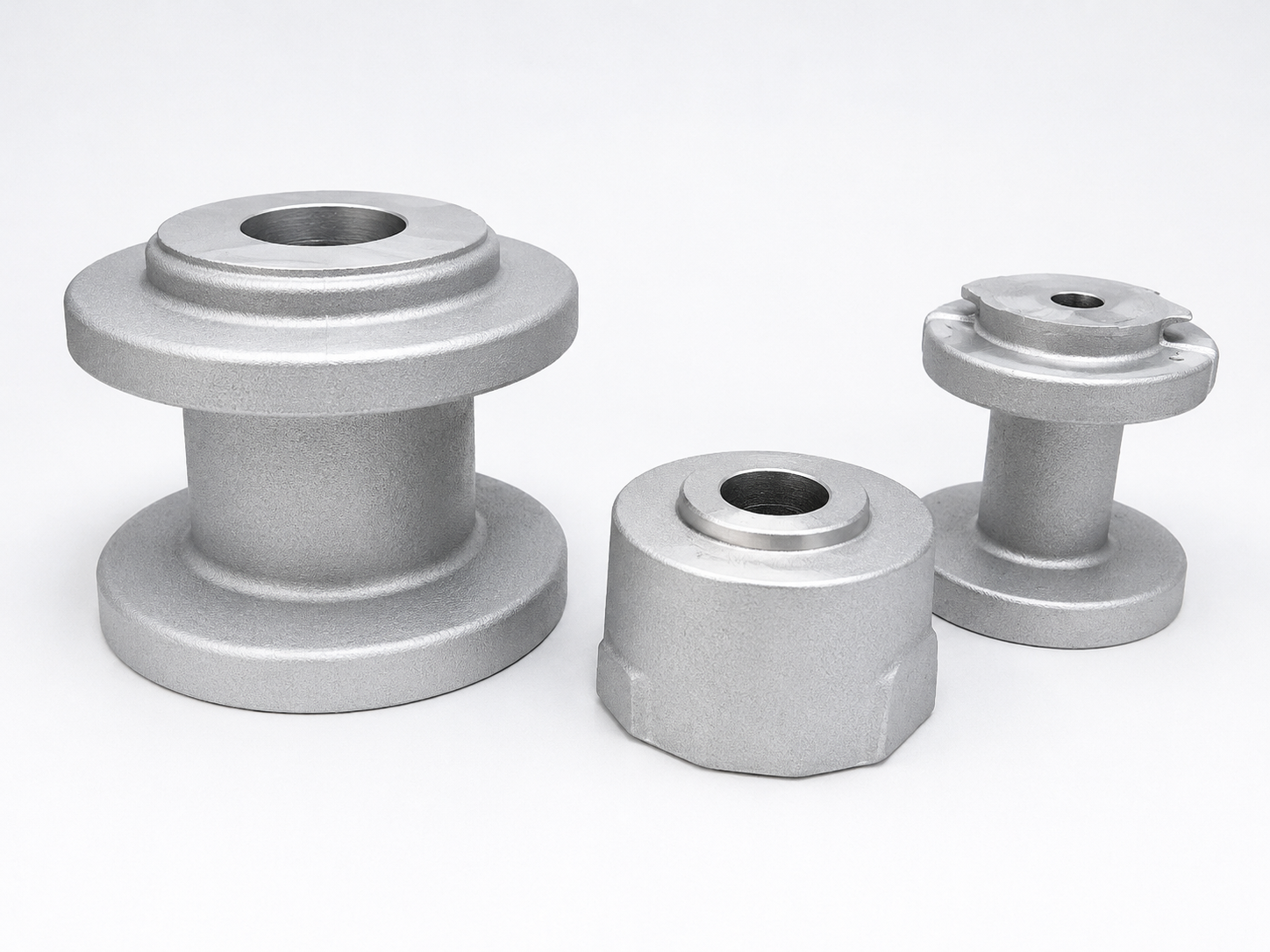
SPM Castings is one local option for an aluminium oil engine spacer in kolhapur, but qualify its capability against the released drawing and application. Kolhapur offers shorter logistics and faster trial-part iteration; location alone proves nothing.
Related product
Frequently asked questions
Which Kolhapur businesses actually need an oile engine spacer?
OEMs and equipment manufacturers need one when a measured layout requires controlled spacing between engine, crankcase, oil-system, sensor, sump, filter, or accessory interfaces.
How do you prove that a spacer is needed?
Document the interference, alignment, clearance, sealing, or service-access problem with layout measurements, interface drawings, tolerance analysis, and prototype test results.
When is an aluminium spacer the right engineering choice?
Aluminium fits applications that benefit from low mass and corrosion resistance while the alloy, wall thickness, joint design, temperature range, and loads meet the service requirements.
What must the casting, machining, and validation plan control?
Control alloy specification, casting porosity, shrinkage, machining datums, flatness, hole position, threads, surface finish, dimensional inspection, and functional testing.
How should Kolhapur OEMs compare spacer suppliers?
Compare drawing review, tooling capability, casting and CNC capacity, inspection methods, material traceability, sample approval, delivery controls, and repeat-production evidence.
Related product
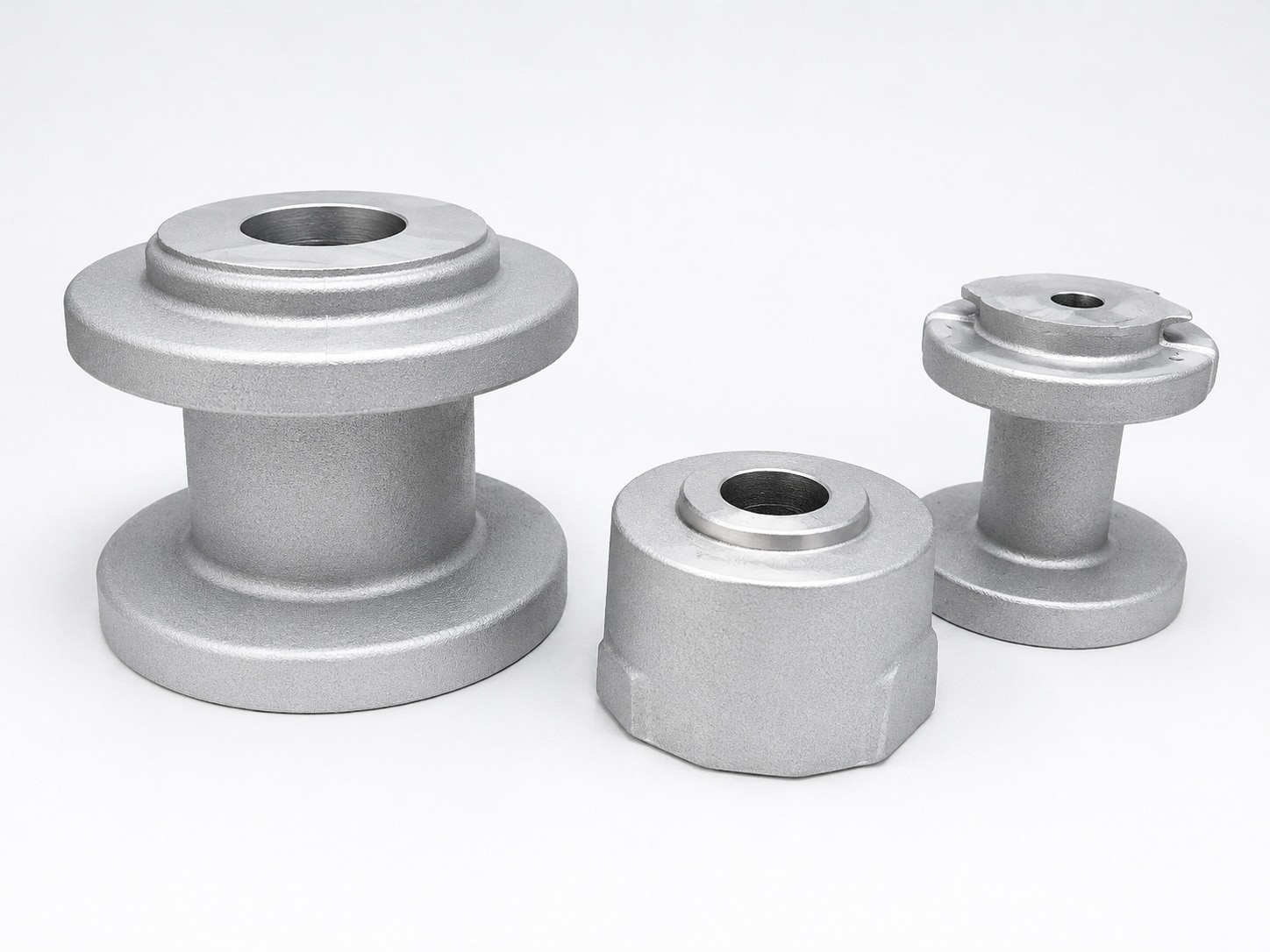
 | Aluminium Gravity Die Castings An “oil engine spacer“ typically refers to an automotive or industrial component designed to resolve clearance issues, prevent oil starvation, or... View product → |