
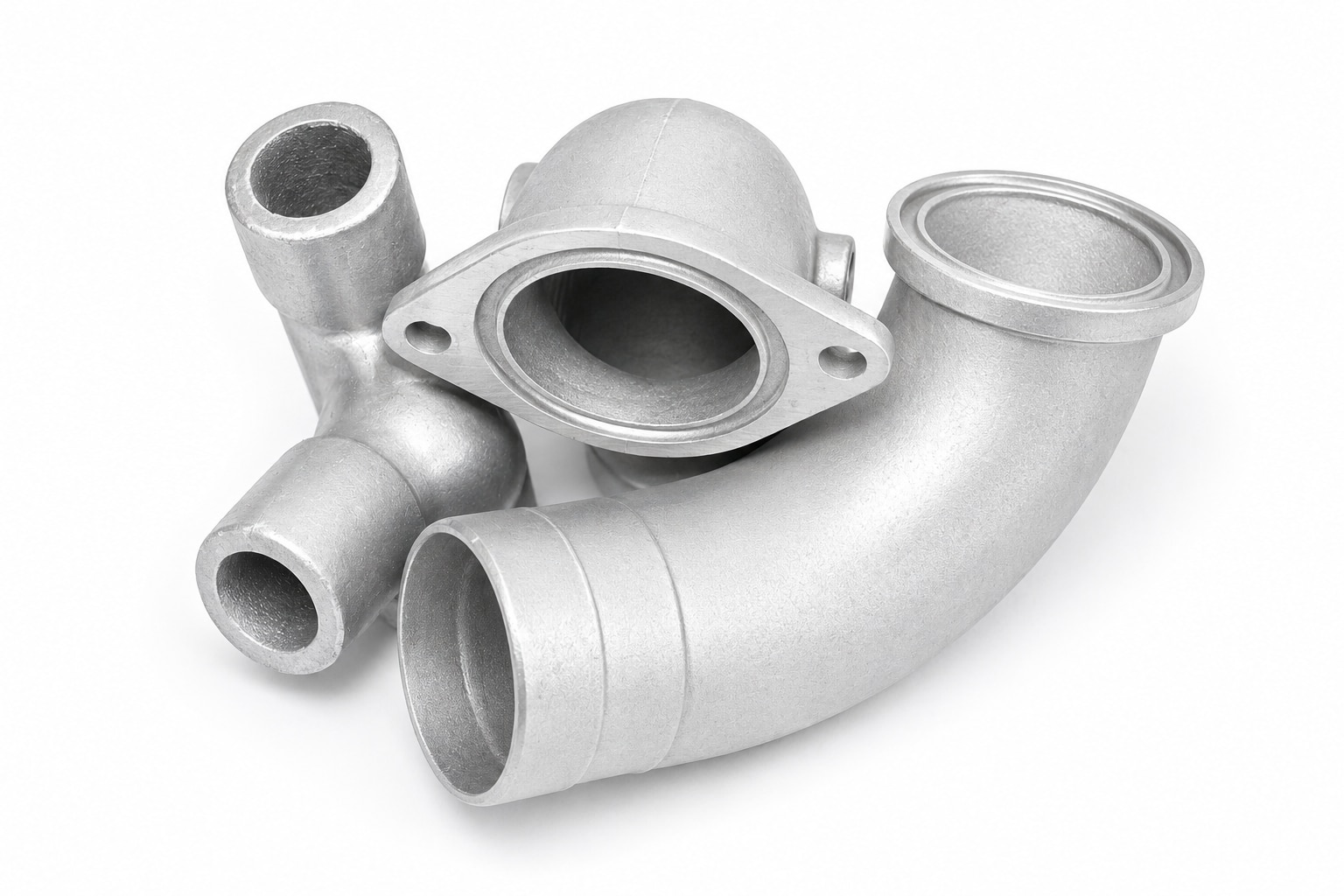
An aluminium cast pipe is not simply a hollow version of a bracket or cover: its bore, wall variation, joints and pressure requirement determine the manufacturing route. By comparing gravity-die casting with extrusion, welding, sand and shell-core casting, permanent-mould methods and machining from bar, you can choose a process and quotation that match the part’s actual service conditions.
Key takeaways
- Specify bore, wall thickness, end geometry and alignment—not just the outside profile.
- Choose gravity-die casting for integrated features; choose tube for simpler constant-wall geometry.
- Require alloy designation, core details, machining allowances and inspection records in the quotation.
- Reject gravity casting when pressure integrity, thin walls or high volumes favour another route.
What makes a cast aluminium pipe different from other cast parts?
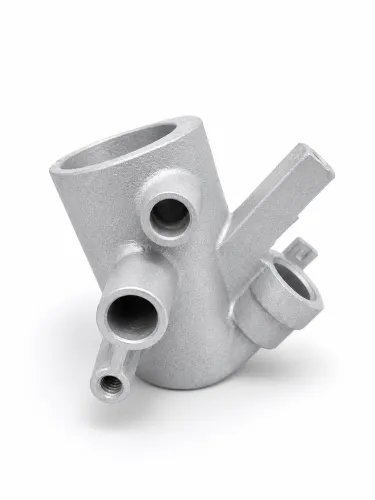
A cast aluminium pipe is defined by its working geometry: a controlled bore, wall thickness, outside diameter and length, plus end geometry, ports, flanges, bosses, ribs or non-circular transitions. A pipe for industrial equipment in Nashik must contain fluid and preserve connection alignment, not merely resemble a hollow aluminium casting.
| Part | Main load case | What to judge |
|---|---|---|
| Pipe | Fluid pressure, sealing and connection loads | Bore accuracy, wall variation, flange faces and leak tightness |
| Nozzle body | Local pressure and pipe-applied forces | Port alignment, threaded or flanged ends and reinforcement |
| End frame | Structural and mounting loads | Flatness, bolt locations and stiffness |
| Hydraulic cover | Pressure, gasket compression and fastening | Sealing face, distortion and porosity |
| Cylinder head | Pressure, heat and cyclic mechanical loads | Passages, seats, wall thickness and thermal distortion |
| LM6 casting | Alloy designation, not a defined load case | Confirm geometry, chemistry, temper and service requirements |
Gravity die casting fills a reusable metal mould under metallostatic pressure. Pressure die casting injects metal at high velocity, so its tooling and defect risks differ. ASTM B108/B108M covers aluminium-alloy permanent-mould castings, but the standard or catalogue label does not prove that a pipe will hold pressure.
Judge the casting by its bore, wall map, outside profile, machined sealing faces and resistance to connection loads. A core can shift, making an apparently sound as-cast bore inaccurate. Flanges, bosses and ribs also create local stress and solidification demands that a simple bracket or cover does not face.
How does gravity-die casting compare with tube and casting alternatives?
For a pipe comparison in Nashik, choose extrusion for a long, straight tube with a constant cross-section and uniform wall. Choose gravity-die casting when one component needs flanges, mounting bosses, ports, ribs, elbows, manifolds or changing sections. Gravity filling uses metallostatic pressure in a reusable metal mould; it is not high-pressure die casting.
| Option | What it means | When it applies |
|---|---|---|
| Extruded tube | Continuous profile with a uniform section and wall | Long, straight runs |
| Welded tube | Fabricated sections joined at seams | Assemblies needing cut lengths or branches; inspect welds for distortion and defects |
| Sand casting | Aluminium-alloy casting under ASTM B26/B26M | Larger or frequently revised designs; lower tooling commitment, rougher surfaces and less repeatable dimensions |
| Shell-core casting | Removable shell cores form enclosed passages and complex internal geometry | Hollow bodies, intersecting bores and difficult internal shapes |
| Permanent-mould casting | Reusable metal mould, covered by ASTM B108/B108M | Better repeatability and as-cast finish than sand casting |
| Machined from bar | Solid stock cut and bored to shape | Short runs and simple bodies; waste increases on hollow or large parts |
For pipe casting options in Nashik, separate as-cast dimensions from machined dimensions. Machine the bore, flange faces, O-ring grooves and sealing seats from controlled datums; do not demand tight tolerance on every cast surface.
A gravity-cast pipe becomes the better choice when the alternative requires multiple fabricated pieces or excessive machining. Confirm core location and wall thickness before release, because a cast bore is not automatically as accurate as a machined bore.
How do cores, alloy and casting design affect pipe performance?
The bore is only as reliable as the core that forms it. Specify whether a sand, shell, metal or other removable core is used, then show core prints, locating features, vent paths and removal access on the drawing.
Core movement changes bore diameter and wall thickness, so an as-cast bore is not equivalent to a machined bore.
Design the junctions before approving the die:
- Use generous fillets and reasonably uniform walls; abrupt changes create hot spots.
- Plan directional solidification with feeders and chills around flange, boss and bore junctions.
- Add machining allowance to sealing faces, flange faces and critical bores.
- Check core extraction, because a trapped core can make the casting impossible to release or clean.
These controls matter for pipe aluminium gravity die castings in Nashik because shrinkage porosity or distortion at a junction can cause leaks, poor sealing or an undersize passage. Alloy choice adds another decision. Do not accept “LM6” from a catalogue entry as the complete specification: require the exact alloy, chemistry, temper and heat-treatment route.
A356 or AlSi7Mg-type alloys can suit strength and heat-treatment needs, but corrosion exposure, weldability, elongation, service temperature, machinability and pressure tightness decide the grade.
Gravity casting fills a reusable metal mould under metallostatic pressure. Conventional high-pressure die casting injects metal at high velocity, entrapping gas that can blister or shift dimensions during solution heat treatment. Ask for the casting process and heat-treatment route, not merely “aluminium,” with ASTM B108/B108M identified where permanent-mould castings apply.
When is a gravity-cast pipe the wrong manufacturing route?
Reject gravity casting when the bore, wall, pressure duty or quantity makes its tooling and inspection burden outweigh its geometric benefits. Extrusion suits a very long tube with a constant section and uniform wall; another thin-wall process suits extremely thin sections.
Welded or forged construction deserves consideration when severe pressure service demands a different defect and fatigue-risk profile.
- Choose another route if enclosed cores are unusually complex, cannot be removed, or leave unacceptable uncertainty in internal passages.
- Choose extrusion for long, straight, uniform tubes; choose welding for fabricated assemblies; choose forging or a qualified welded design for severe pressure duty.
- Avoid a new gravity die for prototype quantities that cannot recover tooling costs.
- Reject the route when the required finish, tolerance or machining allowance makes every surface expensive to control. Reserve tight dimensions for the bore, sealing faces, O-ring grooves, bearing seats and flange faces, not every as-cast surface.
A smooth exterior does not prove pressure integrity. Gas porosity, shrinkage porosity and oxide-related defects can form leakage paths. For pipe casting options in Nashik, specify pressure or vacuum, test pressure, duration, medium and acceptance criterion; radiography finds certain internal discontinuities, dye-penetrant inspection finds surface-connected defects, and leak testing verifies functional tightness.
None replaces the others.
For a pipe for industrial equipment in Nashik, separate as-cast and machined dimensions, nominate ISO 8062-3 tolerance grades, and state machining allowances. This prevents an overly coarse default or unnecessary casting precision from driving cost.
What should a Nashik buyer require in the quotation and first article?
A quotation for a pipe comparison in Nashik must separate casting cost from the work needed to make the part pressure-tight, machinable and repeatable. Do not accept one line labelled “aluminium casting.”
- Mold or die tooling, core boxes and recurring cores
- Metal grade, chemistry checks and melt controls
- Pouring and solidification method
- Fettling, specified heat treatment, CNC machining, cleaning and inspection
- Repeat-order quantities, setup charges, tooling life and replacement cores
2. Require the proposed manufacturing sequence: mold preparation, pouring, solidification, shakeout or core removal, fettling, heat treatment, machining, cleaning and inspection. Ask for quoted cycle time at the proposed volume; do not let the supplier guess it after approval.
- An alloy certificate and temper or heat-treatment record
- Critical bore, flange, sealing-face and O-ring dimensions
- Wall-thickness mapping around the bore, ports, bosses and flange
- Surface-defect review with photographs or marked-up drawings
- Pressure-test medium, pressure, hold time and acceptance result
For pipe aluminium gravity die castings in Nashik, the drawing must identify as-cast dimensions separately from machined dimensions and state the ISO 8062-3 tolerance grade and machining allowances.
SPM Castings becomes relevant when one Nashik OEM needs casting and CNC machining together; compare its documented repeatability of core location, sealing geometry and inspection results, not a general claim to make aluminium parts.
Related products
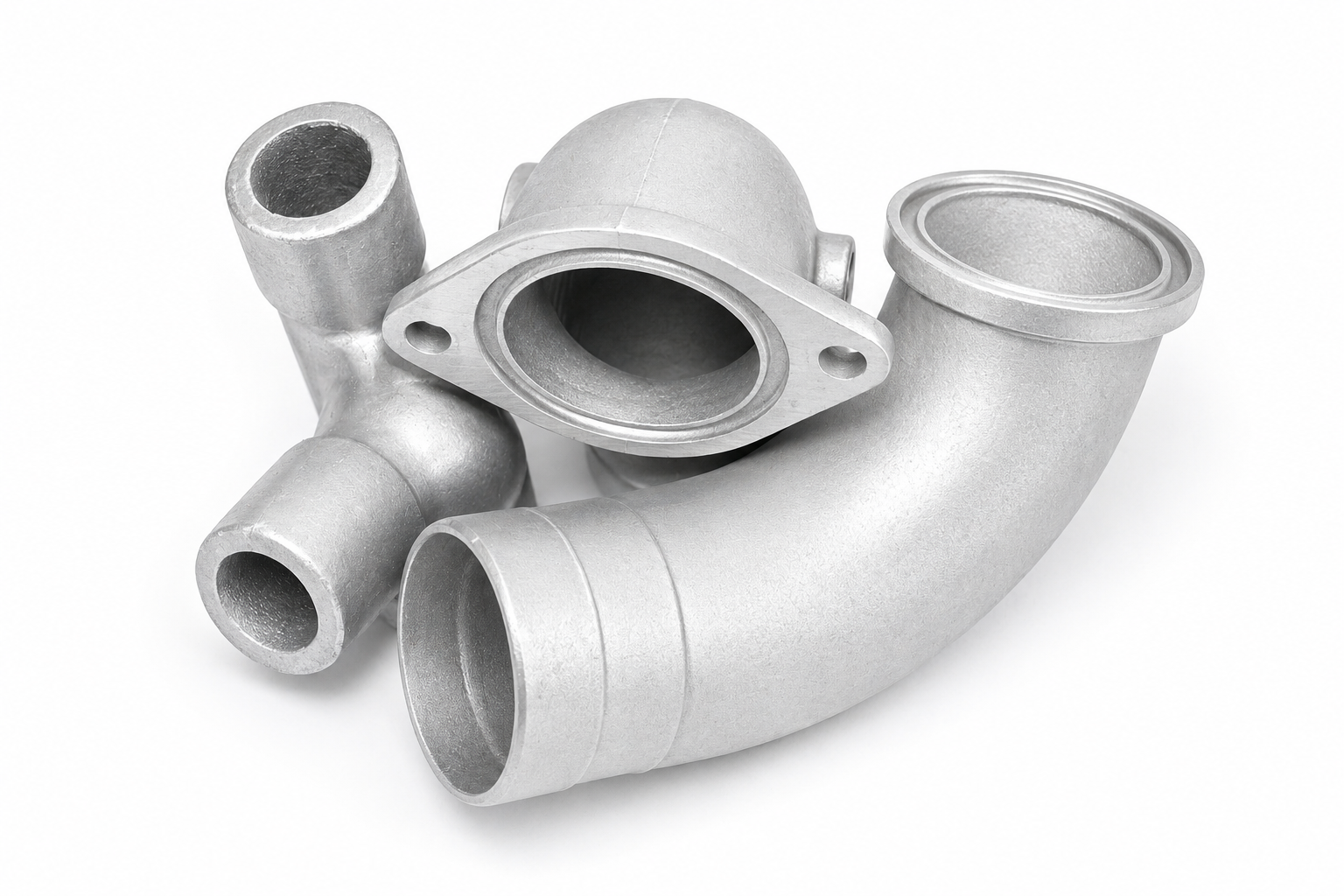 | Aluminium Gravity Die Castings Pipe Pipe |
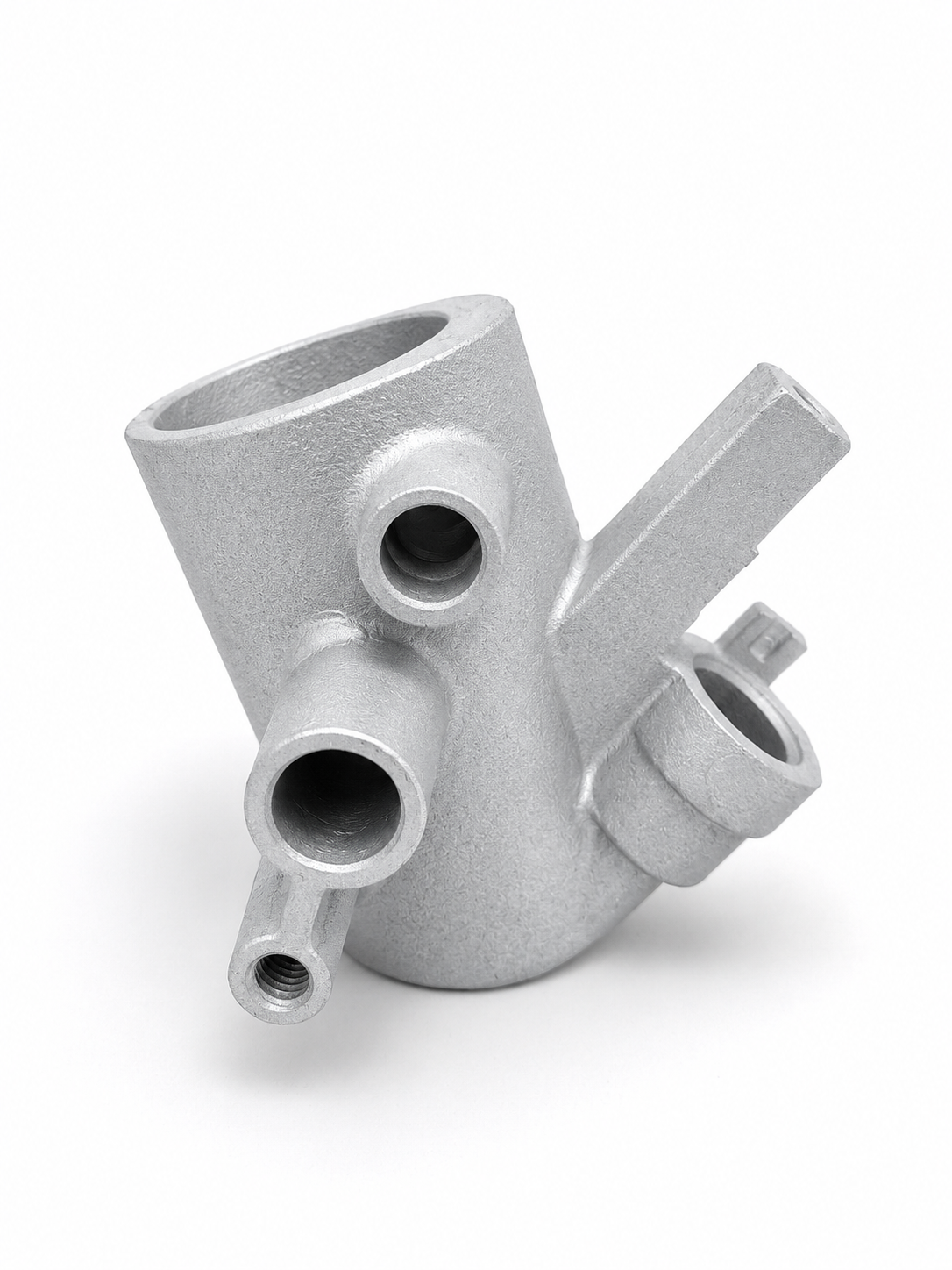 | Aluminium Gravity Die Castings The Aluminium Nozzle Body is a precision-engineered component designed to ensure accurate fluid or air flow in industrial, automotive, and... View product → |
Frequently asked questions
What makes a cast aluminium pipe different from other cast parts?
A pipe must control its bore, wall thickness, outside diameter, length and connection geometry while containing fluid and preserving alignment.
How does gravity-die casting compare with tube and casting alternatives?
Gravity-die casting suits pipes with flanges, bosses, ports, ribs and non-circular transitions; tube is better for simpler, constant-wall geometry, while other routes suit different volumes, pressure demands or dimensional requirements.
How do cores, alloy and casting design affect pipe performance?
Core accuracy controls the bore, alloy selection affects strength and corrosion resistance, and wall transitions, fillets, feeds and machining allowances influence soundness and service life.
When is a gravity-cast pipe the wrong manufacturing route?
Choose another route when the design needs very thin uniform walls, extreme pressure integrity, long simple tube lengths, unusually tight as-cast tolerances or production volumes that justify a different process.
What should a Nashik buyer require in the quotation and first article?
Request the alloy designation, casting process, core method, machining allowances, dimensional tolerances, pressure or leak-test method, inspection plan and first-article measurement report.
Related products
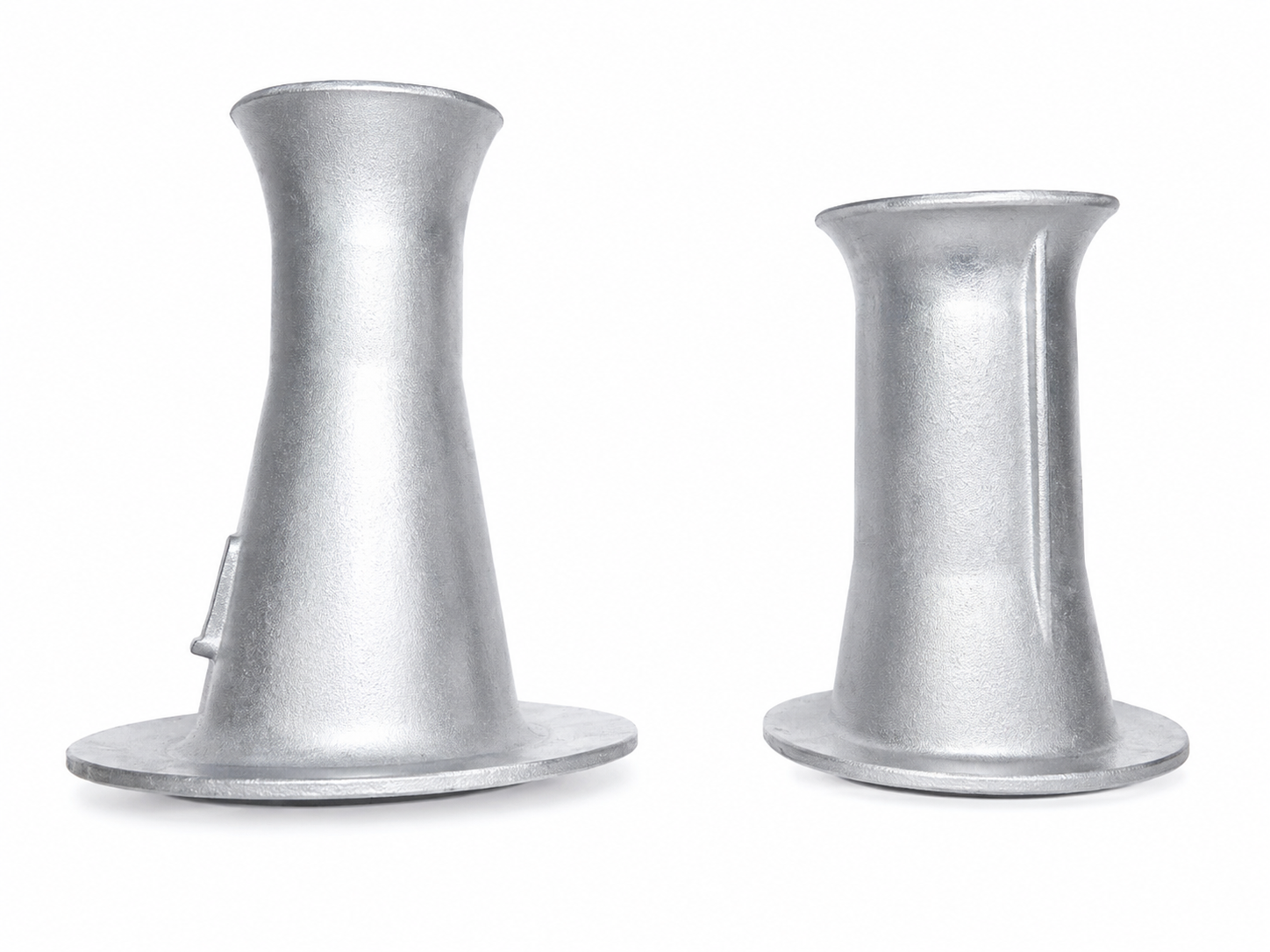 | Aluminium Gravity Die Castings Aluminium Gravity Die Castings in LM6 Material View product → |
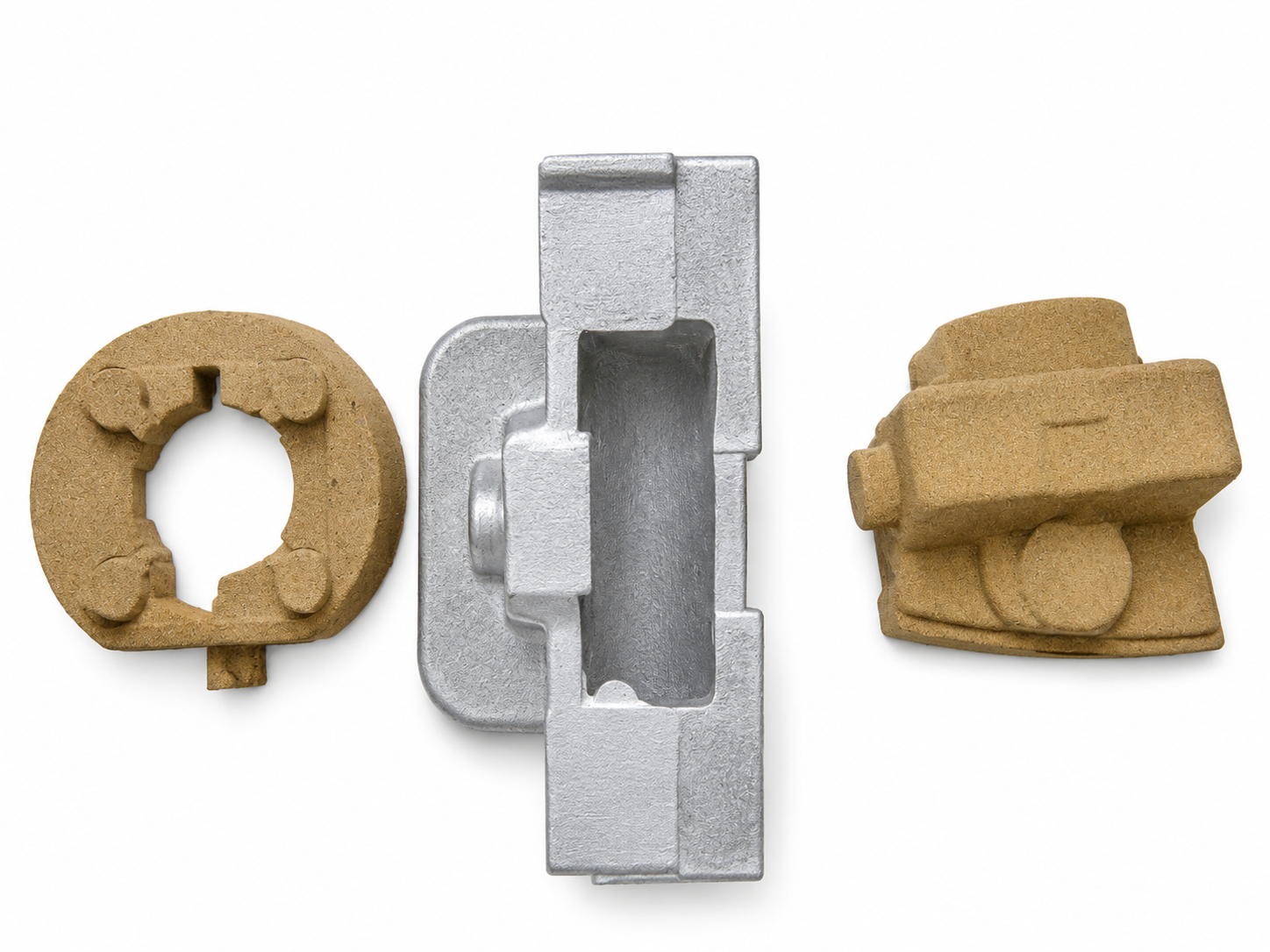 | Aluminium Gravity Die Castings Shell core casting (or shell molding) is a metal casting process that uses a resin-coated sand mixture to create thin, hardened half-molds and cores. View product → |
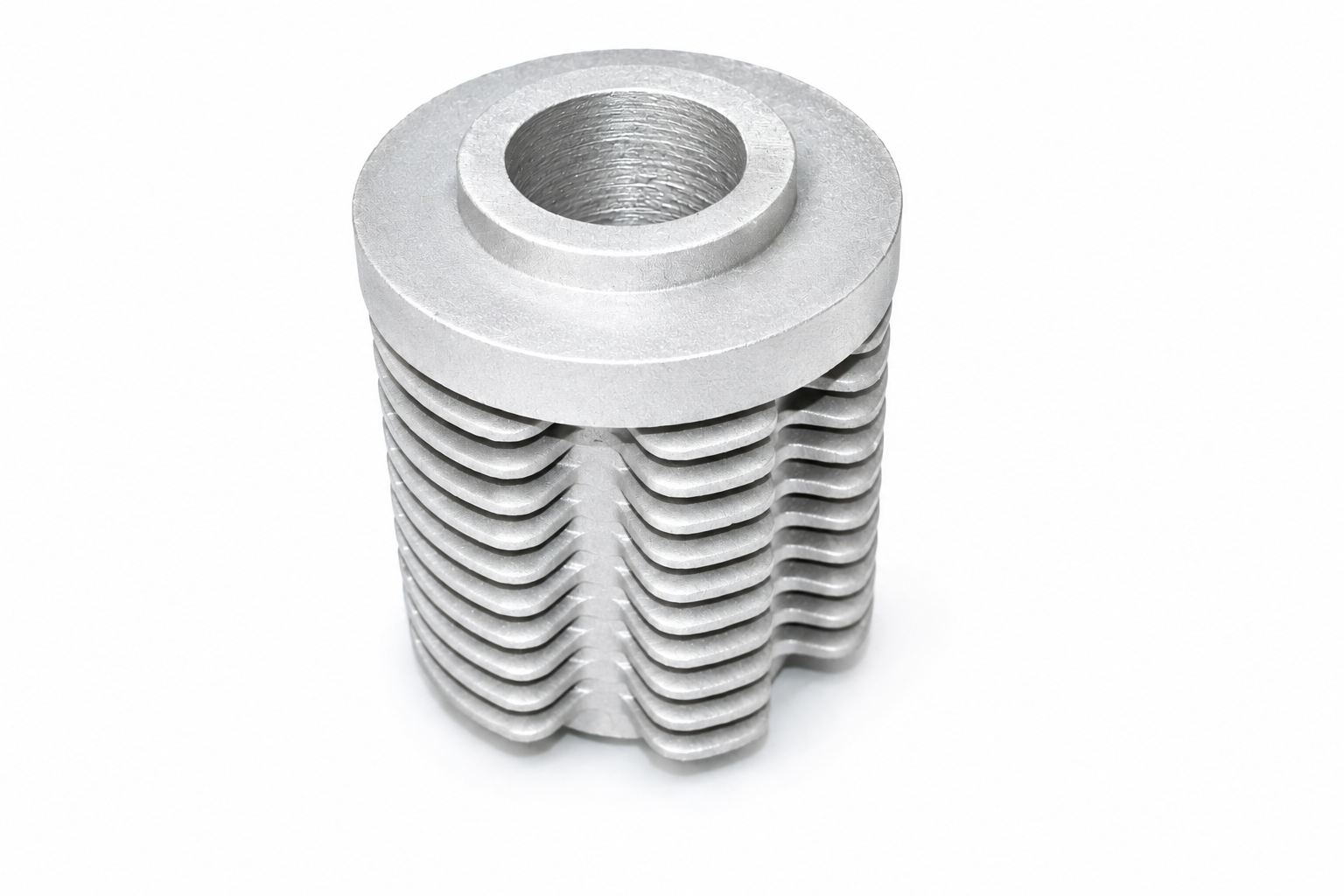 | Aluminium Gravity Die Castings Aluminium Engine Cylinder Head The Aluminium Engine Cylinder Head is a precision-engineered component designed to seal the top of the engine cylinder while housing the combustion... View product → |
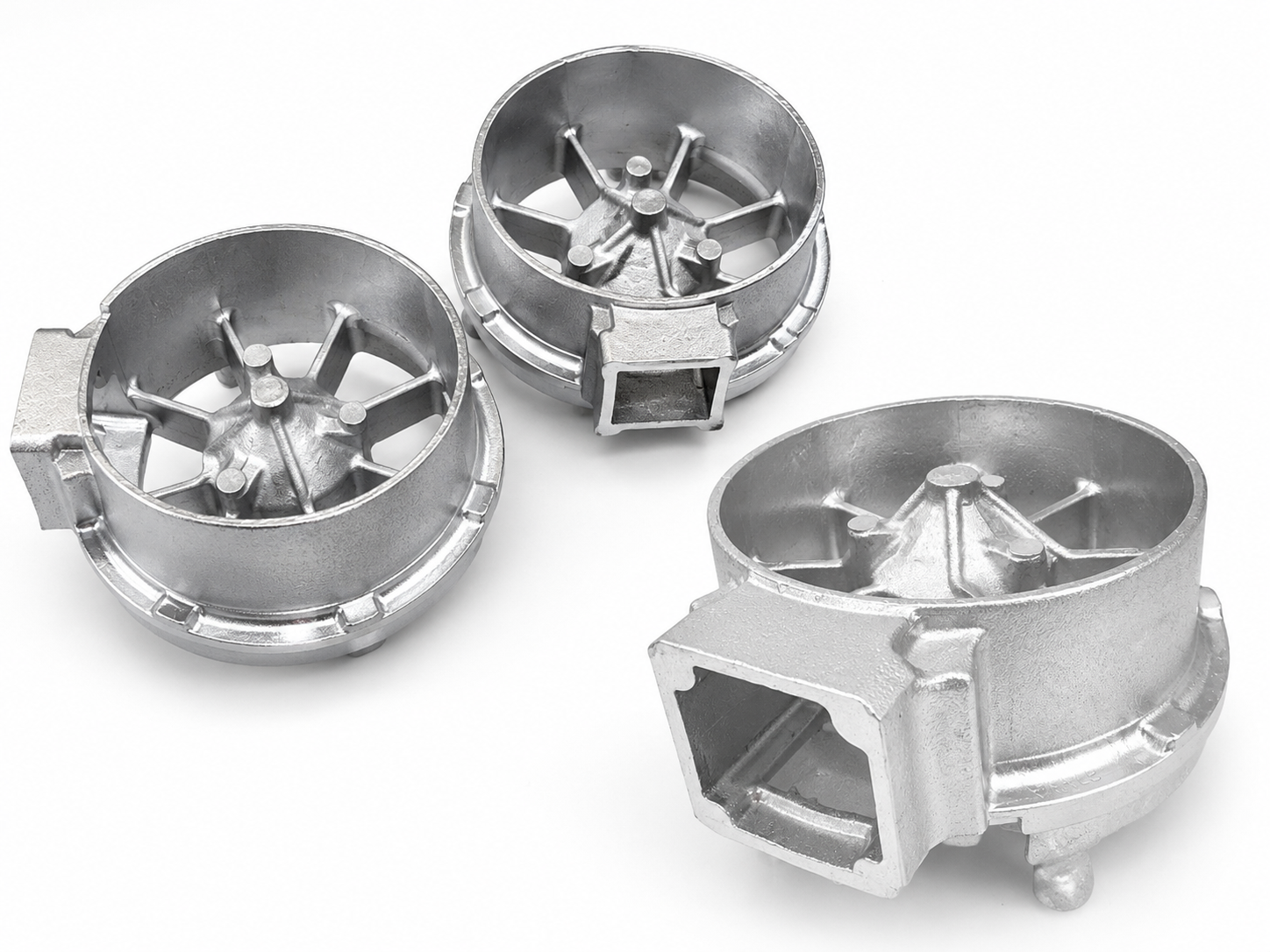 | Aluminium Gravity Die Castings The Aluminium End Frame is a precision-engineered structural component designed to provide support, alignment, and protection for motors, pumps,... View product → |