
A CNC-machined bracket earns its cost only when a controlled interface affects alignment, safety, reliability, or assembly time. By the end, you will be able to set measurable requirements, compare aluminium with steel and alternative manufacturing routes, and decide whether precision machining improves the total cost of your electrical equipment.
Key takeaways
- Specify precision where geometry controls assembly, load transfer, or insulation distance.
- Calculate movement, deflection, and misalignment costs before paying for tighter tolerances.
- Choose aluminium after checking stiffness, thermal expansion, corrosion, and electrical requirements.
- Release datums, tolerances, materials, finishes, and inspection points suppliers can verify.
Define the Interface Before You Specify Precision
Specify precision only where the bracket’s geometry controls assembly, load transfer, or insulation distance. A CNC label alone does not create value: a cover support with generous clearance may perform just as well with ordinary manufacturing tolerances, while a small error at a connector or PCB standoff can cause rework, cracked housings, or intermittent connections.
| Feature | Specify precisely when | Ordinary tolerance is enough when |
|---|---|---|
| Mounting-hole position | Bolts must align with a fixed enclosure, motor, busbar, or terminal assembly | Slots or clearance holes absorb positional variation |
| Datum-to-datum dimensions | The bracket sets connector, PCB, or transformer-component location | The supported part has adjustable mounting |
| Mounting-face flatness and perpendicularity | Uneven contact creates tilt, vibration, or uneven bolt loading | The face uses compliant washers or a flexible joint |
| Connector or busbar alignment | Misalignment can damage contacts or force wiring sideways | Cables have flexible routing and ample access |
| Electrical clearance | The dimension protects the specified creepage or clearance distance | The area has no energized parts nearby |
| External profile and unused edges | The profile enters an enclosure or obstructs service access | It only removes excess material or provides appearance |
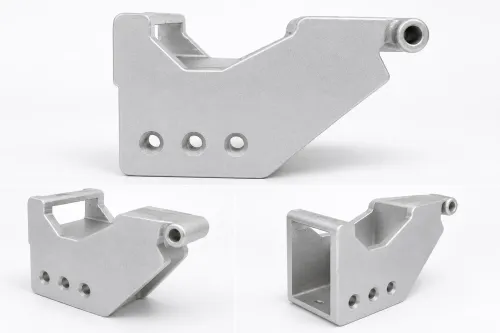
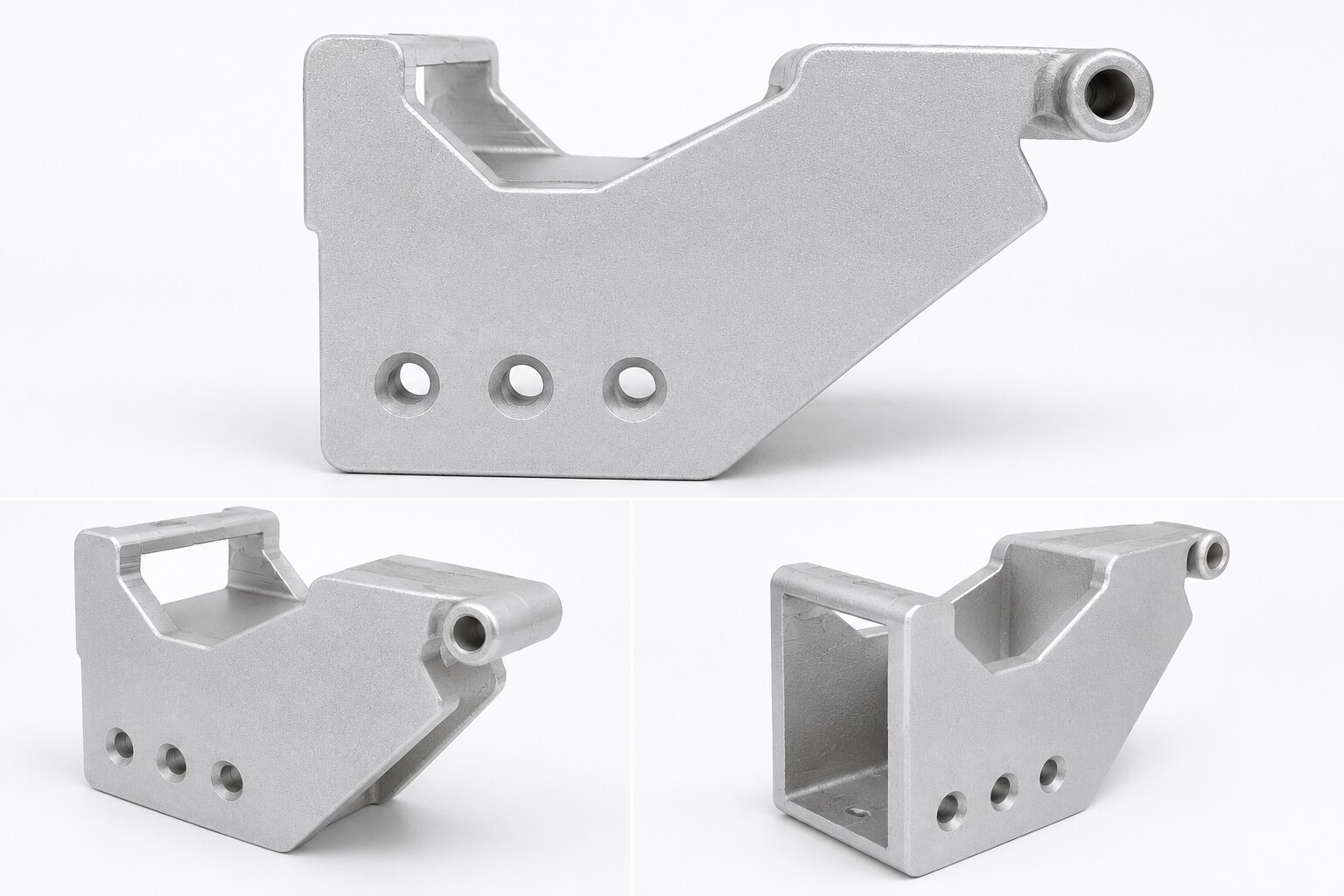
For a precision machined bracket for electrical equipment in Nashik, put the critical dimensions in a datum-based drawing with true-position, flatness, perpendicularity, surface-finish, burr, and inspection requirements. Do not use “precision” to replace numbers.
Remember that an aluminium bracket conducts electricity. State the required insulation or grounding path, and reference the product standard using working voltage, pollution degree, altitude, and material group; general machining accuracy does not establish creepage or clearance.
Calculate the Cost of Movement, Deflection, and Misalignment
A 0.5 mm shift at a connector can turn into damaged pins, forced cable routing, or repeated assembly rework. Calculate the bracket’s deflection before tightening its tolerances.
For a cantilever, use δ = FL³/(3EI), where F is load in newtons, L is unsupported length, E is elastic modulus, and I is the section’s second moment of area. Deflection rises with the cube of length, so doubling the reach increases movement eightfold.
Use the calculation to test the parts that create measurable precision machined bracket value:
- Resolve the equipment’s weight and centre of gravity into load at each fastener; include cable pull, door force, and short-circuit fault force where applicable.
- Check bending stress and deflection against the permitted movement at the connector, PCB standoff, busbar, or enclosure face; apply the specified safety factor.
- Compare bolt spacing with the load path. Widely spaced fasteners resist rotation better than two closely grouped holes.
- Add vibration and service access to the check. Movement that is harmless in a static test can loosen fasteners, fatigue a joint, or misalign a repeatedly removed assembly.
Aluminium’s elastic modulus is about 69 GPa, roughly one-third of steel’s 200 GPa. Control movement with deeper ribs, thicker sections, shorter spans, or improved bolt spacing rather than tightening every dimension.
Specify the actual clearance and creepage distances required by the applicable product standard; working voltage, insulation type, pollution degree, material group, and altitude determine them, not the word “precision.” If generous clearances absorb the movement and no interface is sensitive, cast or fabricated construction with machined holes can deliver better total cost.
Choose Aluminium Only When Its Trade-Offs Fit the Equipment
Choose aluminium when low mass, corrosion resistance, and adequate stiffness matter more than maximum rigidity or repeated high-load service. An aluminium machined bracket in Nashik suits an enclosure, terminal assembly, cable support, or PCB mount when its load path is short and electrical clearances are stable.
Do not select it from tensile strength alone: aluminium’s elastic modulus is about one-third of steel’s, so deflection can control the design.
| Material | Strength in this application | Choose it when | Main risk |
|---|---|---|---|
| Aluminium | Low density, good machinability, useful corrosion resistance | Weight reduction matters and loads, spans, and temperatures are moderate | Deflection, stripped threads, and galvanic corrosion |
| Carbon steel | High stiffness, high load capacity, strong resistance to fault forces | The bracket carries a transformer, motor, busbar, or vibrating equipment | Rust without effective coating and heavier handling |
| Stainless steel | High stiffness with strong corrosion resistance | Moisture, washdown, chemicals, or outdoor exposure threaten ordinary steel | Higher material and machining cost; greater mass |
Use deeper ribs, thicker sections, shorter unsupported spans, or steel inserts when aluminium must carry vibration or repeated fastener removal. Choose steel or stainless steel for high preload, frequent servicing, severe vibration, elevated temperature, or short-circuit fault forces.
Check the joint, not just the bracket. Aluminium against copper, brass, stainless steel, or plated steel can create galvanic corrosion in damp or contaminated equipment; use isolation washers, compatible plating, sealant, drainage, and defined coating removal. Apply tight tolerances only to hole position, flatness, connector alignment, and critical clearances.
A supplier quoting an aluminium machined bracket in Nashik needs those functional requirements, alloy and temper, thread details, coating, and inspection criteria to price the correct part.
Compare Machining, Casting, Fabrication, Stamping, and Standard Hardware
For low volumes or changing designs, machining usually gives the best control without dedicated tooling. The precision machined bracket value depends on whether that control prevents connector damage, enclosure leakage, wiring rework, or misalignment—not on the CNC process alone.
| Option | Tooling cost | Repeatability, strength, and weight | Best production volume |
|---|---|---|---|
| Machining from billet | Low; programming and fixtures | Excellent repeatability; strong, but removes more material and adds cycle time | Prototype to low or medium volume |
| Cast and machined | Moderate; pattern or die plus machining | Lightweight near-net shape; casting brings draft, shrinkage, distortion, and porosity | Medium to high volume |
| Fabrication | Low; cutting, bending, and welding fixtures | Efficient for steel or sheet aluminium; weld distortion and datum variation need control | Prototype to medium volume |
| Stamping | High dies and setup | Fast, repeatable, lightweight sheet parts after launch; limited depth and geometry | High volume |
| Standard hardware | Minimal; brackets, rails, and fasteners from stock | Lowest custom control; adequate for non-critical covers and generous clearances | Any volume when interfaces fit |
Choose fabricated sheet metal or standard angle hardware when load is low and hole location does not affect an electrical interface. Choose stamping only when volume can recover the die cost.
A cast-and-machined bracket reduces billet waste, but inspect machined threaded holes, thin load sections, sealing faces, and pressure boundaries for exposed subsurface porosity. A cosmetic casting acceptance grade does not prove those areas are pore-free.
Do not tighten every dimension by default. Reserve tight tolerances for datums, hole true position, flatness, connector alignment, and critical clearances; electrical creepage and clearance still come from voltage, pollution degree, insulation, altitude, and the applicable product standard.
Release a Drawing That Suppliers Can Quote and Inspect
Release a controlled drawing with a revision number, material specification, inspection plan, and acceptance criteria. A precision machined bracket for electrical equipment in Nashik is worth buying only when the drawing controls a functional interface such as connector alignment, PCB standoff height, busbar position, enclosure fit, or mounting-hole location.
Include these items in the supplier package:
- Alloy and temper, such as AlSi10Mg-T6 or 6061-T6; state billet or gravity-die-cast route and heat treatment.
- Datums, hole-position tolerances, flatness, perpendicularity, critical dimensions, and surface-finish values in Ra.
- Coating type, thickness, masked faces, burr limit, and edge-break requirement. Aluminium is conductive, and anodizing is not a guaranteed insulator at threads, cut edges, or damaged faces; specify insulating bushings, shoulder washers, or a grounding path.
- Thread size, class, minimum engagement, insert material, tightening torque, lubrication, and required assembly cycles. Use steel or stainless-steel inserts where repeated servicing or high preload could strip aluminium.
- Inspection method and acceptance limits: calibrated CMM or gauge checks for hole locations, surface plate checks for flatness, thread gauges, coating-thickness measurement, and a first-article report.
- Supplier details: casting or machining capacity, inspection equipment, traceability, batch documents, lead time, minimum order, and packaging that prevents scratches.
State electrical clearance and creepage distances with working voltage, insulation type, pollution degree, material group, altitude, and the applicable product standard, such as IEC 60664-1. SPM Castings can be one supplier to compare against others when the same controlled package is issued for an aluminium machined bracket in Nashik.
Related product
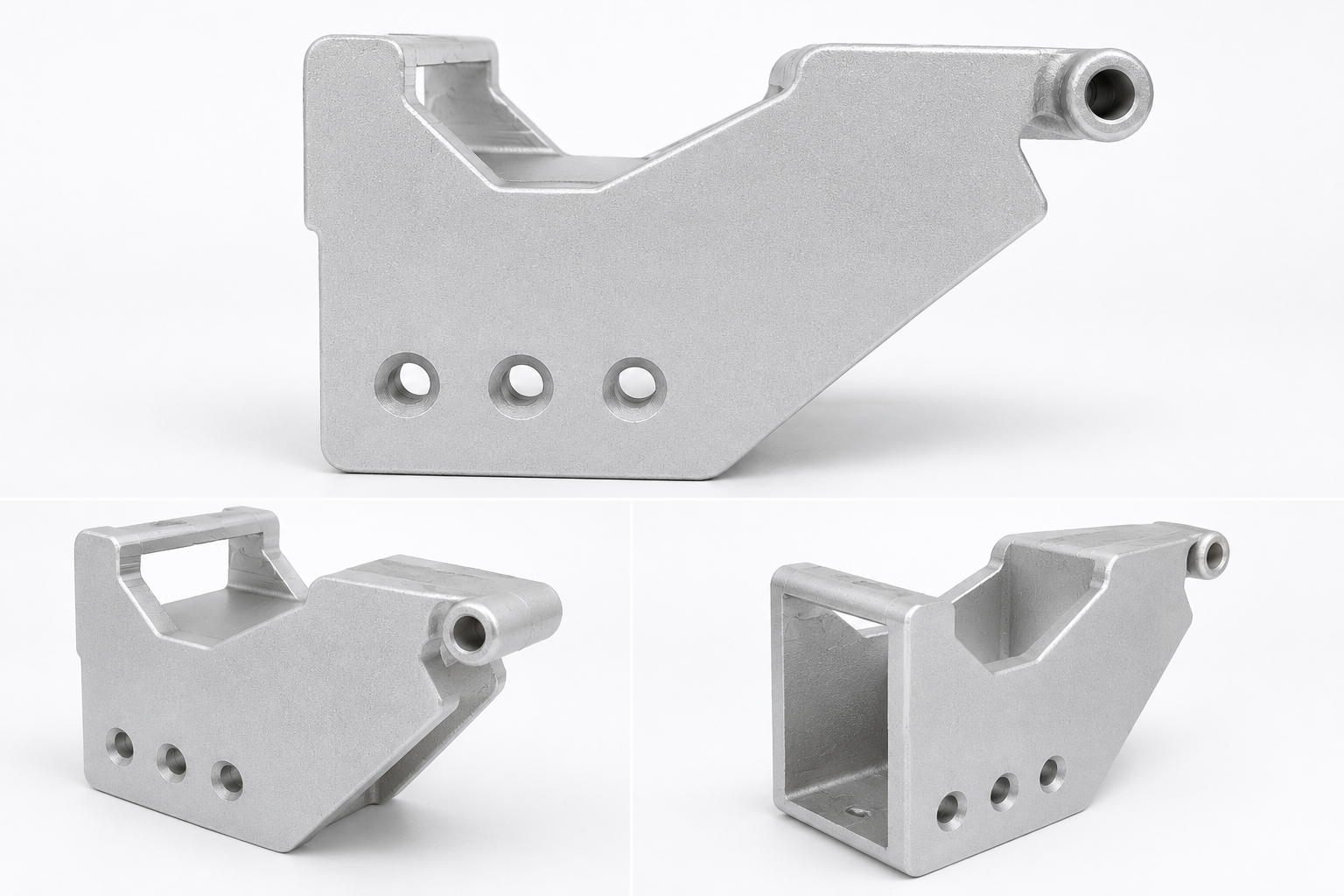 | Aluminium Gravity Die Castings A precision machined bracket is a custom-engineered metal or plastic support component manufactured via CNC milling, turning, or electrical discharge... View product → |
Frequently asked questions
When is a precision machined bracket worth specifying for electrical equipment?
It is worth specifying when bracket geometry controls connector alignment, PCB position, load transfer, enclosure fit, or insulation distance. Use looser tolerances where clearance absorbs dimensional variation.
How should you calculate the cost of bracket movement, deflection, and misalignment?
Translate each error into a measurable consequence: assembly rework, connector side load, cracked housings, contact loss, vibration, or reduced creepage and clearance. Compare that cost with the added machining and inspection cost.
When is an aluminium machined bracket the right choice?
Choose aluminium when low mass, corrosion resistance, thermal conductivity, and sufficient stiffness suit the equipment. Check thermal expansion, thread durability, galvanic contact, surface finish, and electrical insulation before release.
How do machining, casting, fabrication, stamping, and standard hardware compare?
Machining suits accurate, low-to-medium-volume geometries; casting suits repeatable complex shapes at volume; fabrication suits larger simple brackets; stamping suits high-volume sheet parts; standard hardware suits interfaces that need no custom geometry.
What must a supplier drawing include for quoting and inspection?
Show material grade, datums, critical dimensions, geometric tolerances, hole sizes and positions, thread specifications, surface finish, coating or anodising, deburring requirements, inspection points, and revision control.