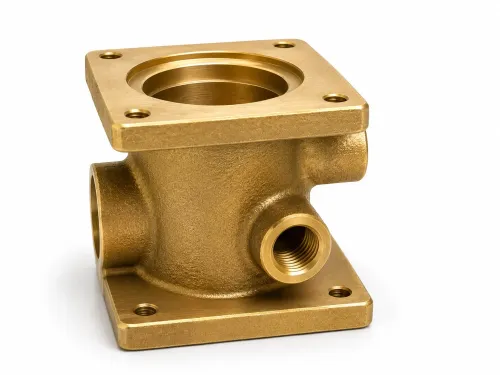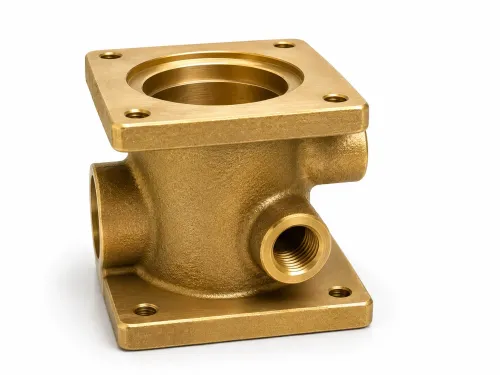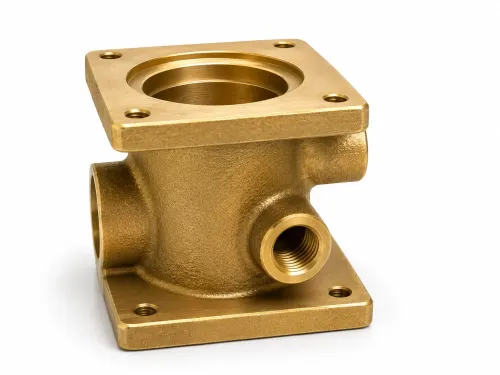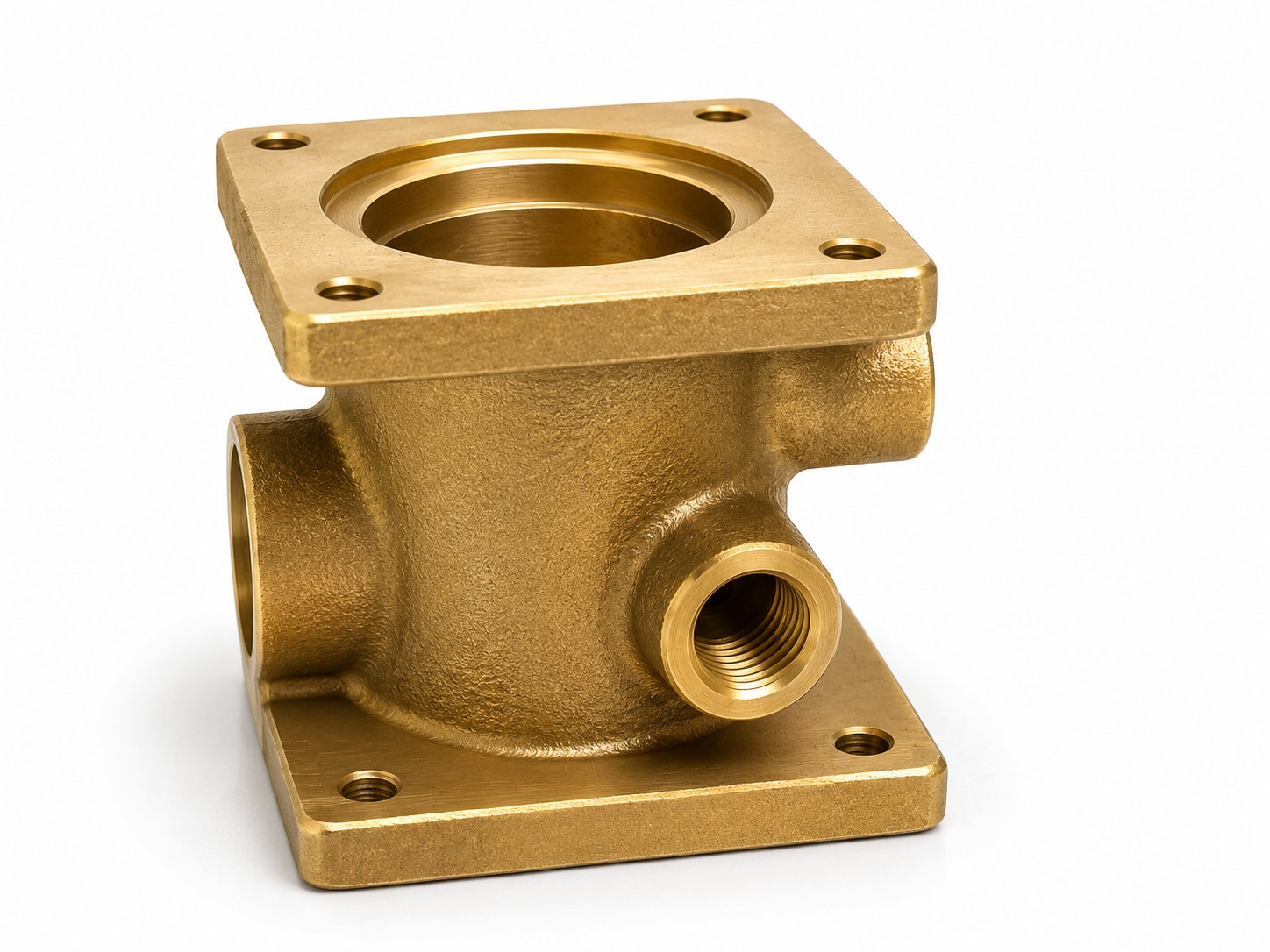
“Valuve brass GDC” and “value brass GDC castings” usually point to valve components made by brass gravity die casting, not to separate casting methods. By the end, you will be able to trace the moulding and machining sequence, judge whether a Venturi design is castable, compare brass grades, and identify the inspections that prove a part is fit for service.
Key takeaways
- “Valuve brass GDC” usually means valve brass gravity die castings.
- Gravity die casting uses a reusable metal mould filled without pressure.
- Venturi passages require controlled cores, machining and dimensional inspection.
- Ask Pune suppliers for process records, test results and sample approvals.
What “Valuve Brass GDC” Means and Why Gravity Die Casting Is Used
“Valuve brass GDC” is not a recognised casting method. “Valuve” is usually a misspelling of “valve,” while “value brass GDC castings” may be a search label for valve components rather than a product name or alloy.
GDC means gravity die casting: molten brass fills a reusable metal mould under gravity, without pressure die casting’s high injection pressure.
| Method | Surface finish and repeatability | Tooling, speed and geometry |
|---|---|---|
| Sand casting | Rougher surface and wider variation | Low tooling cost, slower production, thicker sections and limited thin detail |
| Gravity die casting | Smoother surface and better repeatability | Moderate tooling cost, faster than sand, suitable for medium sections but less thin or intricate than pressure die casting |
| Pressure die casting | Very good repeatability and fine surface | High tooling cost, high production speed, excellent thin and intricate detail |
| Investment casting | Fine detail and smooth surface | Costly pattern process, slower production, thin complex shapes; less suited to large routine valve bodies |
| Forging | Dense, strong grain flow but no cast cavities | High forming force and tooling cost; excellent solid shapes, poor choice for hollow passages without substantial machining |
The brass GDC casting process suits valve and Venturi parts because brass machines readily and resists many fluids and atmospheric corrosion. Confirm pressure-temperature limits and fluid compatibility; water service also requires a dezincification-resistant specification where applicable.
Compare CuZn39Pb3/CW614N, CuZn40 and lead-free brass against the drawing and service conditions—not the generic word “brass”—because dezincification, pressure failure or contamination can result.
The Brass Gravity Die Casting Process from Pattern to Solidified Casting
1. The brass GDC casting process starts by cleaning and inspecting permanent-die and pattern surfaces. Check the parting-line location and locating features, add draft and machining allowances, preheat the die, and apply a suitable coating.
Install and vent sand or permanent cores, then verify core prints and alignment; a shifted core changes wall thickness and passage size.
2. Prepare a traceable charge and confirm the alloy designation before melting. Control melt temperature, skim dross, and keep the metal clean. Excessive temperature or long holding times increase zinc loss, oxidation, dross and fumes; segregated charge or repeated remelting can also move chemistry outside the specified grade.
3. Design gates, risers, feeders and vents together. The gate must fill every section before freezing without creating turbulence that folds oxide films or traps air, while feeders supply liquid metal during shrinkage. A cold die causes misruns and cold shuts; an overheated die slows solidification and increases soldering, erosion and dimensional drift.
This control produces consistent value brass GDC castings.
4. After pouring, allow directional solidification, then remove risers and shake out the mould or remove the cores. Fettling removes adherent sand and excess metal; flash trimming follows, but it cannot correct parting-line mismatch. Apply heat treatment where specified, inspect the casting, and leave clean datums and machining stock for CNC operations.
How Valve and Venturi Geometry Changes the Casting Method
Parting-line position, draft angle, wall thickness and feeding paths determine whether a valve casting fills without misrun, cold shut or shrinkage porosity. Keep walls uniform; isolate bosses and ribs from heavy sections, provide draft on pull surfaces, and avoid casting threads when machining is practical.
Specify shrinkage allowance, machining allowance and likely porosity zones on the drawing.
Valve passages are core-dependent features. Core shift changes bore diameter and wall thickness; core breakage blocks the passage, poor venting traps gas, and variable core prints move the bore relative to machining datums. The brass GDC casting process must therefore control core alignment and support, not just external dimensions.
A Venturi follows a converging inlet, a controlled throat and an expanding diffuser. Align the core, keep transitions smooth, place pressure taps at defined upstream and downstream stations, and machine the throat and sealing faces.
Throat diameter and surface roughness change the flow coefficient and pressure loss; wall variation alters velocity, while an excessive diffuser angle promotes separation and reduces pressure recovery.
Use this design checklist:
- Confirm whether the part is a Venturi meter, ejector, mixer or vacuum device; the outside profile alone does not establish its function.
- Dimension the throat diameter and length, diffuser angle, inlet profile, pressure-tapping locations and required surface finish.
- Mark core prints, vent routes and inspection datums, then check core-shift limits against bore and wall-thickness tolerances.
- Identify bosses, ribs, threads, sealing faces and bearing areas requiring draft, feeding access or machining stock.
- Review heavy sections and isolated corners for feeder access, shrinkage risk and stock removal that could expose porosity.
Machining, Defect Control and Acceptance Testing
Machining allowances must be specified on the drawing for sealing faces, valve bores, threads, bearing seats, pressure-tapping points and Venturi throats. Excess stock increases cutting time and can expose subsurface porosity; insufficient stock leaves oxide skin, parting-line mismatch or flash on the finished surface.
Use a separate control for each defect mechanism. Shrinkage porosity requires directional solidification, correctly sized feeders and an uninterrupted feeding path. Gas-related porosity requires clean melt, low-turbulence filling and adequate mould and core venting. A sound external surface does not prove that internal passages in value brass GDC castings are free from either defect.
A practical release checklist for pressure-bearing valve and venturi castings is:
- Weigh the casting and record visual defects, flash, cracks, cold shuts and surface cavities.
- Measure as-cast wall dimensions, core-dependent passages and parting-line mismatch; trimming flash does not remove a mismatch step.
- Establish machined datums, then verify sealing faces, threads, bearing seats, pressure taps, valve bores and Venturi throats.
- Measure bore diameter and location from those datums; check core shift before accepting external dimensions.
- Run a pressure-containment test and a separate leakage test to their specified pressure, medium and hold time.
A pressure test detects loss of containment, not whether shrinkage, gas porosity, an oxide defect or machining exposure caused it. Dimensional conformity cannot prove pressure tightness. A passing machined sample also cannot certify every as-cast passage.
How to Specify a Supplier for Brass GDC Castings in Pune
A sound RFQ for brass gravity die castings in Pune starts with service conditions, not a generic request for “brass parts.” Require the supplier to document the brass GDC casting process and submit:
1. Drawing number and revision, alloy designation, lead-free requirement, conveyed fluid, pressure-temperature range, casting weight, and annual or batch quantity.
2. As-cast and machined dimensions, datums, machining allowances, surface-finish requirements, core details, critical passages, threads, sealing faces, and inspection access.
3. Pressure-test method, acceptance pressure, hold time, leakage limit, functional test, and sampling frequency for first-off, batch, and ongoing production.
4. A control plan separating alloy chemistry and melt temperature; die and core condition; casting weight and visual inspection; as-cast dimensions; machining inspection; and pressure or functional testing.
Ask the supplier to review parting lines, core feasibility, feeder placement, likely porosity, CNC datums, and inspection access before quoting. SPM Castings is useful when that review is needed because a valve or Venturi casting cannot be assessed as a machined block.
For critical internal passages, require first-off samples plus sectioned validation pieces or documented radiographic, ultrasonic, or other suitable non-destructive checks. Approve production only after both casting and machining results meet the same drawing and test requirements.
Related product
 | Brass Gravity Die Castings A brass valve is a mechanical device used to control, regulate, or direct the flow of liquids and gases within a piping system. View product → |
Frequently asked questions
What does “valuve brass GDC” mean?
“Valuve” is usually a misspelling of “valve.” Brass GDC means brass gravity die casting, while the phrase may describe valve components rather than a specific alloy or casting method.
How are brass gravity die castings made?
The process uses a pattern or tooling design, a reusable metal die, prepared brass melt, gravity filling, controlled solidification, fettling, machining and inspection.
Why does Venturi geometry affect the casting method?
A Venturi casting has a narrow throat and internal passage. These features influence core design, metal flow, feeding, machining access and dimensional inspection.
What should you check when choosing a brass GDC supplier in Pune?
Check the supplier’s tooling capability, alloy and melt controls, defect inspection, machining capacity, acceptance testing, traceability records and ability to approve samples against your drawing.