An aluminium Venturi casting is worthwhile only when its geometry, alloy, pressure boundary and hydraulic duty match the pump system. By the end, you will be able to distinguish a true Venturi component from an ordinary pump casting, compare materials and specify the checks that justify a Pune-made part.
Key takeaways
- Aluminium suits lightweight, corrosion-conscious pump applications with moderate hydraulic loads.
- Specify throat diameter, inlet size, diffuser angle, flow rate and pressure before ordering.
- Verify flange pattern, centreline dimensions and hydraulic performance against the existing pump.
- Choose brass, stainless steel or another material when pressure, abrasion or chemistry exceeds aluminium’s limits.
What a Venturi casting does inside a pump system
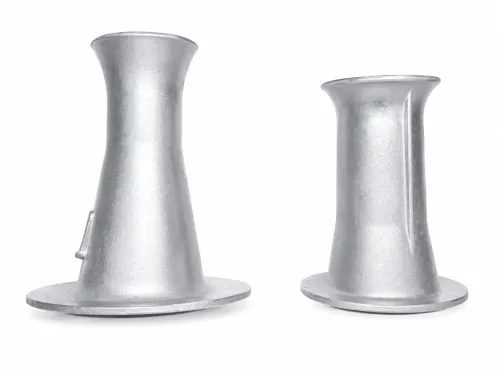
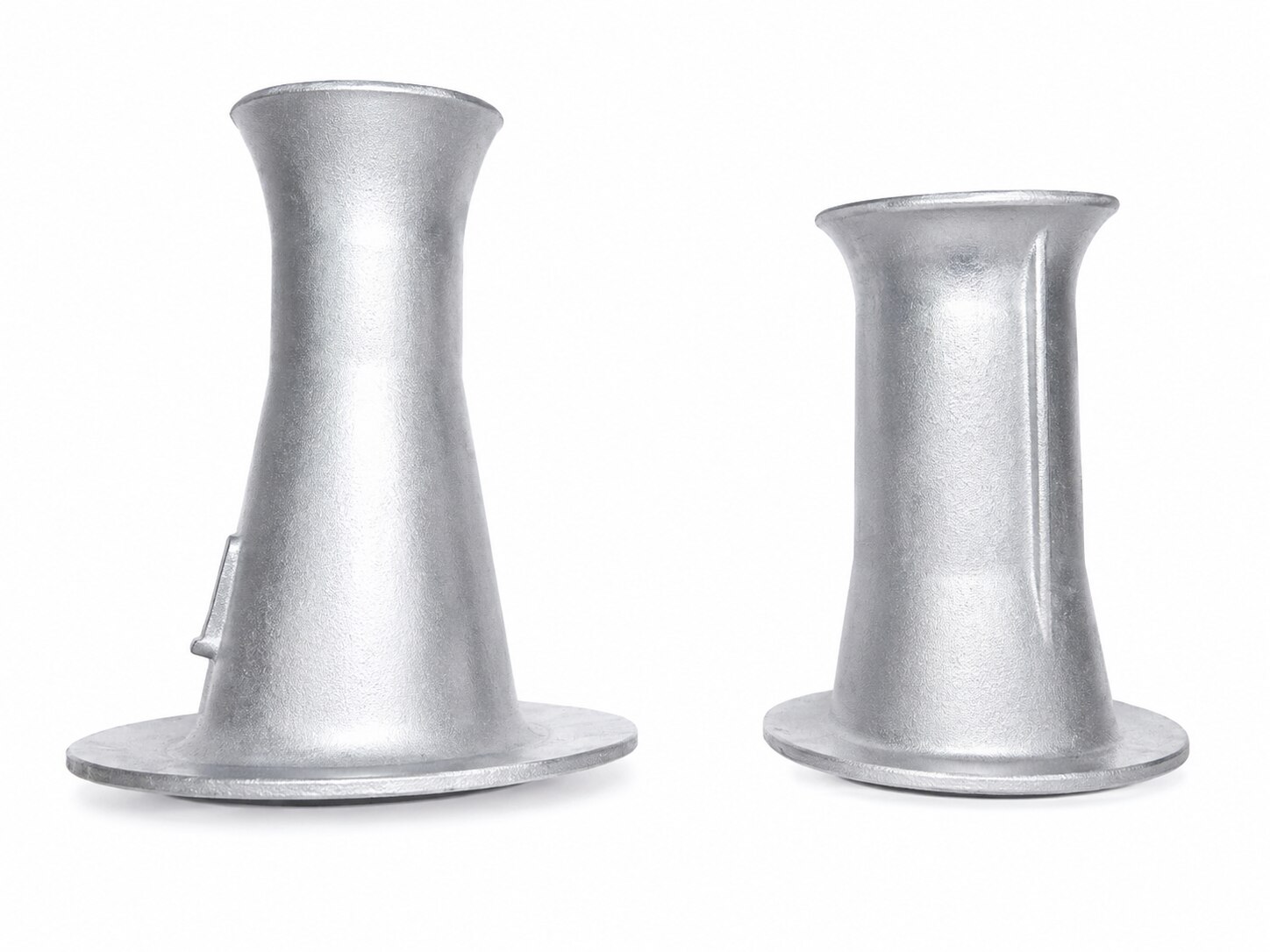
A Venturi casting contains a converging inlet, a narrow throat and an expanding diffuser. As liquid enters the smaller throat, velocity rises and static pressure falls; the diffuser then recovers part of that pressure as flow slows.
The pressure drop can draw in air or a second liquid through a side port, mix fluids, create suction in an eductor, or provide a flow signal for measurement.
The geometry does the work, not the aluminium itself. Install a Venturi on the pump suction side without checking velocity, available NPSH and entrained air, and the low-pressure throat can promote cavitation. Its location and pressure losses must match the pump curve and the system NPSH calculation.
Use these distinctions when comparing venturi castings for pumps:
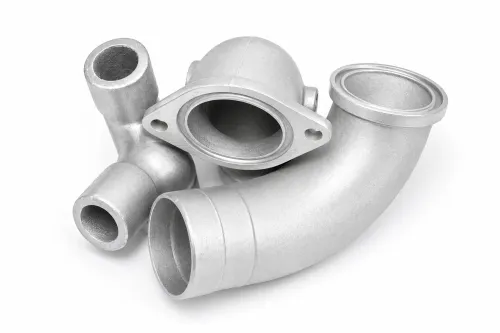
- Pump body: The main pressure-containing casing around the impeller, with suction and discharge connections. It directs and contains pumped liquid but does not create a Venturi throat.
- Water-pump housing: A housing term used for a pump casing or cover, often shaped around an impeller. It is not automatically a Venturi device.
- Nozzle body: Holds or directs a nozzle insert, usually producing a jet through its outlet. A Venturi casting requires the complete converging-throat-diffuser profile.
- Hydraulic cover: Closes or supports part of a hydraulic assembly. It may seal the chamber, but it does not necessarily accelerate, mix or entrain flow.
A buyer searching for Aluminium Venturi castings for pumps in Pune should put “Venturi” on drawings and inspection documents, not “venture.”
Where aluminium earns its cost—and where it fails
At about 2.7 g/cm³, aluminium weighs roughly one-third as much as common brass at 8.4–8.7 g/cm³. That reduction eases lifting, supports, and installation, but it does not prove pressure capability or service life.
The strongest venturi casting benefits appear in clean water, compatible process fluids, moderate temperatures and repeatable production quantities. Aluminium also conducts heat well and machines readily, while permanent-mould or low-pressure casting can produce denser, more consistent parts than ordinary sand casting.
Thermal conductivity becomes a disadvantage when the fluid temperature changes repeatedly: expansion and contraction can loosen joints or accelerate fatigue. Aggressive chemicals, abrasive slurry, high pressure, severe erosion and tight metering tolerances also expose aluminium’s limits.
| Material | Aluminium’s position | Prefer another option when |
|---|---|---|
| Cast iron or ductile iron | Lower mass and better handling | Impact, abrasion, high pressure or heavy sections dominate |
| Brass or bronze | Lighter and often easier to cast in volume | Seawater, erosion or demanding pressure service requires greater margin |
| Stainless steel | Better resistance to aggressive chemistry and heat | Corrosion, temperature or pressure outweighs weight savings |
| Polymer | Lowest mass and strong chemical resistance for selected fluids | Temperature, stiffness or dimensional stability is critical |
For pressure-containing service, reject visual inspection alone. Gas porosity, shrinkage cavities and oxide films can remain hidden after machining and open under hydraulic pressure. Request alloy traceability, process details, dimensional results and pressure or leak-test records; die-cast aluminium needs particular scrutiny because gas porosity can hinder welding and pressure tightness.
The phrase aluminium venture castings in pune is a search misspelling; specify “aluminium Venturi casting” on drawings and purchase orders. Local supply shortens transport, not the consequences of an uncontrolled casting process.
Which dimensions and hydraulic conditions must you specify
A Venturi that matches the pipe can still fail at the pump. Specify minimum, normal and maximum flow, inlet pressure, outlet pressure, fluid temperature, density, viscosity, solids content and allowable pressure loss.
For suction service, check throat velocity, absolute pressure, available NPSH and cavitation margin against the pump curve; a casting supplier cannot correct poor installation or inadequate NPSH.
- Dimension the inlet and outlet diameters, throat diameter, converging angle, diffuser angle, overall length and minimum wall thickness. Add flange faces, bolt-circle dimensions, gasket groove details, machining datums and permitted concentricity or surface-finish tolerances.
- For flow measurement, define pressure-tap positions, upstream and downstream straight lengths, expected Reynolds-number range and the required accuracy. Use ISO 5167-style geometry rather than copying a Venturi’s outside shape.
- For entrainment or mixing, state the motive-flow rate and pressure, suction-fluid flow, required entrainment ratio, discharge back-pressure and nozzle-to-throat spacing.
- Name the aluminium alloy, casting process, temper or heat treatment, pressure rating and traceability requirement. Require radiography or an equivalent examination for internal porosity and oxide films, plus dimensional, pressure and leak-test records.
| Application | Critical specification | Main risk if omitted |
|---|---|---|
| Flow meter | Throat ratio, tap locations and straight length | Incorrect discharge coefficient |
| Suction or eductor | NPSH margin, throat pressure and back-pressure | Cavitation or loss of entrainment |
| Pressure boundary | Wall thickness, alloy, casting controls and test pressure | Leakage through hidden porosity |
These details reveal whether the claimed venturi casting benefits justify aluminium venturi castings for pumps in Pune. Local supply cannot replace controlled geometry and pressure-boundary evidence.
How to verify a casting against an existing pump
Approve the casting only after its drawing, interfaces and test evidence match the pump’s actual serialised assembly. For aluminium Venturi castings for pumps in Pune, local delivery matters less than proving that the pressure boundary and metering geometry were controlled.
1. Request the approved drawing, revision history, alloy designation, casting method, heat-treatment specification and material certificate. The certificate must identify the melt or batch used for your parts.
2. Compare the supplier’s dimensional report with the pump model: flange faces, bolt-circle diameter, throat diameter, pressure-tap locations, wall thickness, concentricity and machined sealing faces. Require the functional axis to be the machining datum, not an as-cast surface.
3. Check the interface schedule for gasket material, fastener grade, isolation washers or sleeves, coating and drainage. Aluminium joined to cast iron, carbon steel or stainless steel can form a galvanic-corrosion couple when water or another electrolyte reaches the joint.
4. Ask for casting-process records covering melt control, mould or die identification, gating and risering, and any weld or metal-repair declaration. SPM Castings should be judged on this traceability, not on a visual sample alone.
5. Require radiographic or equivalent volumetric examination for internal gas porosity, shrinkage and oxide films where the pressure boundary demands it. Add dye-penetrant or another surface examination after machining when specified by the drawing.
6. Witness the agreed hydrostatic or pneumatic leak test, with test pressure, hold time, medium and acceptance limit recorded. Also check the assembled Venturi against the pump curve, suction loss and available NPSH; a sound casting cannot cure cavitation caused by excessive throat velocity or entrained air.
When the final answer is yes—and when another material wins
Approve the aluminium Venturi casting only when its service life, installed cost and failure exposure beat the alternatives. Count the Venturi casting benefits—lower handling weight, easier machining and potential corrosion resistance—against the actual liquid, solids content, pressure and installation interfaces.
| Option | Service-life outlook | Buy-versus-reject decision |
|---|---|---|
| Aluminium | Good in clean, compatible liquids; poor against abrasive solids and unresolved galvanic contact | Buy when velocity, NPSH, isolation and pressure-boundary inspection are controlled |
| Ductile iron or cast iron | Longer wear life in many abrasive services; heavier and costlier to machine | Choose when erosion resistance matters more than weight |
| Stainless steel or bronze | Stronger corrosion and pressure-risk position; higher material and machining cost | Choose for aggressive chemistry, high reliability or costly downtime |
| Polymer | Low weight and chemical resistance; limited temperature, pressure and dimensional stability | Choose only after confirming pressure, temperature and creep limits |
Reject the part if the supplier cannot show a hydrostatic test record with test medium, pressure, hold time and acceptance limit, or cannot address internal porosity through an agreed inspection method. Visual inspection alone does not clear a pressure boundary.
Calculate total manufacturing cost as purchase price plus machining, coating, isolation hardware, testing, installation labour, expected replacements and downtime. If your search began with aluminium venture castings in Pune, correct the specification to “aluminium Venturi casting” in the drawing and purchase order.
Select aluminium when the five-year cost and risk remain lower; select another material when one avoidable failure would exceed its price premium.
Frequently asked questions
What does a Venturi casting do inside a pump system?
It accelerates liquid through a narrow throat, lowers static pressure, then recovers pressure through an expanding diffuser.
Which dimensions and hydraulic conditions must you specify?
Provide inlet and throat diameters, diffuser geometry, flow rate, pressure, liquid temperature, flange pattern and centreline dimensions.
How do you verify an aluminium Venturi casting against an existing pump?
Compare the drawing with the pump’s flange pattern, bolt-hole spacing, centreline, bore, throat size, flow direction and operating conditions.
When does another material beat aluminium for a Venturi casting?
Choose another material when pressure, temperature, abrasive solids or fluid chemistry exceeds aluminium’s mechanical or corrosion limits.