
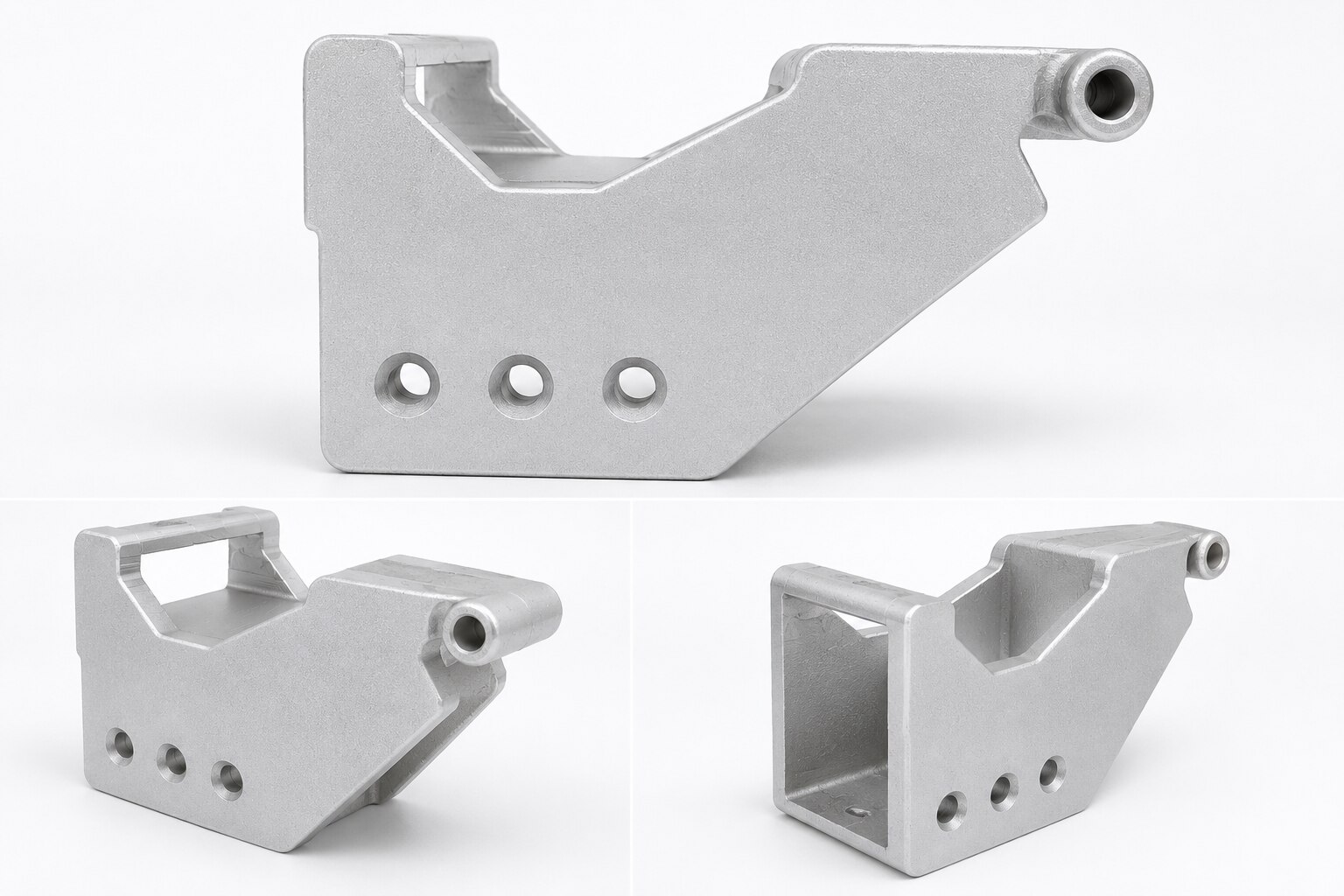
A fast quote is not useful if the supplier lacks the required alloy, inspection equipment, or production route. Screen suppliers against your drawing, material, quantity, and acceptance requirements first, then compare lead times from a clearly defined start date.
Key takeaways
- Confirm CNC capacity, stock, inspection, and alloy experience before sending an enquiry.
- Include drawings, tolerances, quantities, material, finish, and delivery date in your RFQ.
- Compare billet, extrusion, and cast blanks against feature size and production volume.
- Request measured inspection results, not only a supplier’s claimed dimensional capability.
Screen a supplier before sending the enquiry
Start with capabilities that remove the likely delay: available stock, suitable CNC capacity, in-house inspection, and experience with your bracket’s material and feature sizes. A quick-turn machined bracket supplier is not necessarily quick if it must source a nonstandard aluminium thickness, special extrusion, or cast blank.
Ask whether the supplier can:
- Machine the specified alloy and temper from stock, and state the available heat or lot.
- Identify which dimensions are process-controlled, which need a finishing operation, and which will be checked in the inspection plan.
- Hold the required hole position using functional datums under ASME Y14.5, rather than merely matching coordinate dimensions.
- Inspect large faces, thin walls, threads, and hole patterns with suitable equipment, such as a CMM, height gauge, or calibrated thread gauges.
- Install steel wire or solid inserts before or after anodizing when aluminium threads face vibration, installation torque, or repeated servicing.
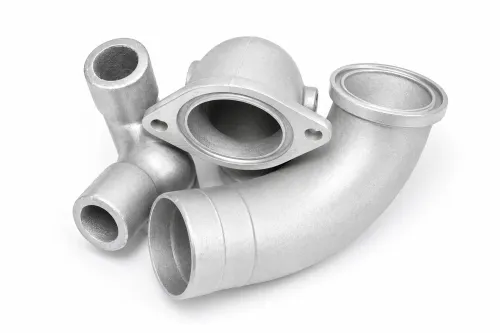
- Machine cast blanks while controlling parting-line mismatch, sink, as-cast skin, porosity, and machining allowance.
Compare the supplier’s claim with the feature that matters:
| Capability claim | Evidence to request | Risk if absent |
|---|---|---|
| Small-hole tolerance | Similar material, size, machine, and inspection record | Large faces or thin walls may distort |
| Casting experience | Machining allowance and accepted as-cast zones | Porosity or warp can make recovery impossible |
| In-house inspection | Sample report using your datums | Individual dimensions may pass while the bracket fails assembly |
A precision machined bracket supplier should explain these limits before quoting, not after production starts. Choose the machined bracket supplier that can prove capability on comparable geometry and confirm blank availability.
Send a quote package that prevents clarification delays
Send a native 3D CAD file with a released 2D drawing. The model defines geometry; the drawing defines what makes the precision machined bracket acceptable.
Include these details in the RFQ:
- Drawing number, revision, material grade, temper, quantity per lot, annual demand, and required delivery date
- Datum scheme, critical dimensions, geometric tolerances, threads, hole specifications, and deburr requirements
- Surface-finish values, anodizing or plating specification, colour, masking areas, and finish-certification requirement
- Inspection method, critical characteristics, first-article report requirement, and material-certificate requirement
- Packaging instructions, sample-approval requirement, and the acceptance criteria for production parts
- The date that starts the lead-time clock: purchase-order release, drawing approval, material receipt, casting approval, or first-article acceptance
- For aluminium threads, the insert type and installation stage when steel wire inserts or solid inserts are required
- For cast blanks, permitted as-cast skin, parting-line mismatch, sink, and cosmetic variation, plus machining allowance at datum pads and critical holes
State whether the quotation covers tooling, casting trials, inspection, finishing, inserts, and packaging. Without these boundaries, “two weeks” can mean two weeks after clarification or material receipt, so quotes from machined bracket suppliers will not be comparable. A model without the released drawing invites assumptions that surface only after machining.
Choose the fastest practical production route and alloy
For the fastest route, match the blank to the bracket’s geometry, quantity, and required performance—not to CNC cycle time alone. Available stock often determines whether a precision machined bracket ships in days or waits for material, tooling, or castings.
| Option | Choose it when | Main speed or risk |
|---|---|---|
| Billet machining | Low quantities, prototypes, flat or moderately complex geometry, and material is in stock | Fastest setup, but costly scrap can make high volumes uneconomical |
| Cast blank plus machining | High recurring volume, substantial three-dimensional geometry, or extensive billet waste | Adds tooling, casting trials, porosity control, and machining-stock checks |
| Fabrication and welding | The bracket uses simple plates, angles, or gussets and weld distortion is acceptable | Avoids tooling, but weld distortion and post-weld machining can compromise datum accuracy |
| Standard bracket | Loads, hole pattern, envelope, and finish match an available catalogue part | Fastest purchase, but offers no custom geometry or controlled fit |
For a quick-turn aluminium machined bracket, ask the supplier to quote the proposed stock form, alloy and temper, heat or lot availability, and any acceptable thickness substitution. Specify 6061-T6 for general strength and machinability; choose 7075-T6 for higher strength when corrosion exposure and weldability are acceptable trade-offs.
Do not replace either with A356 or 319 casting alloy without engineering approval.
Choose stainless steel for corrosion exposure, carbon steel for higher stiffness or temperature, and ductile iron for heavy vibration and mass-sensitive designs. State the alloy, temper or casting condition, and material standard on the drawing and purchase order.
Separate quoted capability from verified dimensional performance
A quoted tolerance is only a claim; verified performance requires evidence tied to your actual feature, material, machine, and inspection method. Ask the precision machined bracket supplier to separate dimensions controlled during the normal process from those needing a finishing operation, special fixturing, or additional inspection.
Request these items before approving the order:
- A feature-by-feature review identifying the datum scheme, tolerance, machining operation, and inspection method for each assembly-critical surface.
- Confirmation that the machine, cutting tools, probing routine, and workholding suit the bracket’s size, wall thickness, and material. A small billet hole does not prove that a large cast face or thin wall will remain accurate after clamping.
- A first-article or first-lot dimensional report referenced to drawing feature numbers, using a calibrated CMM, gauges, or a functional fixture as appropriate.
- A material heat-lot certificate separately from the dimensional report. Material identity does not prove hole position, flatness, perpendicularity, or thread compliance.
Use position tolerances referenced to functional datums for mounting-hole patterns, rather than forcing several coordinate dimensions to carry the assembly requirement. ASME Y14.5 defines how to interpret that geometric-tolerancing scheme.
For an aluminium machined bracket, specify anodizing type and thickness, plus masking or compensation for close holes, bores, threads, and sliding fits. Coating growth can make an acceptable pre-finish dimension fail after anodizing. Ensure the inspection plan checks the coated condition where the fit depends on it.
Compare the real lead time before you place the order
A “10-day lead time” is meaningless until you know when the clock starts and what event ends it. Compare each machined bracket supplier against the same milestones, not against the headline number.
| Supplier quote | Clock starts | Clock stops |
|---|---|---|
| Billet machining | Released drawing and purchase order | Parts pass first-article inspection |
| Cast-and-machined route | Approved casting design and material availability | Machined parts pass inspection |
| Special-stock route | Alloy, temper, and stock-size receipt | Parts are packed and ready to ship |
Ask every precision machined bracket supplier to state the proposed stock form, alloy heat or lot availability, and any permitted stock-size substitution. Existing material can beat a faster CNC schedule that depends on a special extrusion, nonstandard plate thickness, or new castings.
For a cast route, confirm who owns casting approval and whether machining allowance covers warped or porous areas; SPM Castings, for example, should be compared on that complete route rather than machining time alone.
Put the acceptance gate in the purchase order. Require the supplier to confirm:
- Sample approval or first-article report
- Material certificate showing grade, temper, heat, or lot
- Finish, anodizing, plating, or other finish certificate
- Inspection records for critical datums, holes, threads, and flatness
- Packaging method and shipment date
- The exact date that starts the quoted lead time
Also state whether aluminium threads need wire or solid inserts, and whether installation occurs before or after anodizing. Otherwise, two apparently equal quotes can contain different parts, approvals, and waiting periods.
Related product
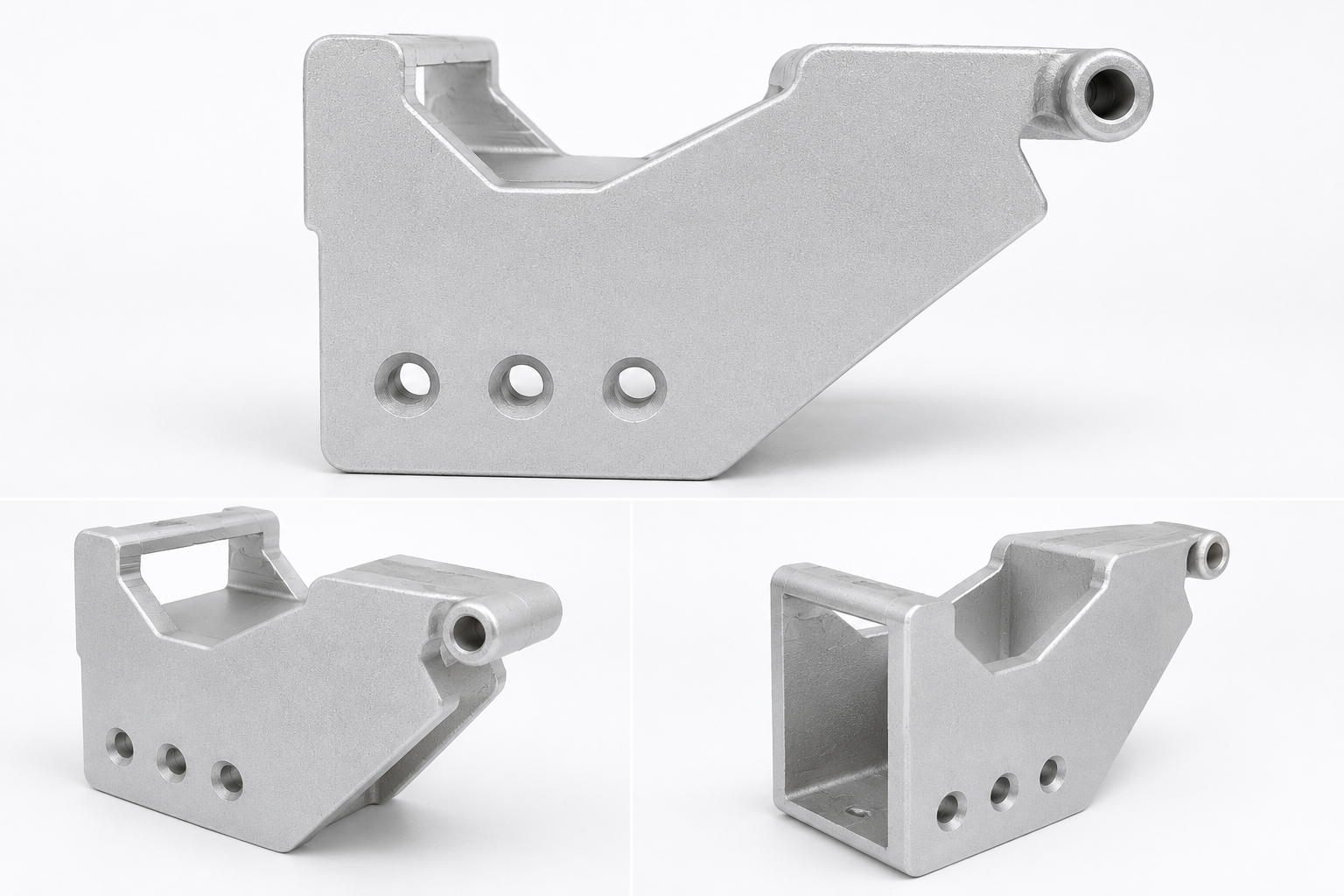 | Aluminium Gravity Die Castings A precision machined bracket is a custom-engineered metal or plastic support component manufactured via CNC milling, turning, or electrical discharge... View product → |
Frequently asked questions
How do you screen a precision machined bracket supplier before requesting a quote?
Check available stock, suitable CNC capacity, in-house inspection, and experience with your bracket’s alloy, thickness, tolerances, and feature sizes. A supplier is not quick if it must source a nonstandard aluminium thickness, special extrusion, or cast blank.
What should you include in a machined bracket quote package?
Send the latest drawing and 3D model, material and temper, annual and first-order quantities, tolerances, surface finish, deburring requirements, inspection needs, packaging instructions, and required delivery date. Identify critical dimensions and datums clearly.
Which production route and alloy can shorten a precision machined bracket order?
Compare machining from billet, extrusion, or a cast blank. Choose the route that matches your volume, wall thickness, feature size, tolerances, and material requirement. Confirm the exact aluminium grade and temper rather than specifying aluminium alone.
How can you compare a supplier’s quoted lead time before placing an order?
Separate drawing review, material or blank procurement, programming, machining, inspection, finishing, and shipping. Ask for dates for each stage, then confirm whether the quoted schedule depends on stock, subcontracted processes, or inspection capacity.