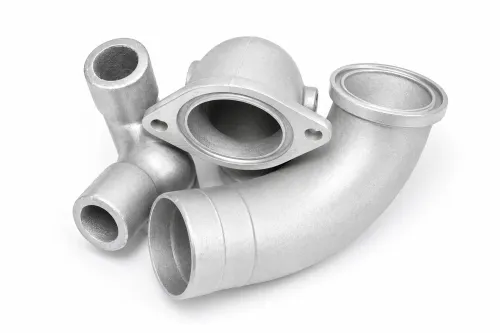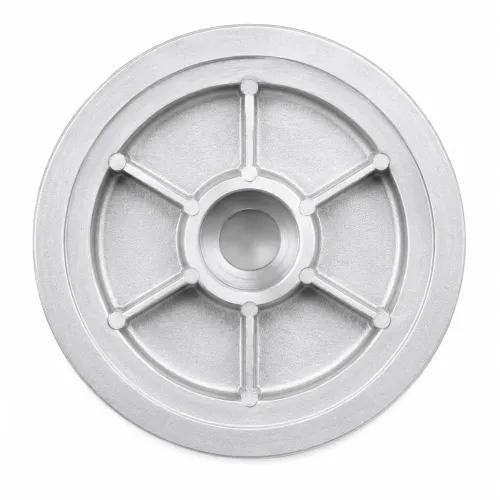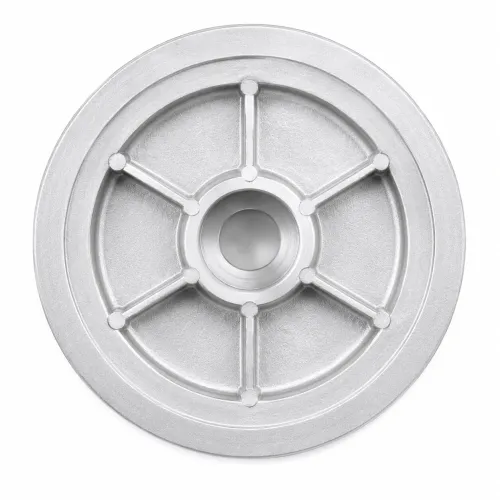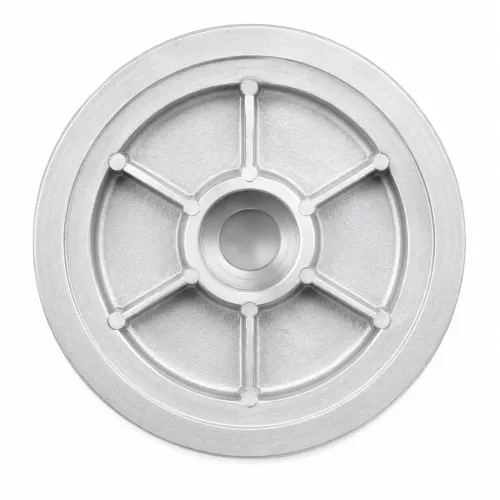

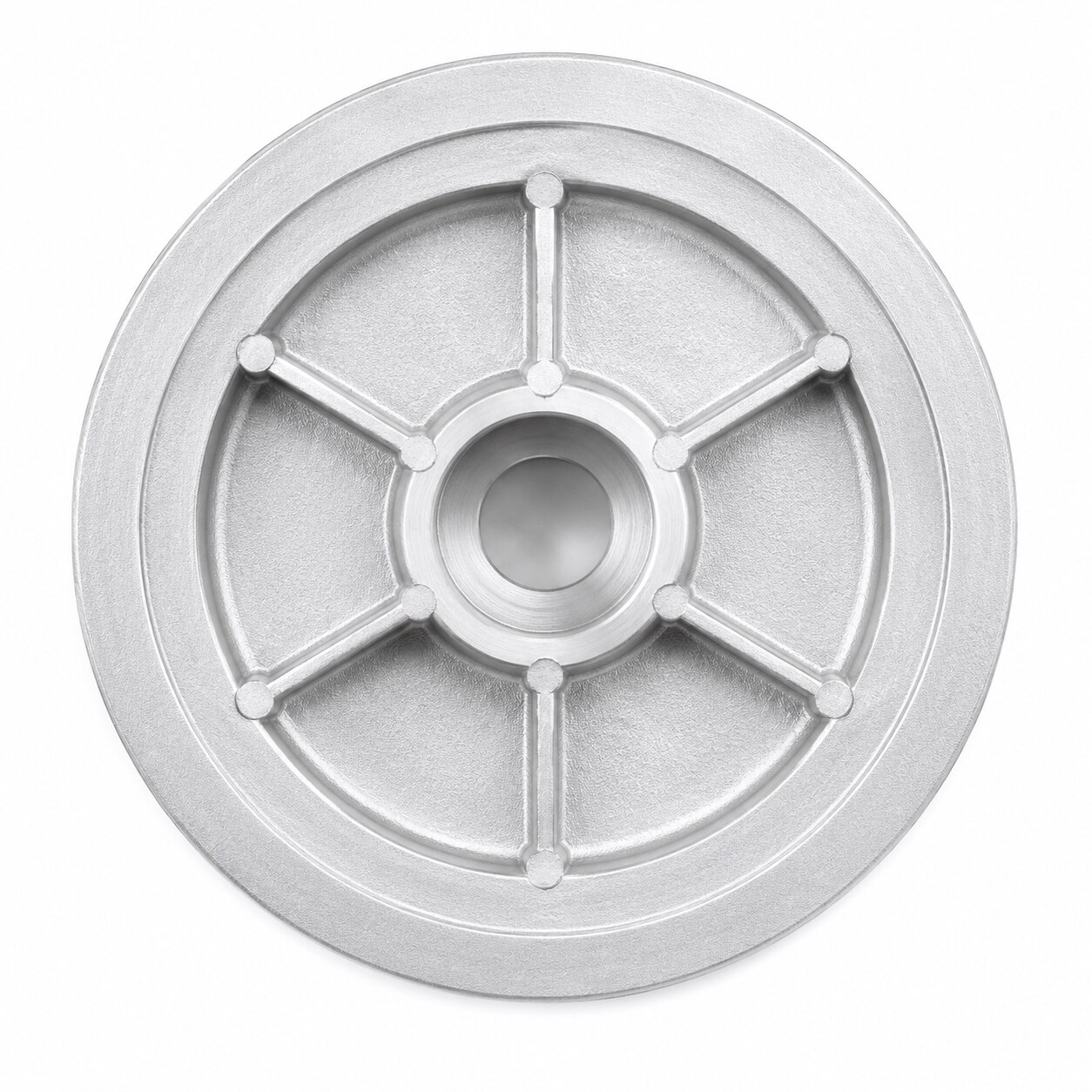
The term “piston pulley” can describe several different assemblies, so a supplier cannot confirm fit from the name alone. By the end, you will know which dimensions, belt details, material data, process evidence and inspection records to request before comparing a local casting quotation.
Key takeaways
- Define the piston mechanism and pulley function before requesting a quotation.
- Confirm belt profile, pitch diameter, bore, keyway and alignment dimensions.
- Match aluminium alloy and casting process to load, speed and wear.
- Approve samples only after inspecting dimensions, balance, finish and traceability.
What does “piston pulley” mean in your equipment?
“Piston pulley” is not a sufficiently precise part name for a price request. It may mean a pulley linked to a piston mechanism, a pulley fitted to a piston pump, compressor, engine or blower, or a customer-specific combined component.
The component may transfer belt force, support a shaft, guide reciprocating motion or drive a piston assembly. Applications include pumps, compressors, engines, blowers, textile machinery and other industrial drives, but the same name can describe completely different geometries and loads.
- State the equipment type and belt function.
- Identify the shaft arrangement: fixed shaft, through-shaft, cantilevered shaft or bearing-supported hub.
- Give the duty cycle, rotational speed, transmitted load and operating temperature.
- Supply a dimensioned drawing or 3D CAD model, an assembly view showing piston and shaft clearances, and clear machining datums for the bore, hub, grooves and registration faces.
- Specify whether the part is cast only or supplied machined, balanced and ready to install.
Do not rely on the product name to define fit or performance. A search for “piston pulley manufacturer” is useful only after the supplier proves experience with a comparable rotating component, including its bore, groove, shaft support, runout and operating load.
The relevant qualification is a documented casting and machining record for a similar part, not the label alone.
Which dimensions and belt details confirm a correct fit?
Request these geometry values on the RFQ, not just a nominal pulley size:
- Outside diameter, pulley width, bore diameter, hub length, piston diameter, skirt length and shaft centre distance
- Keyway width, depth and length, plus the machining datum used for each measurement
- Belt type, groove profile, groove count, groove angle, belt width, pitch and pitch diameter
- Tooth form and flank detail for a timing belt, including the belt designation
- Radial runout, axial runout, bore-to-groove concentricity and allowable balance limit as separate values
| Belt interface | Details to specify | Fit failure if omitted |
|---|---|---|
| V-belt | Groove count, included groove angle, pitch diameter, belt section and groove width | The belt rides high, bottoms out or slips |
| Timing belt | Tooth pitch, tooth count, pitch diameter, belt width, tooth form and flank profile | Teeth clash or the pulley loses timing |
| Flat belt | Belt width, crown or guide detail, pitch diameter and allowable edge clearance | The belt walks sideways or leaves the pulley |
Treat piston pulley casting availability as separate from a finished, inspected part. The bore, hub, keyway and belt groove commonly need CNC machining after casting. Do not accept bearing, seal or shaft-registration surfaces as final cast surfaces unless the drawing permits their tolerance, runout, roughness and allowance.
Agree machining allowances before making the die or pattern. Too little allowance can expose oxide films or casting defects; too much adds machining time, tool wear, distortion risk and scrap.
Which aluminium alloy and casting process suit the load?
Choose the material after identifying the failure mode: belt fatigue, hub cracking, abrasive groove wear, shaft-bore deformation or excessive heat. For an aluminium piston pulley, request the exact alloy designation, tensile strength, yield strength where relevant, hardness, density, heat-treatment or temper condition, and operating-temperature range.
Aluminium-silicon alloys support castability and wear-related service; heat-treatable grades suit higher-strength designs. State the temper: one alloy can have different properties after different treatments.
| Process | Quantity and wall thickness | Finish, repeatability and porosity | Tooling cost |
|---|---|---|---|
| Gravity permanent-mould | Medium to high; moderate sections | Good finish and repeatability; lower porosity than pressure die casting when fed correctly | Medium |
| Low-pressure casting | Medium to high; larger or structurally loaded sections | Good filling; controlled porosity risk | Medium to high |
| Pressure die casting | High volume; thin walls | Excellent finish and repeatability; trapped gas can weaken fatigue-loaded hubs | High |
| Sand casting | Low to medium; thick or complex sections | Rougher finish, lower repeatability; shrinkage and gas require control | Low |
| Machining from billet | Prototypes or low volume; limited by stock size | Best dimensional control; no casting porosity, but higher material and machining cost | Low tooling |
Treat pressure-die-casting claims as unproven without the machine, die size, alloy and qualified process; “high-pressure injection” does not establish piston pulley casting availability.
Aluminium is the wrong choice for severe abrasive wear, high contact stress, high-temperature duty or magnetic-property requirements. Cast iron improves wear and strength but adds weight; steel provides higher strength and contact durability at greater weight and cost; brass offers corrosion resistance and conductivity but higher density and cost.
Each substitution changes thermal expansion, dimensions and design calculations.
How do you qualify a supplier and verify casting quality?
A nearby supplier earns qualification through records, not the phrase “piston pulley manufacturer.” Ask a piston pulley casting supplier near Chhatrapati Sambhajinagar, also listed as Sambhaji Nagar, to separate what exists from what must be made.
1. Confirm whether the offer covers an existing pattern or die, castings awaiting machining, or finished inspected stock. Record tooling ownership, minimum order quantity, prototype route, repeat-batch lead time, replacement-part capability and current stock status.
Use SPM Castings as one local supplier to question against this evidence, not as proof that every listed process or piston pulley is available.
2. Require a process-specific quotation showing pattern or die cost, casting price, CNC setup and cycle time, inspection cost, rework and rejection policy, packaging that protects the bore and grooves, and delivery lead time. Confirm boring, facing, reaming, grooving, balancing and keyway cutting.
3. Ask how the foundry controls shrinkage, gas porosity, cold shuts, inclusions, flash and die mismatch around thick hubs and bosses. Require visual and dimensional inspection, hardness testing, and radiography or CT when fatigue, pressure or safety duty justifies internal examination.
4. Request material certificates, heat-treatment records, chemical analysis or positive-material-identification results, dimensional reports, first-article approval and heat or melt traceability. The quotation should identify alloy, casting route and drawing revision.
5. Reject vague claims of “casting availability.” Ask for inspection evidence on the actual batch and a written acceptance route before paying for tooling or approving production.
What should you check before approving samples or repeat batches?
Approve the sample only after it works as a finished rotating component, not merely as an acceptable casting. Compare it with the drawing and CAD model, then record:
- Bore fit on the actual shaft or a certified gauge; keyway width, depth and length; hub length; groove profile; belt alignment; piston clearances; surface finish; and casting cracks.
- Radial and axial runout measured from the drawing’s specified datum scheme, plus bore-to-pitch-diameter concentricity. Complete balance testing when rotational speed or vibration makes imbalance a risk.
- Machined surfaces checked for exposed porosity, oxide films and insufficient machining allowance. Check cast surfaces for shrinkage, cold shuts, inclusions, flash and die mismatch.
| Status | What it means | Release decision |
|---|---|---|
| Existing pattern or die | Tooling exists, but no finished component is ready | Confirm ownership, tooling condition and lead time |
| Castings available | Parts require machining, inspection and possible rework | Do not treat this as finished-part stock |
| Finished inspected parts | Bored, grooved, checked and documented | Confirm quantity and dispatch date |
Treat piston pulley casting availability as distinct from finished-part availability. Before releasing the order, agree dimensional and defect acceptance criteria, sampling frequency, packaging that protects the bore and grooves, corrosion protection, delivery geography and replacement terms.
Every repeat order must state the approved alloy, casting process, drawing revision, inspection report, machining allowance and traceability requirement. Require the heat or melt number on each batch record.
Frequently asked questions
What does “piston pulley” mean in your equipment?
The term can describe a pulley linked to a piston mechanism, fitted to a piston pump, compressor, engine or blower, or designed as a custom combined component. Provide the assembly drawing and operating function before requesting a price.
Which dimensions and belt details confirm a correct fit?
Confirm the belt section, pitch diameter, outside diameter, face width, groove angle, number of grooves, bore, keyway, hub length, concentricity and shaft alignment. Match these dimensions to the belt and mating shaft drawings.
Which aluminium alloy and casting process suit the load?
Select the alloy and process from the pulley’s torque, rotational speed, temperature, wear, impact and corrosion exposure. Gravity die casting, sand casting and pressure die casting offer different trade-offs in strength, dimensional control, tooling cost and production volume.
How do you qualify a piston pulley casting supplier?
Review the supplier’s drawings, process controls, inspection equipment, material records and sample reports. Ask how they control porosity, shrinkage, balance, bore accuracy, heat treatment and repeat-batch consistency.
What should you check before approving samples or repeat batches?
Measure critical diameters, groove geometry, bore, keyway, hub length, runout and balance. Inspect casting surfaces for cracks, cold shuts, excessive porosity and flash, then compare the material and inspection records with the approved specification.